



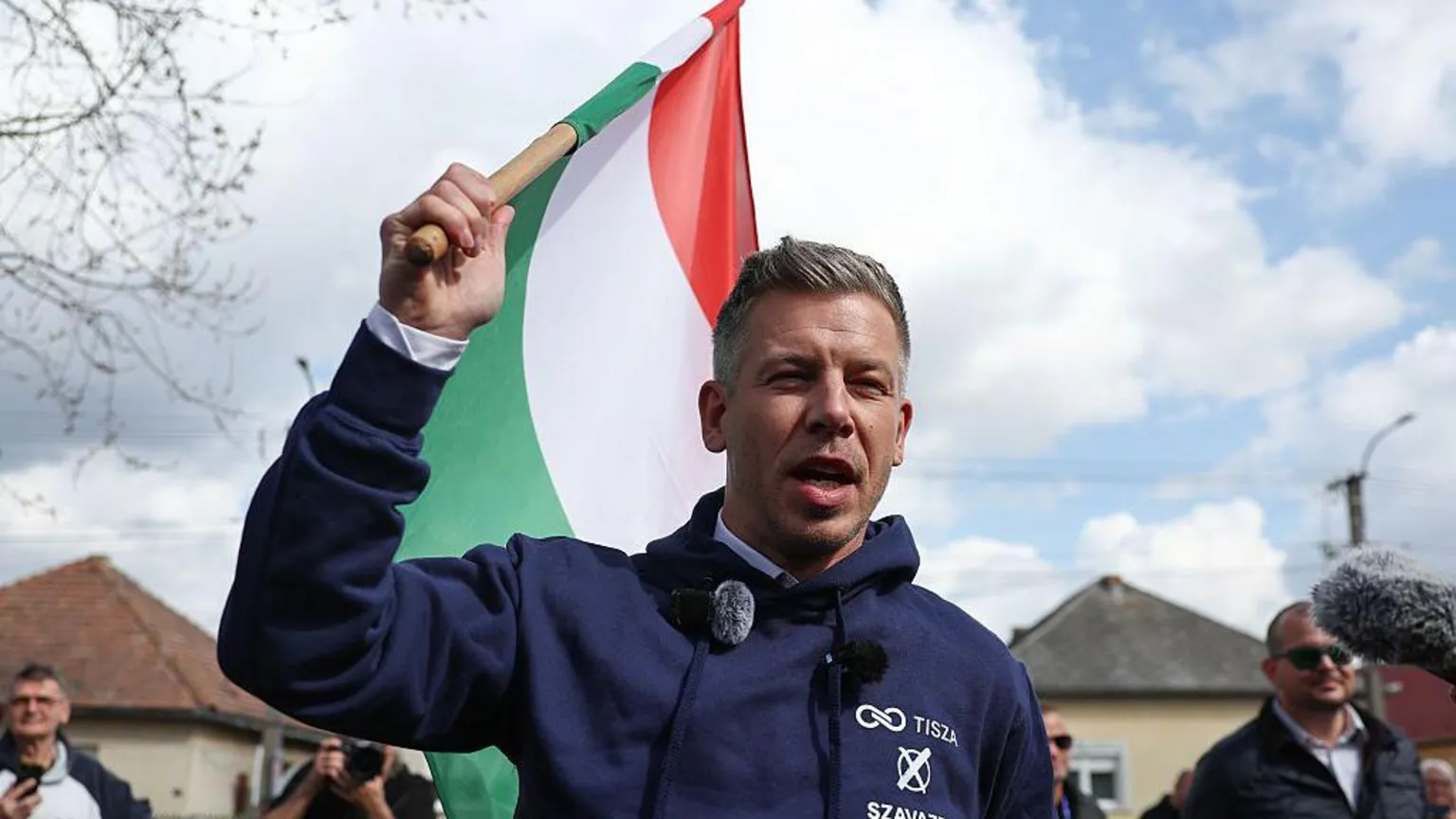

Hungary’s election campaign has entered its final hours with opposition challenger Péter Magyar claiming momentum as he attempts to unseat Prime Minister Viktor Orbán and end 16 years of rule by the governing Fidesz party.
Get today's headlines by email 
Speaking to supporters at one of his final campaign stops, Magyar said he believed victory was within reach. “We’re at the gates of a two-thirds majority victory,” he told cheering crowds, urging voters to mobilise in the last stretch of campaigning.
Magyar planned to end his tour in the country’s second-largest city, Debrecen, while Orbán prepared to address supporters in the capital, Budapest.
Large rallies highlight growing political divide
The final days of campaigning have been marked by major gatherings across the country. On Friday evening, tens of thousands gathered in Budapest’s Heroes' Square for a concert opposing the government.
Among them was a first-time voter who travelled from a village several hours away with her mother. She said she believed change might be possible, even though she would not normally support Magyar under different circumstances.
Orbán’s challenge in the election stems from a wide range of voter dissatisfaction that has coalesced around Magyar’s opposition movement. The challenger is a former Fidesz insider who broke with the governing party and later formed the political movement Tisza Party.
International support and geopolitical stakes
Orbán has received backing from allies abroad during the campaign. JD Vance, the US vice-president, visited Hungary for two days, while US President Donald Trump pledged to use the “full economic might” of the United States to support Hungary’s economy if Orbán wins.
Although Hungary has a population of around 9.6 million, Orbán has played an influential role internationally. He maintains close ties with both Trump and Russian President Vladimir Putin, and his positions have frequently put him at odds with European Union partners and Ukraine’s leadership.
Orbán has warned voters that a change of government could threaten what his administration has built, calling for national unity during what he describes as a challenging period.
However, attempts by his campaign to frame the European Union and Ukraine’s president, Volodymyr Zelenskyy, as threats to Hungary have not significantly reduced Magyar’s lead in opinion polls.
Youth vote and shifting political landscape
Magyar has campaigned intensively across the country, delivering multiple speeches daily in towns, villages and cities. During one rally in Mosonmagyaróvár, he told supporters it was time for “regime change”.
Though ideologically a centre-right conservative, Magyar’s movement has drawn support from a wide range of voters, particularly younger Hungarians who have known no government other than Fidesz.
According to political analyst Zsuzsanna Végh of the German Marshall Fund, opinion polls indicate a clear shift among voters aged 18 to 29, with less than 10% backing Fidesz.
She also pointed to growing opposition support in smaller towns and rural areas that had previously been strongholds of the governing party.
Corruption concerns and competing narratives
Even if Magyar wins a parliamentary majority, analysts say dismantling Fidesz’s entrenched influence could prove difficult without a two-thirds majority. Orbán’s government has spent years reshaping institutions, including the judiciary.
Campaign battles have been particularly intense in traditional Fidesz strongholds such as Székesfehérvár, historically known as Hungary’s “city of kings”.
Voters there expressed sharply divided views. Some supported Orbán’s message warning against closer alignment with the EU and Ukraine, fearing Hungary could be drawn into conflict.
Others cited corruption and cronyism as reasons for seeking change. Critics have accused the government of awarding large public contracts to allies and consolidating control over sections of the media.
After more than a decade and a half in power, the election will determine whether Orbán’s long dominance of Hungarian politics continues or whether a new political movement succeeds in reshaping the country’s direction.
Join the discussion? 
Already a member? 
 Adapted by ASEAN Now. Source 12 April 2026
Recommended Comments
Create an account or sign in to comment