



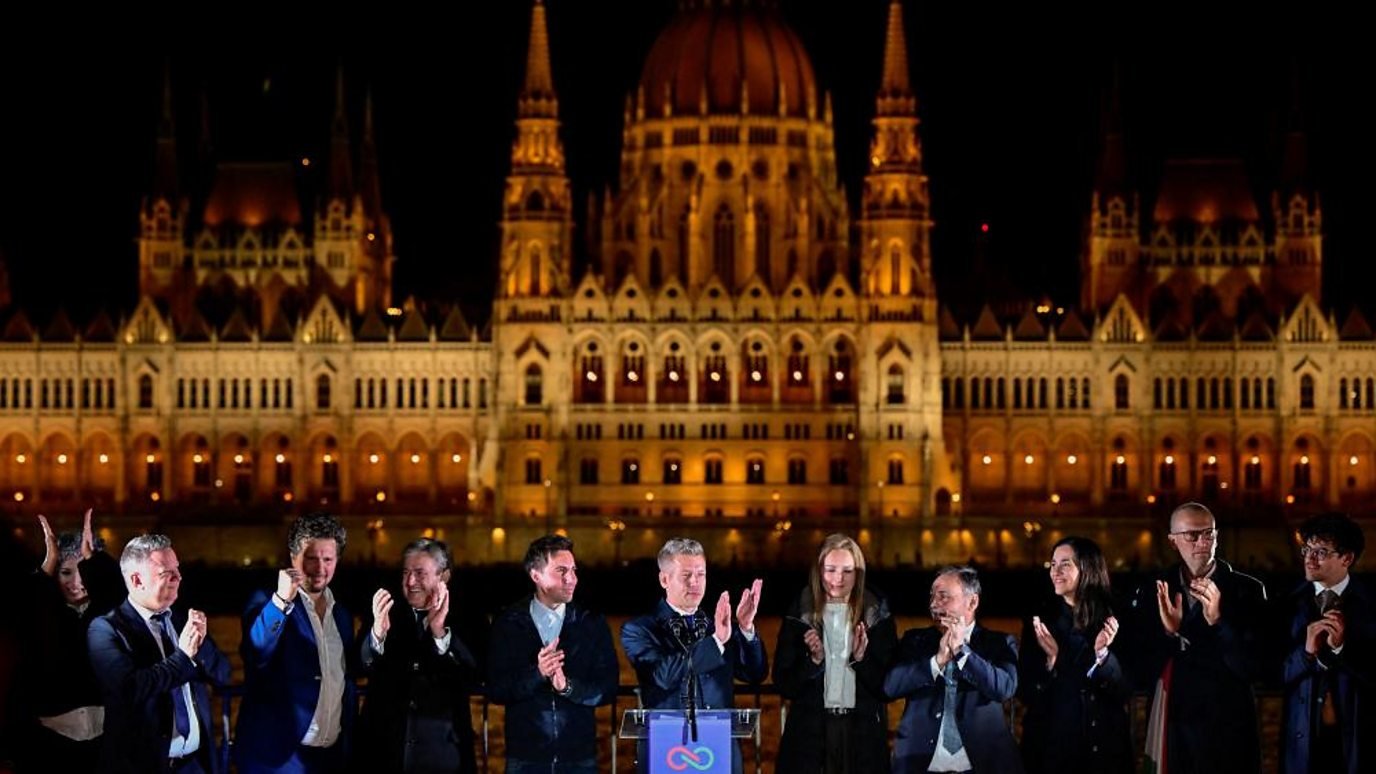

Hungary’s Prime Minister Viktor Orbán has conceded defeat in a landmark election that appears to end his 16-year hold on power, after early results and exit polls indicated a decisive victory for opposition leader Péter Magyar and his Tisza movement.
Get today's headlines by email 
Orbán acknowledged the result less than three hours after polls closed, congratulating Magyar as vote counting continued across the country. Preliminary projections suggested that Magyar’s movement could secure a two-thirds majority in parliament — a level of support that would allow sweeping political and constitutional changes.
The vote drew an exceptionally high turnout, reported to be the largest since the fall of communism in Hungary in the early 1990s.
Record turnout reshapes Hungarian politics
Hungarian voters turned out in large numbers to back Magyar’s Tisza movement, which built its campaign around pledges to tackle corruption and restore Hungary’s closer integration with the European mainstream.
The movement united a broad range of opposition forces that had previously struggled to challenge Orbán’s Fidesz party.
If confirmed, a two-thirds parliamentary majority would give Magyar the power to reverse several constitutional changes introduced during Orbán’s time in office. Critics say those reforms weakened the independence of the judiciary and strengthened Fidesz’s influence over political institutions.
Ballots were still being counted late into the evening, but early trends suggested the opposition’s lead was substantial.
European and international implications
The election had drawn considerable attention across Europe and beyond.
Orbán’s government frequently clashed with partners in the European Union, particularly over financial support for Ukraine and broader policy toward Russia. He opposed additional EU sanctions against Moscow and resisted further assistance to Kyiv, positions that often placed Budapest at odds with other EU member states.
Orbán has also faced allegations of corruption and misuse of EU funds, accusations he has consistently denied.
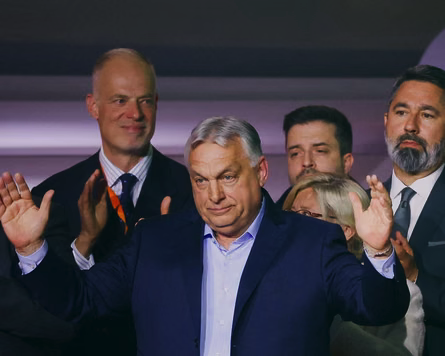
International figures became involved in the campaign as the vote approached. US Vice President JD Vance appeared alongside Orbán during the final stages of the race, while former US President Donald Trump addressed one of the prime minister’s rallies remotely.
Setback for Putin’s Influence in Europe
Orbán’s departure is widely expected to alter Hungary’s role inside the EU and NATO.
For years, analysts viewed the Hungarian leader as one of Russia’s most sympathetic partners within Western institutions. His government maintained comparatively close relations with Moscow and often resisted policies designed to isolate the Kremlin after Russia’s invasion of Ukraine.
With Orbán now leaving office, that dynamic could shift.
There has been no official reaction from Moscow to the election result. However, observers say the loss of a Kremlin-friendly leader inside the EU could weaken Russia’s influence in European decision-making.
At the same time, Hungary’s economic ties with Russia — particularly its reliance on Russian energy — are unlikely to change immediately. Analysts say these connections could continue to shape relations between Budapest and Moscow even under a new government.
Russian commentators have recently suggested that worsening economic or energy pressures in Europe could create instability within the EU. Despite the political shift in Hungary, those broader dynamics are expected to remain part of the region’s geopolitical landscape.
Join the discussion? 
Already a member? 
 Adapted by ASEAN Now. Compiled from various sources 13 April 2026
Recommended Comments
Create an account or sign in to comment