



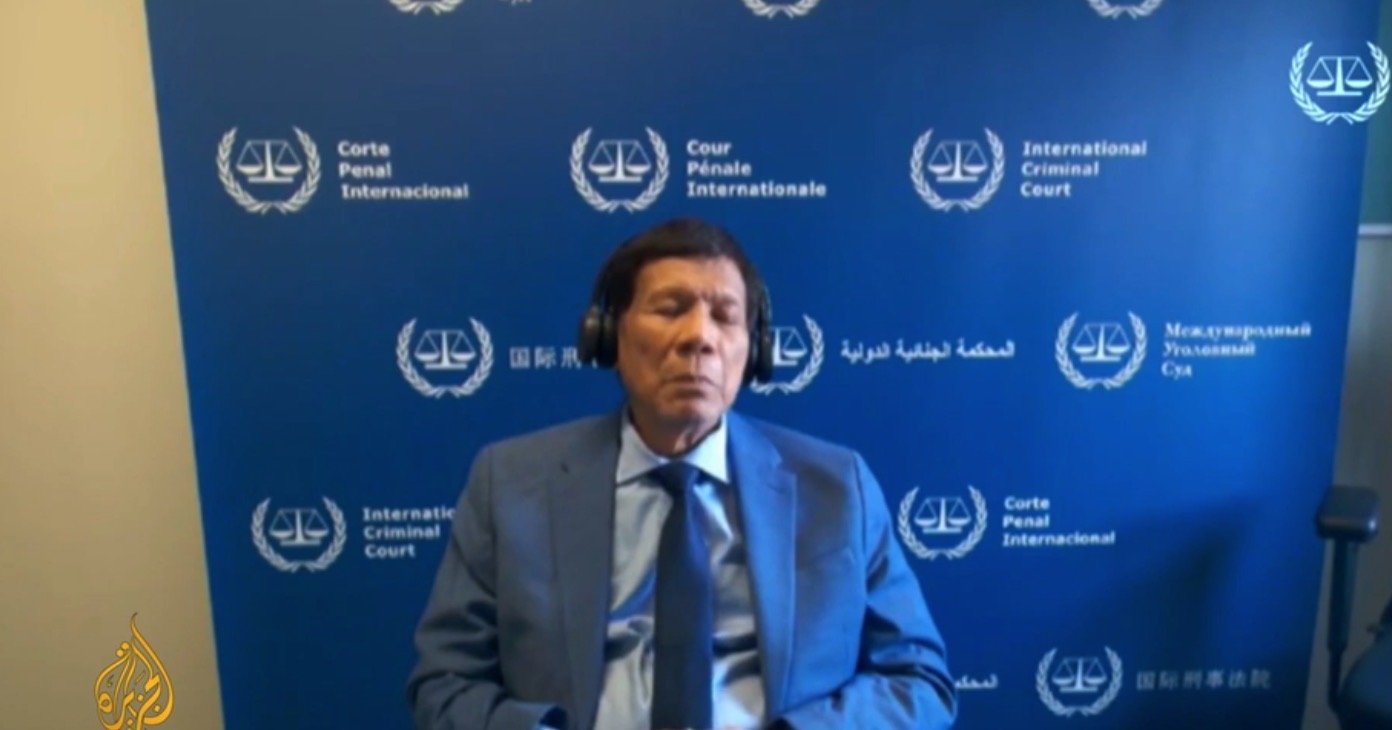

Former Philippine president Rodrigo Duterte will face trial for crimes against humanity after judges at the International Criminal Court confirmed charges linked to his anti-drug campaign, the court said on Thursday. The 81-year-old is accused of overseeing widespread killings during a controversial “war on drugs” carried out between 2011 and 2019. Pre-trial judges unanimously determined there were substantial grounds to believe Duterte committed the alleged crimes, allowing the case to proceed to a full trial.
Get today's headlines by email 
The decision follows multiple attempts by the former leader to secure his release after spending more than a year in detention.
Court rules it has jurisdiction
Duterte has rejected the legitimacy of the proceedings, arguing that the Philippines withdrew from the ICC’s founding treaty, the Rome Statute, during his presidency in 2019.
However, judges in the court’s Pre-Trial Chamber ruled that the tribunal retains jurisdiction because the alleged crimes occurred while the Philippines was still a member state.
The court also confirmed that more than 500 victims have been authorised to participate in the proceedings.
Focus on anti-drug crackdown
At the centre of the case is Duterte’s anti-drug campaign, which drew international condemnation from human rights groups.
Critics say the campaign led to the killing of thousands of suspected drug users and small-time dealers, often without trial, while failing to dismantle major trafficking networks. Police officials have long maintained that officers used lethal force only in self-defence during anti-drug operations.
Duterte has repeatedly denied any wrongdoing and dismissed the allegations against him as false.
His legal team also argued that the former president was medically unfit to stand trial, citing claims of cognitive impairment. ICC judges rejected that argument, relying on medical assessments which concluded that he is capable of participating in the proceedings and exercising his legal rights.
Political tensions behind arrest
Duterte arrived in The Hague last year after being arrested at Manila’s airport. His transfer to the court followed political tensions between his daughter, Sara Duterte, and the current Philippine president, Ferdinand Marcos Jr..
The case marks one of the most significant international legal challenges faced by a former Philippine leader.
Mixed reactions in the Philippines
The ICC’s confirmation of charges has been welcomed by several critics of Duterte’s drug war.
Former justice secretary and now lawmaker Leila de Lima, a long-time opponent of the former president, described the decision as an important step toward accountability.
She said the ruling represented a milestone for those seeking justice for victims of the anti-drug campaign, though she acknowledged that the process had taken years to reach this stage.
Human rights group Karapatan also welcomed the development, describing it as recognition of efforts by campaigners to hold officials accountable for the killings.
However, the organisation said the moment was “bittersweet”, noting that the lives lost could not be restored and that families of victims continue to struggle.
The office of the Philippine president, known as Malacañang Palace, also said it welcomed the court’s decision.
Despite the charges, Duterte continues to enjoy strong support among a section of the Philippine public, with some of his backers staging protests against his detention and the ICC case.
Join the discussion? 
Already a member? 
 Adapted by ASEAN Now. Source 24 April 2026
-
 1
1
Recommended Comments
Create an account or sign in to comment