



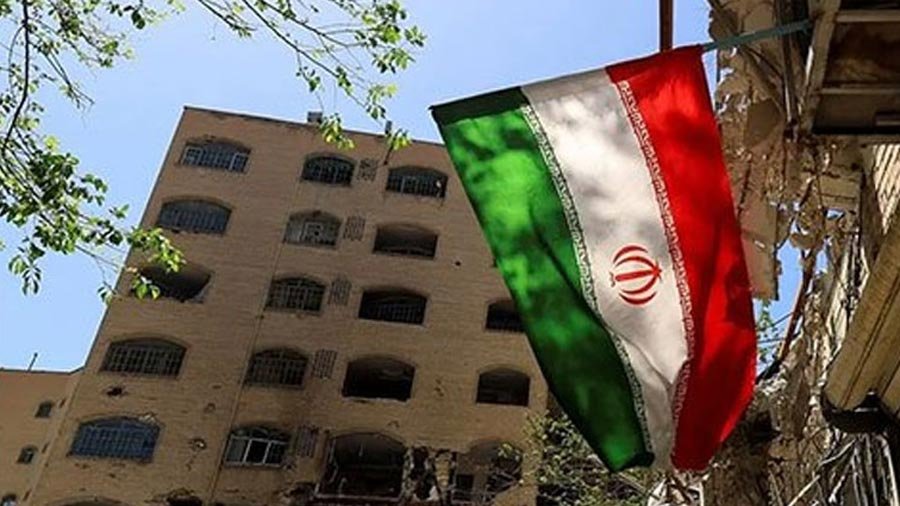

-fifthIran has accused the United States of committing a “gross violation” of the ceasefire after American forces launched new air strikes in southern Iran, raising fresh doubts over efforts to extend the truce and end the conflict.
Get today's headlines by email. 
The US Central Command said on Monday that it carried out what it described as “self-defence strikes” against Iranian missile sites and boats attempting to place mines in southern Iran.
Iran’s foreign ministry condemned the attacks as “aggressive and unjustified actions” and warned that Tehran would respond.
“Without a doubt, the Islamic Republic of Iran will not leave any evil unanswered and will not hesitate to defend the Iranian nation,” the ministry said in a statement.
Strikes near Strait of Hormuz
The reported strikes took place in Hormozgan province, which borders the Strait of Hormuz, a strategically important shipping route through which roughly one fifth of the world’s oil supplies pass.
Iran has effectively blocked the waterway since the conflict began on 28 February, contributing to a sharp rise in global energy prices.
The US military did not specify the exact locations targeted. However, an unnamed US official cited by the New York Times said the operation focused on an area near Bandar Abbas, a major southern port city that hosts an Iranian naval base on the Strait of Hormuz.
Iranian state media earlier reported explosions in Bandar Abbas, saying local authorities were investigating.
Later, Iran’s Islamic Revolutionary Guard Corps said it had shot down a US drone and fired at an American fighter jet that entered Iranian airspace, although it gave no further details about the timing of the incident.
Ceasefire under pressure
The US and Israel launched military operations against Iran on 28 February with a series of attacks that included one which killed Iran’s supreme leader.
Following weeks of fighting, a ceasefire was agreed on 8 April. The truce has largely held, despite a significant clash earlier this month.
In its statement, US Central Command said the latest strikes were intended “to protect our troops from threats posed by Iranian forces”.
The renewed military action comes as diplomatic efforts continue to preserve and potentially extend the ceasefire agreement.
US Secretary of State Marco Rubio said a deal remained possible but cautioned that negotiations would require “a few days” more.
At the weekend, President Donald Trump first indicated that an agreement was close before later saying negotiators had been instructed “not to rush into” a settlement.
Talks continue in Doha
According to US media reports, negotiators are discussing a memorandum of understanding rather than a final peace agreement. The reported proposal includes a 60-day extension of the ceasefire, reopening the Strait of Hormuz, and further negotiations over Iran’s nuclear programme.
Iran said on Monday that progress had been made in the talks but stressed that a deal was “not imminent”.
One of the main obstacles is understood to be Tehran’s demand for the release of frozen Iranian assets held overseas.
The negotiations have largely been mediated by Pakistan, while Qatari mediators have also hosted talks this week in Doha.
A source briefed on the discussions told Reuters that Iran’s central bank governor attended Monday’s meetings, where talks focused mainly on frozen Iranian funds, Tehran’s stockpile of highly enriched uranium, and the future of the Strait of Hormuz.
The US, Israel and several Western countries accuse Iran of enriching uranium to develop nuclear weapons. Iran maintains that its nuclear programme is intended solely for peaceful civilian purposes.
Join the discussion? 
Already a member? 
 Adapted by ASEAN Now. Source 27 May 2026
Recommended Comments
Create an account or sign in to comment