



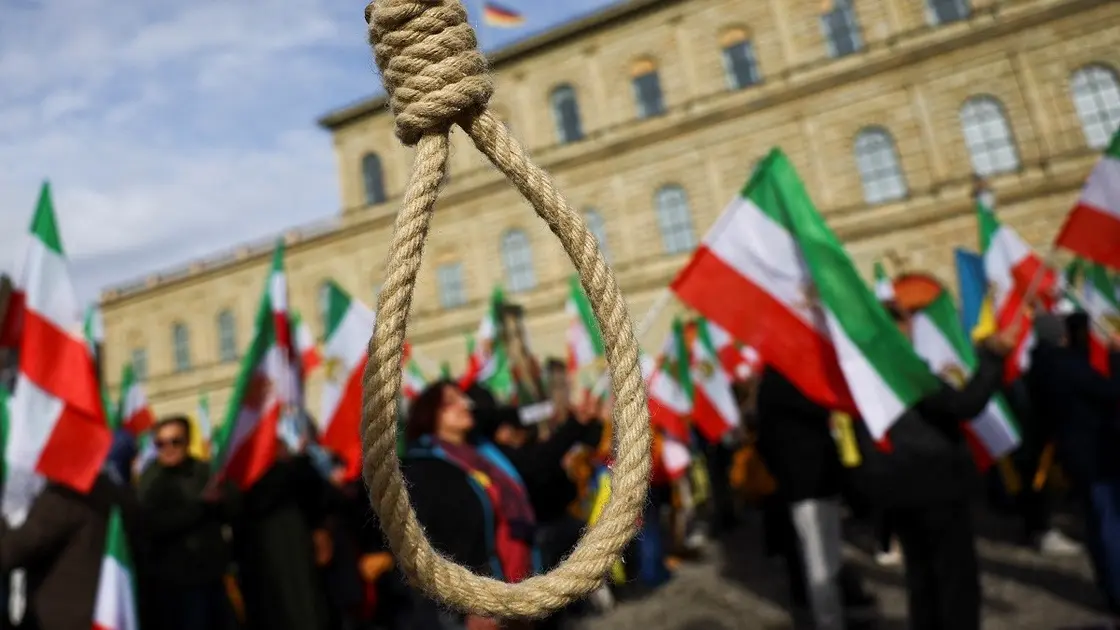

Iran carried out at least 1,639 executions in 2025, the highest annual total recorded in the country since 1989, according to a report released by two human rights organisations.
Get today's headlines by email 
The figure marks a sharp rise from 2024, when 975 executions were documented. The new report, compiled by Norway-based Iran Human Rights (IHR) and Paris-based Together Against the Death Penalty (ECPM), says the latest total represents an increase of 68%.
The organisations warn that executions could rise further as authorities respond to unrest and ongoing conflict involving Iran.
Sharp rise in executions
According to the report, the Islamic Republic carried out an average of roughly four executions per day last year. Iran remains the world’s second-largest user of the death penalty after China, where the exact number of executions is unknown but believed by activists to run into the thousands annually.
Most of those executed in Iran were convicted of drug-related offences or murder.
The report says 795 people were executed for drug crimes, a 58% increase compared with the previous year. Another 747 executions were carried out for murder convictions, representing a 79% rise.
A further 37 individuals were executed after being convicted of rape.
The report also documented the execution of at least 48 women, the highest number recorded in more than two decades and a 55% increase compared with 2024.
Human rights groups said ethnic minorities and other marginalised communities were disproportionately represented among those put to death.
More than half of the executions followed verdicts issued by Iran’s Revolutionary Courts. The organisations criticised these proceedings, describing them as lacking due process and alleging that many trials were conducted under conditions they characterised as “grossly unfair”.
Executions linked to unrest and conflict
The report notes that some executions were linked to security-related charges.
At least 57 people were executed on such charges, including two individuals connected to protests earlier in the year. Demonstrations in January were met with a sweeping crackdown by Iranian security forces that reportedly left thousands of protesters dead and tens of thousands detained.
Since the conflict with the United States and Israel began on 28 February, seven people linked to the protests have been executed, the report says.
Six others were put to death after being convicted of membership in the exiled opposition organisation Mujahideen-e Khalq (MEK). Another individual was executed after being found guilty of spying for Israel.
Calls for death penalty debate
Human rights groups say the current political climate raises concerns that the use of capital punishment could increase.
The report warns that if the Iranian government remains in power after the current crisis, executions could be used more frequently as a method of repression.
According to the organisations, at least 16 people who were sentenced to death in connection with the 2022 “Woman, Life, Freedom” protests remain at risk of execution. Another 27 people have reportedly received death sentences this year over the same protest movement, while hundreds more face charges that could carry the death penalty.
Raphaël Chenuil-Hazan, executive director of ECPM, said the issue of abolishing capital punishment should be central to discussions aimed at ending the conflict between the United States and Iran.
Mahmood Amiry-Moghaddam, director of Iran Human Rights, said the rights of Iranian citizens had not been addressed in recent negotiations and called for a moratorium on executions along with the release of political prisoners.
Join the discussion? 
Already a member? 
 Adapted by ASEAN Now. Source 14 April 2026
Recommended Comments
Create an account or sign in to comment