
Skip to content
View in the app

A better way to browse. Learn more.

Thailand News and Discussion Forum | ASEANNOW

A full-screen app on your home screen with push notifications, badges and more.

To install this app on iOS and iPadOS
  1. Tap the Share icon in Safari
  2. Scroll the menu and tap Add to Home Screen.
  3. Tap Add in the top-right corner.
To install this app on Android
  1. Tap the 3-dot menu (⋮) in the top-right corner of the browser.
  2. Tap Add to Home screen or Install app.
  3. Confirm by tapping Install.

Become a member

Become a member

Iran Rejects US Claim on Nuclear Inspectors

Iran has denied a US claim that it agreed to allow international nuclear inspectors back into the country, highlighting early differences between Washington and Tehran after a new round of negotiations aimed at securing a broader agreement following last year's conflict.

Get today's headlines by email image.png

The disagreement emerged after talks in the Swiss resort of Bürgenstock, where the two sides met for the first round of discussions on a potential final deal.

Dispute Over Nuclear Inspections

US Vice-President JD Vance said discussions with the International Atomic Energy Agency (IAEA) could begin "as soon as today" and suggested inspectors could return to Iran as early as this week.

US President Donald Trump also said on social media that Iran would agree to extensive weapons inspections.

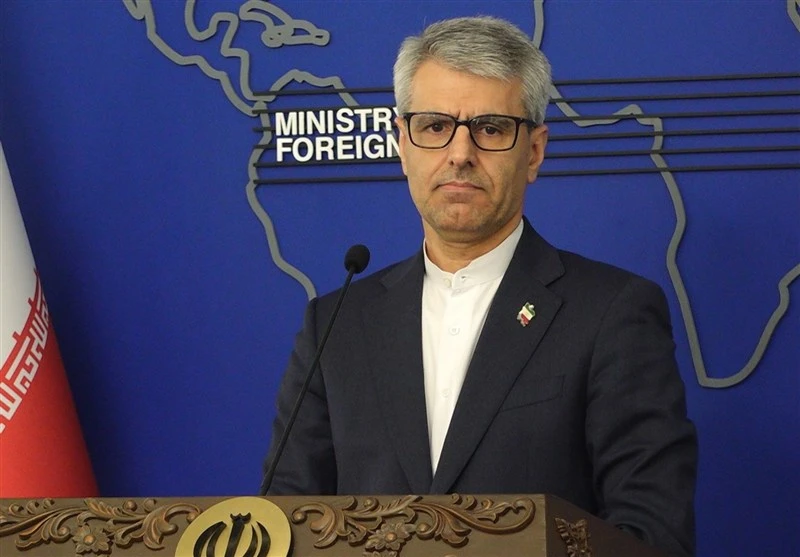
However, Iran's foreign ministry rejected those assertions. Speaking to state news agency Irna, foreign ministry spokesman Esmail Baqai said Tehran had made "no new commitments" regarding nuclear inspections.

Baqai said any future cooperation with UN inspectors would take place under existing procedures established by Iran's parliament and Supreme National Security Council.

The IAEA did not immediately comment on the conflicting claims.

Sanctions Relief and New Commitments

The diplomatic dispute came as Washington temporarily eased sanctions on Iran.

A 60-day waiver issued by the US Treasury allows the production, sale and delivery of Iranian crude oil and petrochemicals until 21 August. The measure also permits transactions involving banking, insurance and transport services and allows Iranian oil exports to be conducted in US dollars.

US Treasury Secretary Scott Bessent said the sanctions relief was granted in exchange for Iranian commitments to keep the Strait of Hormuz open and permit the return of IAEA inspectors.

The waiver marks a significant easing of restrictions that have constrained Iran's economy for decades.

Roadmap for a Broader Deal

In a joint statement, mediators Qatar and Pakistan said the talks had produced a roadmap aimed at reaching a final agreement within 60 days.

Vance described the negotiations as laying a "very good foundation". He said discussions covered reopening the Strait of Hormuz and mechanisms to prevent incidents that could threaten a regional ceasefire.

The mediators also announced the creation of a communication channel intended to reduce misunderstandings and ensure safe passage for commercial shipping through the strategic waterway.

In addition, the parties agreed to establish a "de-confliction cell" involving the US, Iran and Lebanon, with Qatar and Pakistan acting as facilitators.

Regional Tensions Remain

Iranian Foreign Minister Seyed Abbas Araghchi said Lebanon would be the first real test of the new arrangements.

Fighting between Israel and Hezbollah has largely subsided since Saturday night, with a fragile ceasefire continuing to hold.

Vance also revealed that Iranian negotiators had threatened to leave the talks after Trump warned on social media that the US could strike Iran again if tensions escalated. According to Vance, he reassured the Iranian delegation that Trump's comments were a response to Iranian rhetoric rather than a sign that negotiations were collapsing.

Speaking later from the Oval Office, Trump repeated his warning, saying the United States would act if Iran failed to honour any agreement.

Meanwhile, Iranian state media reported that specialist negotiating groups covering nuclear issues, sanctions and other areas would be established as talks move into their next phase.

Join the discussion? Create account. orange.png

Already a member? haveyr-say.png


image.png
Adapted by ASEAN Now. Source 23 June 2026

User Feedback

Recommended Comments

MikeandDow Ruby Member

MikeandDow

Advanced Member

These comments by Vance trying to save face, America Has lost this war plain and simple !!

unblocktheplanet Diamond Member

unblocktheplanet

Advanced Member

To be fair, I support IAEA inspections, for any country with radioactive materials.

When did Israel have its last inspection? See below. You have to sign a UN treaty to allow inspection. Oops!

Israel is not inspected by the International Atomic Energy Agency (IAEA) for its "suspected" nuclear weapons program. [1, 2]

  • Non-Signatory Status: Israel is not a party to the Nuclear Non-Proliferation Treaty (NPT), meaning it has no legal obligation to allow comprehensive international inspections of its strategic nuclear facilities, such as the Negev Nuclear Research Center in Dimona. [1, 2]

  • Research Reactor Exemption: The Soreq Nuclear Research Center in central Israel is fueled by uranium and permits limited visits by IAEA inspectors, but its strategic and military capabilities operate outside international oversight. [1, 2]

  • Regulatory Cooperation: While the Israel Atomic Energy Commission (IAEC) manages nuclear operations, it strictly coordinates voluntary safety peer reviews rather than weapons safeguards.

Jingthing Legendary Member

Jingthing

Advanced Member
3 minutes ago, unblocktheplanet said:

To be fair, I support IAEA inspections, for any country with radioactive materials.

When did Israel have its last inspection? See below. You have to sign a UN treaty to allow inspection. Oops!

Israel is not inspected by the International Atomic Energy Agency (IAEA) for its "suspected" nuclear weapons program. [1, 2]

  • Non-Signatory Status: Israel is not a party to the Nuclear Non-Proliferation Treaty (NPT), meaning it has no legal obligation to allow comprehensive international inspections of its strategic nuclear facilities, such as the Negev Nuclear Research Center in Dimona. [1, 2]

  • Research Reactor Exemption: The Soreq Nuclear Research Center in central Israel is fueled by uranium and permits limited visits by IAEA inspectors, but its strategic and military capabilities operate outside international oversight. [1, 2]

  • Regulatory Cooperation: While the Israel Atomic Energy Commission (IAEC) manages nuclear operations, it strictly coordinates voluntary safety peer reviews rather than weapons safeguards.

There he goes again.

It's NEVER the wrong time to HIJACK a topic to be about the evils of Israel.

Well done! The obsessiveness is truly impressive.

johng Star Member

johng

Advanced Member
25 minutes ago, Jingthing said:

It's NEVER the wrong time to HIJACK a topic to be about the evils of Israel.

^^^^^^^^^^^ Well at least you are right about that bit.

Why has Israel not allowed inspection of its 'nuclear facilities'

but at the same time insists that Iran can not have 'nuclear facilities'

hypocrisy at its finest.

Create an account or sign in to comment

Account

Navigation

Search

Search

Configure browser push notifications

Chrome (Android)
  1. Tap the lock icon next to the address bar.
  2. Tap Permissions → Notifications.
  3. Adjust your preference.
Chrome (Desktop)
  1. Click the padlock icon in the address bar.
  2. Select Site settings.
  3. Find Notifications and adjust your preference.