



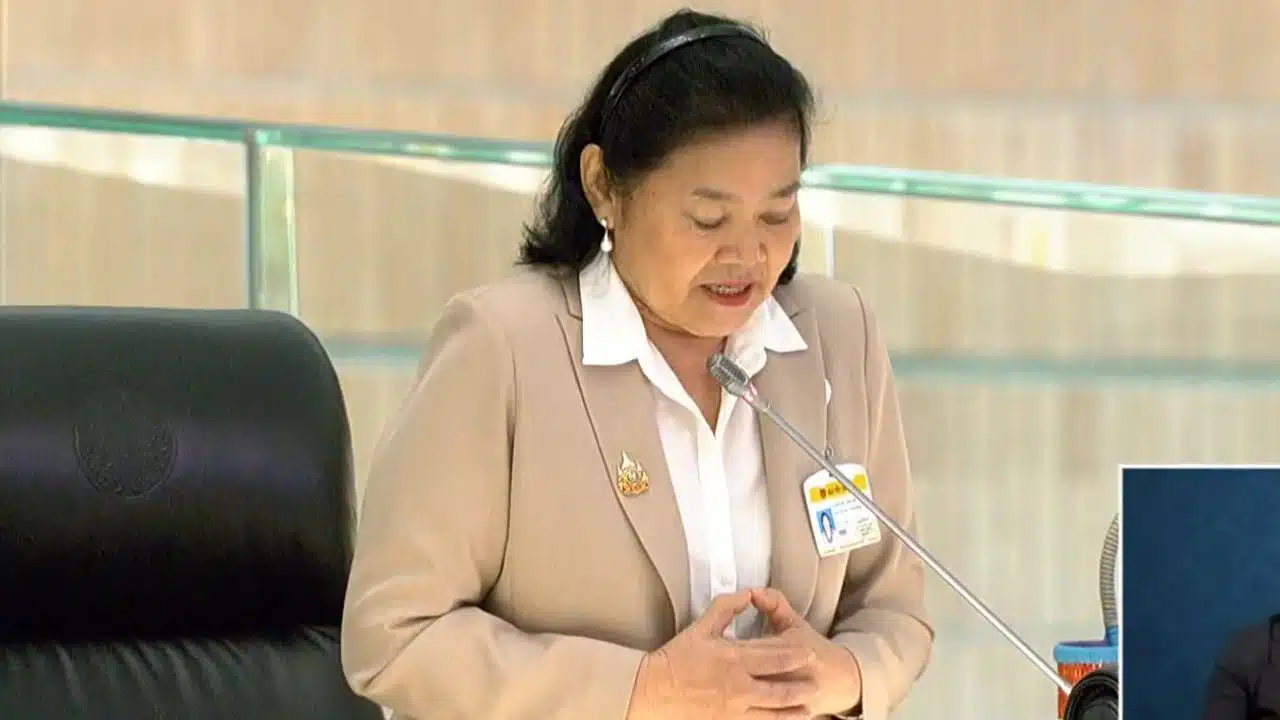

A Thai senator has proposed allowing foreign investors to own 100% of businesses they fully fund, arguing that the change could tackle nominee companies, grey capital and corruption. Senator Prathum Wongsawat raised the idea during a Senate meeting on September 1.
Prathum also suggested that Thailand could introduce investment thresholds allowing overseas investors to qualify for residency or even Thai citizenship.
Ownership rules and nominee risk
Prathum told the Senate that Thailand benefits from foreign investment, but questioned rules which generally limit foreign ownership to 49%, requiring Thai shareholders to hold the remaining 51%.
She said earlier efforts to address nominee businesses and grey foreign capital had failed to deal with the underlying causes. According to Prathum, loopholes in Thai law create opportunities for wrongdoing involving foreign investors and Thai officials seeking illicit benefits.
She argued that some businesses use nominee arrangements despite being funded entirely by foreign investors. In such cases, she said, an investor providing all the capital is unlikely to willingly hand over control of the company.
Prathum said the restrictions can push some foreigners towards Thai nominees or other attempts to bypass the law, including the use of false Thai identities and addresses, so they can operate businesses in Thailand.
She argued that these practices can contribute to grey capital, tax avoidance and opportunities for officials to seek illicit payments.
Drawing on her own investment experience in Russia, Prathum said foreign investors there could own shares in line with the full amount they had invested.
Her proposed reform would make ownership correspond to the proportion of capital invested. Under that model, a foreigner supplying 100% of a company's funding could hold 100% of its shares.
Residency and citizenship linked to investment
Prathum said legalising full foreign ownership where an investor provides all the capital could turn what she described as "grey capital" into "white capital" from the outset.
She further proposed clear investment thresholds under which foreign investors could qualify for residency or Thai citizenship.
She argued that transparent requirements for investment, residency and citizenship would close loopholes and reduce corruption and extortion, because investors operating legally would be less exposed to demands for illicit payments.
Join the discussion? 

3 September 2026
-
 1
1
-
 1
1
-
 5
5
-
 8
8
-
 1
1
-
 4
4
-
 1
1
Recommended Comments
Create an account or sign in to comment