



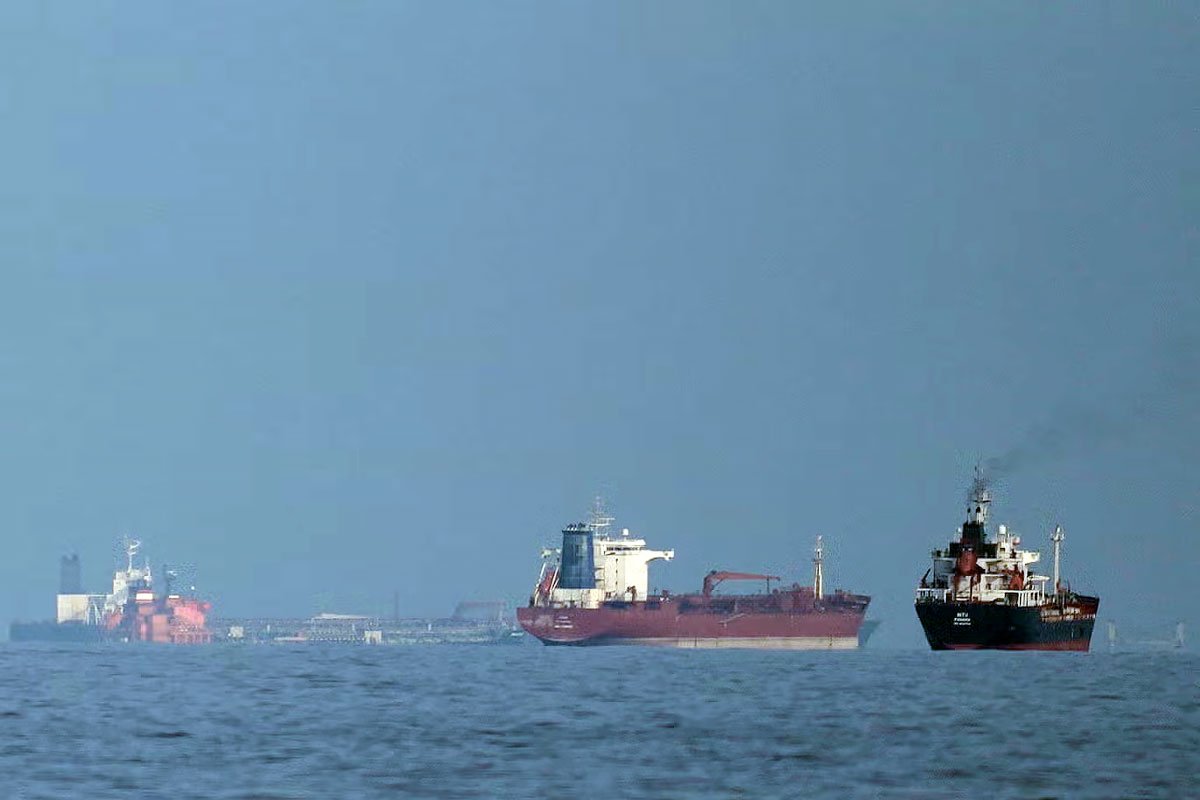

Iran has announced the reopening of the Strait of Hormuz to commercial shipping, but U.S. President Donald Trump said American naval restrictions on Iranian vessels and ports will remain in place until a broader agreement is reached with Tehran.
Get today's headlines by email 
The announcement came on Friday after Iran’s foreign minister, Abbas Araghchi, said the vital waterway was once again open to commercial traffic. The Strait of Hormuz carries roughly one-fifth of the world’s oil supplies, making it one of the most strategically important shipping routes in global energy markets.
Strait Reopens but Under Iranian Oversight
Araghchi wrote on social media that vessels would be able to pass through the strait using routes coordinated with Iranian authorities. The statement suggested Tehran would still exercise some oversight of traffic moving through the channel, though it remained unclear whether ships would be required to pay fees or meet other conditions.
Shipping data firm Kpler reported that traffic in the area was still limited to corridors requiring approval from Iranian authorities.
Initial reaction from Trump appeared positive. In a social media post, he said the strait was “fully open and ready for full passage.” Minutes later, however, the president said the U.S. naval blockade targeting Iranian ships and ports would remain “in full force” until negotiations with Iran were fully resolved.
Iran Criticises Continued U.S. Blockade
Iranian officials quickly criticised the continued blockade. A spokesman for the Iranian foreign ministry, Esmail Baghaei, said the U.S. move violated a ceasefire agreement reached earlier between Washington and Tehran.
Baghaei said Iran was committed to its obligations under the truce but warned that Tehran would respond if the United States failed to uphold its side of the agreement.
Trump said Iran, with assistance from the United States, was working to remove naval mines from the strait. The blockade had been imposed earlier in the week after Iran restricted shipping during fighting connected to the conflict involving the Lebanese militant group Hezbollah.
The ceasefire, which had been brokered with mediation from Pakistan, paused nearly seven weeks of hostilities involving Iran, Israel and the United States.
Nuclear Talks Remain Uncertain
Negotiations between Washington and Tehran continued to face difficulties. Direct talks held the previous weekend ended without agreement, with the sides still divided over Iran’s nuclear programme and other issues.
Trump suggested that a second round of discussions could take place soon, telling the news outlet Axios that Iranian officials were seeking further talks and that a meeting might occur over the weekend.
Oil markets responded to the developments, with prices falling on expectations that a deal could ease tensions affecting global energy supply.
However, the announcement about reopening the strait appeared to face internal questions within Iran. Two Iranian semi-official news agencies, including Fars and Mehr, questioned the clarity of the decision and said further confirmation from senior leadership might be required.
Iran’s Supreme National Security Council has recently taken on a central role in decision-making, amid uncertainty surrounding the status of the country’s supreme leader, Mojtaba Khamenei, who was reportedly injured earlier in the conflict.
Lebanon Ceasefire Raises Hopes for Wider Deal
At the same time, a 10-day ceasefire between Israel and Hezbollah in Lebanon appeared to be holding, raising hopes that broader diplomatic progress might be possible.
Trump said the United States had warned Israel against launching further offensive strikes in Lebanon, though U.S. officials later clarified that Israeli forces could still act in self-defence.
Israel’s prime minister, Benjamin Netanyahu, said his government had agreed to the ceasefire at Trump’s request but insisted Israel’s campaign against Hezbollah was not yet finished.
Israeli Defence Minister Israel Katz said Israeli forces would continue to hold territory in southern Lebanon, including a buffer zone extending about 10km into the country.
Celebrations were reported in Beirut after the truce took effect, although sporadic shelling and an Israeli strike were reported within hours, leaving one person dead and several wounded, according to Lebanese health authorities.
Mediators working on a broader settlement are focusing on three major issues: Iran’s nuclear programme, security around the Strait of Hormuz and compensation for wartime damage.
Trump also claimed Iran had agreed to hand over its stock of enriched uranium. Neither Iranian officials nor mediators involved in the talks have confirmed such an arrangement.
Join the discussion? 
Already a member? 
 Adapted by ASEAN Now. Source 18 April 2026
Recommended Comments
Create an account or sign in to comment