



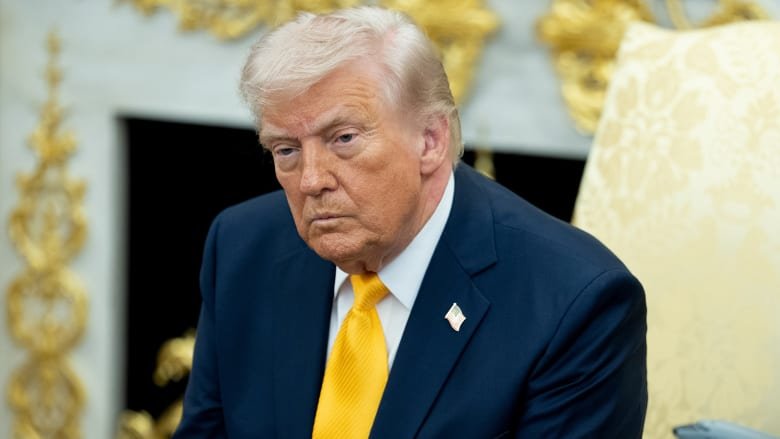

The war involving the United States, Israel and Iran has entered its eighth week, placing President Donald Trump under growing pressure as efforts to resolve the conflict remain uncertain and the closure of the Strait of Hormuz continues to disrupt global oil supplies.
Get today's headlines by email 
When US warplanes joined Israeli forces in launching strikes against Iranian leadership and military targets, the operation was expected to be swift. The military campaign succeeded in damaging Iranian command structures, but the political outcome anticipated by Washington has yet to materialise.
Iran remains defiant and has shut the Strait of Hormuz, a key maritime route through which roughly one-fifth of the world’s oil supply normally passes. The closure has intensified pressure on global energy markets and raised fuel prices, including in the United States.
Washington responded by imposing its own blockade aimed at restricting Iran’s oil exports. The move is estimated to be costing Tehran about $500 million a day while threatening the country’s long-term energy production. However, diplomatic negotiations aimed at resolving the standoff have stalled.
Strait of Hormuz becomes central battleground
Analysts say the conflict has evolved beyond its initial objectives. Aaron David Miller, a former US diplomat and Middle East negotiator now with the Carnegie Endowment for International Peace, said the confrontation had shifted from a conflict involving the United States, Israel and Iran into a wider economic crisis.
Rising energy costs are already affecting American consumers, with petrol prices approaching a four-year high. The increases come as the United States prepares for midterm elections that could determine control of Congress.
One possible diplomatic option under discussion would involve a temporary reopening of the Strait of Hormuz while postponing negotiations over Iran’s nuclear programme, including the fate of more than 400 kilograms of highly enriched uranium and Tehran’s future right to enrich uranium.
But talks have proved difficult. According to reports, Iran has indicated it would reopen the strait only if ships pay transit fees and has shown little willingness to negotiate on its nuclear programme.
Trump has publicly suggested that Iran is under internal strain. In social media comments, he said the country was struggling to determine its leadership after recent strikes and claimed Tehran wanted the waterway reopened.
Yet earlier rounds of negotiations ended without agreement, and attempts to send US envoys to the region — including businessman Steve Witkoff and former White House adviser Jared Kushner — were reportedly halted by the president.
Comparisons with earlier nuclear deal
Officials in Washington are wary of concluding a deal that could highlight how US objectives in Iran have fallen short. Any agreement could invite comparisons with the Joint Comprehensive Plan of Action, the 2015 nuclear accord negotiated during the presidency of Barack Obama.
Trump withdrew the United States from that agreement in 2018, arguing it failed to permanently halt Iran’s nuclear ambitions.
Former negotiators involved in the earlier accord say Iran’s decision to close the Strait of Hormuz has altered the balance of the current crisis, giving Tehran leverage that some analysts describe as potentially more useful than possessing a nuclear weapon.
Military option carries risks
One alternative being discussed is a US-led operation to reopen the strait by force. Such a mission would involve escorting oil tankers through the waterway while protecting them from attacks by Iranian boats, missiles, drones and mines.
Supporters of the plan say naval escorts, destroyers and air support could help shield tankers from Iranian forces. However, analysts caution that some attacks would likely penetrate defences and cause casualties.
Another, more extreme option — a large-scale attack on Iran’s infrastructure or a ground invasion — is viewed by many experts as even riskier and unlikely to guarantee political concessions from Tehran.
Leadership vacuum adds uncertainty
The conflict has also created instability within Iran’s leadership. Airstrikes killed Iran’s long-time supreme leader Ali Khamenei and injured his son and successor Mojtaba Khamenei, leaving rival factions competing for influence.
Critics in Washington say the situation reflects the consequences of the military campaign launched by the United States and Israel, led by Prime Minister Benjamin Netanyahu.
Some analysts warn the conflict is now contributing to economic pressures in the United States as well as geopolitical instability, increasing scrutiny of the administration’s strategy as the war continues with no clear resolution in sight.
Join the discussion? 
Already a member? 
 Adapted by ASEAN Now. Source 1 May 2026
Recommended Comments
Create an account or sign in to comment