



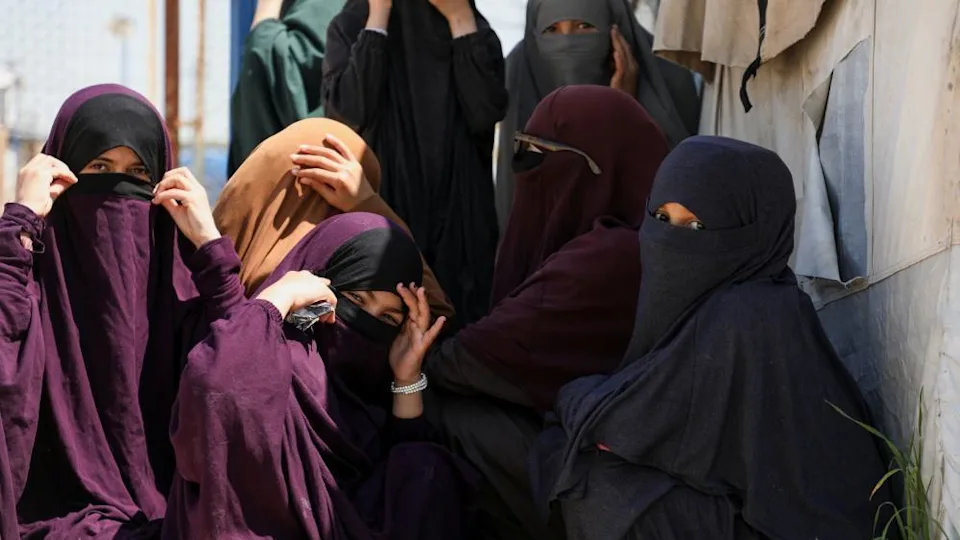

Australia is grappling with renewed debate over security, justice and humanitarian responsibility after several women connected to the Islamic State group returned from detention camps in Syria.
Get today's headlines by email 
Four women arrived in Australia this week after years held in camps housing relatives of fighters from the militant group. Their arrival was swiftly followed by arrests, reigniting controversy in a country still shaken by a deadly attack linked to extremist ideology late last year.
Three of the women were detained soon after landing, while a fourth faced intense media attention with her young children as authorities continued investigations into her case.
Government officials and the public have long been divided over whether Australians who travelled to territory once controlled by the Islamic State should be allowed to return.
Background to the returns
The women had been living for years in camps in northern Syria that held thousands of relatives of Islamic State fighters after the militant group lost its territorial control following a campaign led by the United States and local allies.
For several governments, including Australia and the United Kingdom, the camps have presented a complex dilemma involving national security concerns, legal obligations to citizens and humanitarian considerations.
Australia has resisted calls for the repatriation of many of its nationals held in these camps. However, citizens retain the legal right to return to their home country.
The debate has become more intense following Australia’s deadliest terrorist attack in recent years. In December, a mass shooting at a Jewish event in Bondi Beach, allegedly inspired by Islamic State ideology, killed 15 people.
Prime Minister Anthony Albanese has repeatedly expressed strong condemnation of the militant group. “If you make your bed, you have to lie in it,” he has said in reference to those who travelled to join it.
Lives in Syrian camps
Many of the Australians who travelled to Syria were young when they left, and some say they were influenced or coerced by extremist partners.
One of the women who returned, Janai Safar, 32, arrived in Sydney with her nine-year-old son and has since been charged with terrorism offences.
Another returnee, Zahra Ahmed, 33, came back to Melbourne alongside her sister Zeinab, 31, and their mother Kawsar Abbas, 54. The family has said they became trapped in Syria after travelling there for a wedding without knowing the groom had pledged allegiance to Islamic State.
Authorities have charged Abbas and Zeinab Ahmed with crimes against humanity linked to slavery. Zahra Ahmed remains under investigation.
The nine children who returned with the group will undergo community integration programmes and initiatives designed to counter violent extremism, according to the Australian Federal Police.
Twenty-one Australian citizens — seven women and fourteen children — remain in the Al-Roj camp in northeastern Syria.
National divisions
The return of individuals linked to the militant group has triggered strong reactions across Australia.
Some members of the public argue those who travelled to join Islamic State should remain in Syria.
Others, including survivors of the group’s violence who now live in Australia, have expressed concern about encountering former supporters of the organisation.
At the same time, advocates argue the children in the camps deserve protection and opportunities for rehabilitation.
Sydney doctor Jamal Rifi, who has helped provide telehealth services to families in the camps and assisted with documentation for travel, has urged authorities to allow them to return and face Australian courts if necessary.
“If those women have done anything wrong by our legal system… let the law deal with them,” he said earlier this year.
Legal limits on preventing returns
Australia’s government says it did not facilitate the latest returns and does not intend to organise further repatriations.
Home Affairs Minister Tony Burke said authorities face “very serious limits” on preventing citizens from returning.
In one case, an unnamed woman was barred from coming back earlier this year following national security advice, but officials say the legal threshold for such measures is high.
Opposition politicians have called for stronger laws to prevent further returns, reflecting heightened public concern after the December attack.
Analysts say the issue has become increasingly politically sensitive.
For campaigners seeking the return of the remaining Australians in Syrian camps, the latest arrivals represent only a partial step. Many of the women and children still detained there face uncertain futures as authorities weigh security risks against legal and humanitarian obligations.
Join the discussion? 
Already a member? 
 Adapted by ASEAN Now. Source 9 May 2026
Recommended Comments
Create an account or sign in to comment