



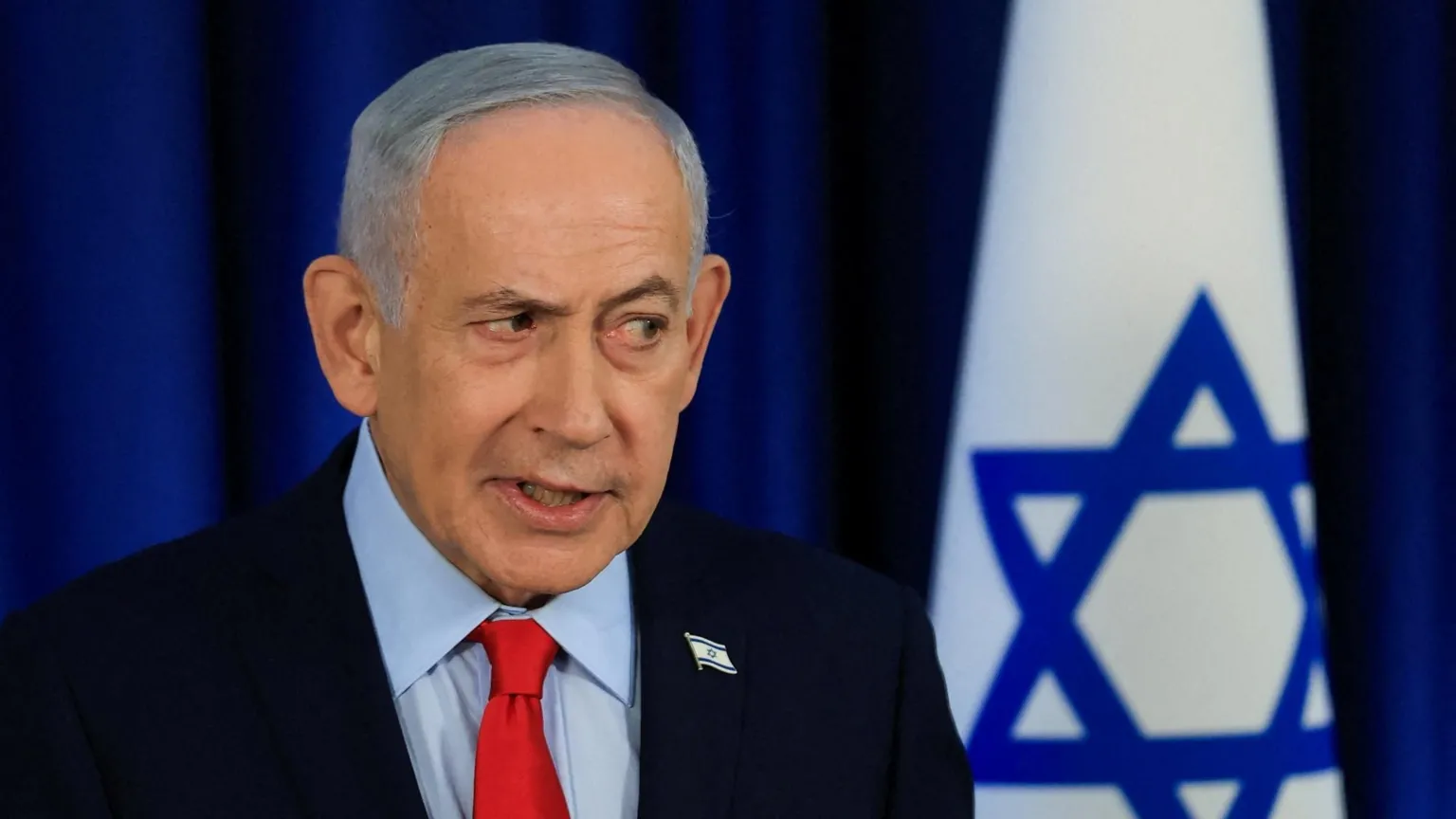

Israel has endorsed a ceasefire between the United States and Iran after five weeks of conflict, but Prime Minister Benjamin Netanyahu has signalled that Israel’s broader war goals remain unresolved.
Get today's headlines by email 
When the Israeli leader announced the joint Israeli-US military campaign against Iran in late February, he projected confidence that the operation would neutralise what he described as the threat posed by Iran’s ruling clerical system.
However, the tone from Netanyahu’s office following the ceasefire announcement was notably restrained. The statement emphasised that the agreement had been declared by US President Donald Trump rather than by Israel, contrasting sharply with more celebratory claims of victory from Washington and Tehran.
Speaking on Wednesday, Netanyahu described the campaign as a success but stressed that the ceasefire did not necessarily mark the end of the conflict. He said Israel still had further objectives that could be achieved either through diplomatic arrangements or by resuming military action.
Unfinished War Goals
At the start of the conflict, Netanyahu said the aim of the campaign was to eliminate the threat posed by Iran’s leadership under the Islamic Republic.
While Israeli and US strikes killed several senior Iranian figures, including Iran’s Supreme Leader Ali Khamenei, Iran’s armed forces remain operational and the governing structure of the Islamic Republic has not collapsed.
Key questions also remain about the status of Iran’s nuclear programme and its stockpile of enriched uranium. Iran has continued to launch ballistic missile attacks on Israel during the conflict, even as its missile capabilities have been partially degraded.
Missile alerts sounded in Jerusalem overnight following Trump’s ceasefire announcement, with the Israel Defense Forces reporting multiple launches from Iranian territory.
Analysts say the outcome suggests Israel and the United States may have overestimated their ability to decisively weaken Iran or trigger a change in its political system.
Political Pressure at Home
Israeli journalist Anshel Pfeffer, who has written extensively about Netanyahu, said the prime minister had referred only to a temporary “suspension” of hostilities rather than the end of the war.
He suggested Netanyahu’s inability to achieve his declared objectives could create political difficulties and potentially strain relations with Washington if Israel felt it had limited influence over the ceasefire negotiations.
Until now, Netanyahu and Trump had publicly maintained a close alliance during the conflict. But analysts say their priorities may diverge if a lasting settlement emerges from negotiations between the United States and Iran.
If the final agreement reflects the “10-point proposal” from Tehran referenced by Trump, some observers believe Iran could claim a strategic victory.
Opposition leader Yair Lapid sharply criticised the government, saying Israel had been excluded from key negotiations affecting its security.
“The army did everything they asked of it,” Lapid said, arguing that the government had failed politically and strategically.
Israel is approaching an election year, raising the possibility that Netanyahu could face voters within months amid growing debate about the war’s outcome.
Ceasefire Dispute Over Lebanon
Another major uncertainty concerns whether the ceasefire applies to fighting in Lebanon, where Israel has been battling the Iran-backed armed group Hezbollah.
Iran and Pakistani Prime Minister Shehbaz Sharif, who helped mediate the agreement, have said the ceasefire includes Lebanon. But Netanyahu’s office insists the deal does not cover that front.
Israeli forces carried out large-scale air strikes in Lebanon on Wednesday, which Lebanese officials said killed at least 182 people and injured hundreds more, including in the capital Beirut.
Trump later told a journalist that Lebanon was not part of the ceasefire arrangement because of Hezbollah’s involvement, describing the fighting there as a separate confrontation.
The dispute has raised fears that the fragile truce between Washington and Tehran could collapse if regional tensions escalate further.
How Netanyahu manages the political fallout at home and whether Trump continues to support Israel’s position could determine whether the ceasefire holds in the coming weeks.
Join the discussion? 
Already a member? 
 Adapted by ASEAN Now. Source 9 April 2026
Recommended Comments
Create an account or sign in to comment