



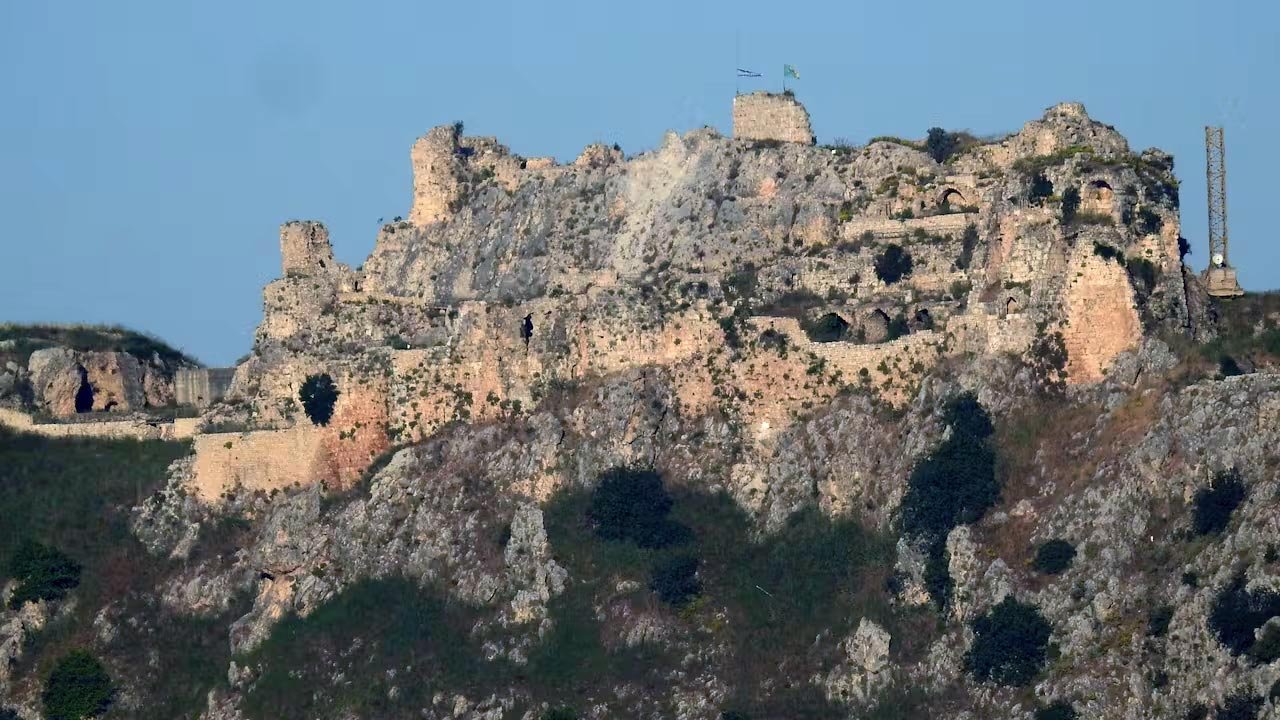

Israeli forces have captured the strategic Beaufort Castle in southern Lebanon, as the military expands its ground offensive against Hezbollah and pushes deeper into Lebanese territory.
Get today's headlines by email 
Prime Minister Benjamin Netanyahu described the seizure of the hilltop fortress as a "decisive stage" in Israel's campaign, while Lebanon accused Israel of escalating the conflict and inflicting collective punishment on civilians.
Historic Fortress Falls Again
Perched above the Litani Valley, Beaufort Castle has been a key military stronghold for centuries. Built by Crusaders around 900 years ago, the fortress overlooks large parts of southern Lebanon and has long held strategic importance.
Israel first captured the site during the 1982 Lebanon War before withdrawing from the area in 2000 as it ended its occupation of a self-declared security zone in southern Lebanon.
Following the latest operation, Netanyahu said Israel was taking the initiative across multiple fronts, including Lebanon, Gaza and Syria. He said the objective was to expand Israeli control over areas previously held by Hezbollah.
Defence Minister Israel Katz highlighted the symbolic value of the capture, noting that the Golani Brigade had once again raised the Israeli flag over the fortress more than four decades after first seizing it.
Ground Forces Push Further North
The capture comes as Israeli troops advance beyond the Litani River, the line that had largely defined the scope of earlier ground operations.
The Israel Defense Forces (IDF) also broadened evacuation warnings across southern Lebanon, urging residents to leave areas south of the Zahrani River. Military officials warned civilians to stay away from Hezbollah positions, facilities and weapons infrastructure.
An IDF spokesman said a significant number of ground troops were taking part in an operation that is continuing to expand into additional areas of southern Lebanon.
Israeli officials say the offensive has intensified in response to increased missile and drone attacks by the Iranian-backed Hezbollah movement on Israeli troops and communities near the border.
Fighting Continues on Both Sides
The conflict showed no signs of easing over the weekend.
Lebanon's Health Ministry said an airstrike near Hiram Hospital in the southern city of Tyre injured 13 medical workers and caused substantial damage to the facility.
Israel confirmed that another soldier had been killed, while schools in several northern communities were closed as a precaution amid security concerns.
On Saturday, Hezbollah fired around 25 projectiles towards northern Israel, prompting opposition politicians to demand stronger measures to protect border residents.
Lebanese Prime Minister Nawaf Salam accused Israel of pursuing a "scorched-earth policy" and carrying out collective punishment in southern Lebanon.
International Concern Grows
The latest escalation has prompted renewed international concern.
France has requested a meeting of the United Nations Security Council to discuss Israeli military operations in Lebanon.
President Emmanuel Macron called for an immediate end to the fighting, saying the current escalation in southern Lebanon could not be justified. French Foreign Minister Jean-Noël Barrot also criticised the offensive.
Both Israel and Lebanon accuse each other of violating a ceasefire agreement that took effect last month and has since been extended twice. While the truce remains formally in place, continued attacks by both sides have undermined its effectiveness.
Despite the deteriorating situation, Israeli and Lebanese delegations are expected to hold a fourth round of talks in Washington this week.
Lebanese officials view negotiations as the only viable route towards reducing tensions, although Hezbollah is not participating in the discussions.
The conflict intensified in March after Hezbollah launched rockets into Israel following an Israeli strike that killed Iranian Supreme Leader Ali Khamenei. Israel responded with a major air campaign and ground invasion.
Lebanese authorities say more than 3,300 people have been killed since then, while Israel reports 25 military deaths.
Join the discussion? 
Already a member? 
 Adapted by ASEAN Now. Source 1 June 2026
Recommended Comments
Create an account or sign in to comment