



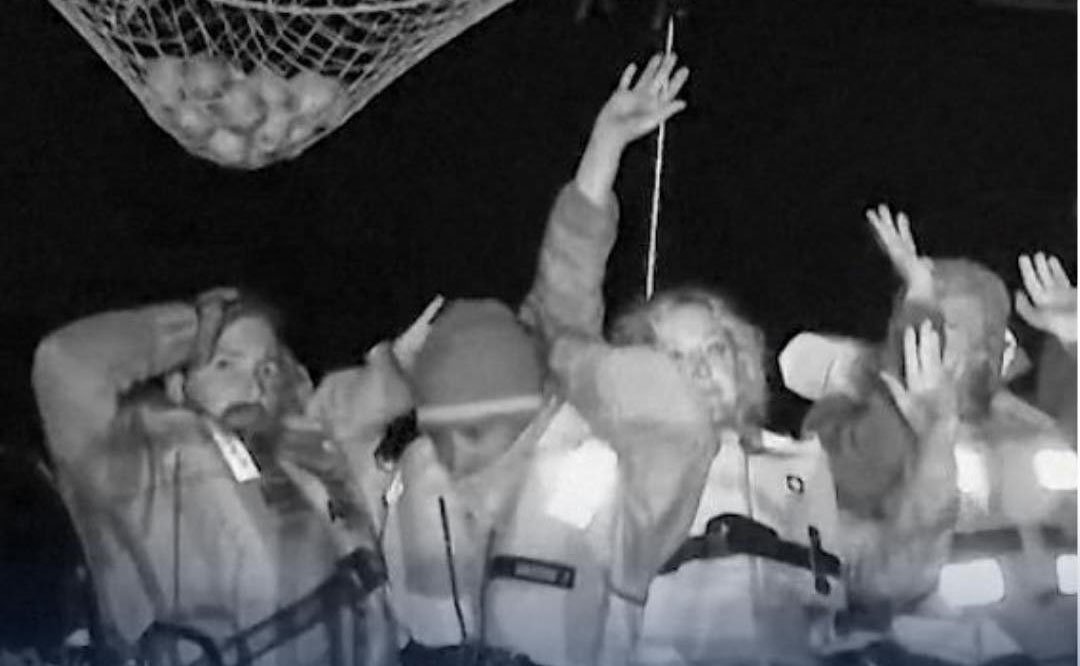

Israeli naval forces intercepted a flotilla carrying aid to Gaza near the Greek island of Crete and detained about 175 activists, organisers and officials said on Thursday.
Get today's headlines by email 
The vessels were part of the Global Sumud Flotilla (GSF), a campaign organised by pro-Palestinian activists seeking to challenge Israel’s naval blockade of Gaza. Organisers said Israeli forces boarded several boats in international waters during an overnight operation north-west of Crete, more than 965km (600 miles) from Gaza.
Israel said the interception was lawful and carried out without casualties.
Flotilla operation and Israeli response
The flotilla had departed two weeks earlier, with 58 vessels joining the convoy from Spain, France and Italy. According to GSF organisers, 22 boats carrying humanitarian aid were intercepted during the Israeli operation.
In a statement, the group accused Israeli forces of conducting a “violent raid in international waters”, claiming that engines were damaged and communications jammed during the boarding.
Organisers said more than 180 civilians from several countries had been affected. They alleged that after detaining participants, Israeli forces left some boats disabled in rough conditions as a storm approached.
Israel rejected the accusations. Its foreign ministry described the flotilla as a “public relations stunt” intended to undermine a proposed Gaza peace plan promoted by US President Donald Trump.
The ministry said Israeli forces had detained about 175 activists and transferred them onto Israeli naval vessels. Foreign Minister Gideon Saar said those detained would be taken ashore in Greece later on Thursday.
According to Israel, the operation took place peacefully and did not result in casualties. Officials added that an initial inspection of the boats had uncovered materials including drugs and contraceptives.
The ministry also accused organisers of attempting to block an Israeli merchant ship and alleged that the flotilla’s organisers were working with the Palestinian armed group Hamas.
Greek response and political reactions
Greek officials said the interception occurred outside Greece’s territorial waters and that authorities had not been consulted beforehand.
Government spokesman Pavlos Marinakis said Israeli naval vessels were operating in international waters at the time. He added that Greece’s coast guard had been informed by Israeli counterparts that several flotilla vessels had been left adrift while the activists were transferred to Israeli warships.
Marinakis said Greek authorities were on alert but could only intervene in international waters during search and rescue operations.
Opposition politician Dimitris Mantzos called on the Greek government to explain its response to what he described as an illegal act.
International criticism
Several European figures criticised the seizure.
Italian Prime Minister Giorgia Meloni called for the immediate release of Italian citizens detained during the operation. Italian media reported that 24 Italians were among those held.
Meloni also urged Israel to respect international law and ensure the safety of those involved.
A spokesperson for the European Union’s foreign affairs service, Anouar El Anouni, reiterated the bloc’s call for Israel to comply with international humanitarian and maritime law.
Gaza humanitarian concerns
The flotilla’s organisers say their mission aims to challenge Israel’s naval blockade of Gaza and push for the creation of a permanent humanitarian corridor into the territory.
Israel maintains that aid deliveries into Gaza are permitted and says there is no cap on the volume of assistance entering through authorised crossings.
However, a senior United Nations official warned this week that humanitarian conditions in Gaza remain severe. Khaled Khiari, the UN assistant secretary-general for the Middle East, told the Security Council that the territory’s population of about 2.1 million people continues to face deadly strikes and deteriorating living conditions.
He said aid access had improved somewhat in recent weeks but remained unpredictable, with restrictions on some supplies and limited crossing points hampering relief efforts.
The current conflict began after Hamas led an attack on southern Israel on 7 October 2023, in which around 1,200 people were killed and 251 taken hostage. Israel’s military campaign in Gaza has since killed more than 72,600 people, according to Gaza’s Hamas-run health ministry.
Join the discussion? 
Already a member? 
 Adapted by ASEAN Now. Source 1 May 2026
Recommended Comments
Create an account or sign in to comment