



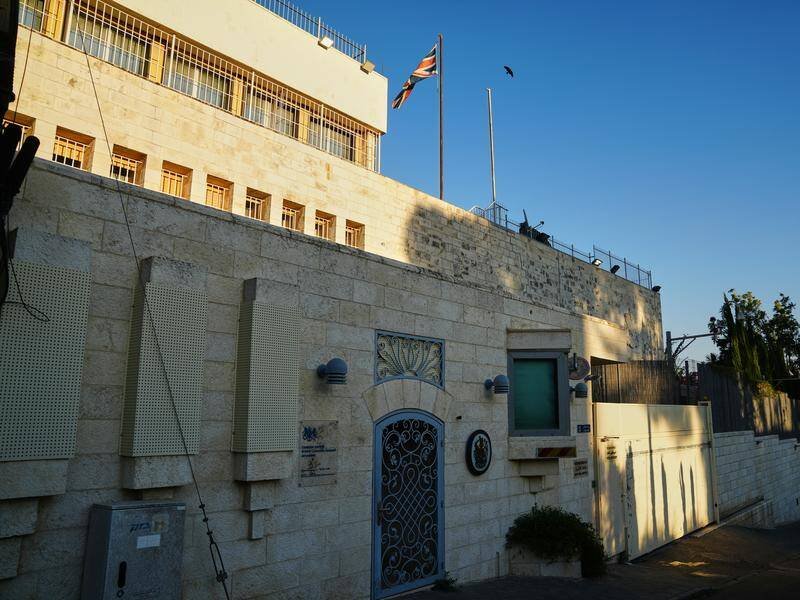

Israel has ordered the closure of the British consulate in occupied East Jerusalem, citing new UK sanctions on goods linked to illegal Israeli settlements.
Israel’s foreign minister, Gideon Sa’ar, said the consulate would be shut in response to the “sweeping” measures announced by the UK and described as retaliatory steps. He also announced entry bans for a number of UK MPs.
Closure and Entry Bans
The consulate, located in the Sheikh Jarrah area, deals with Palestinian issues in the occupied territories, including Gaza, the West Bank and Jerusalem. The British embassy in Tel Aviv hosts the UK ambassador to Israel.
Sa’ar’s announcement came as diplomatic ties between the two countries have sharply deteriorated.
Jerusalem Sovereignty Statement
Sa’ar said Jerusalem is Israel’s undivided capital and argued that foreign activity in the city must go through what Israel considers approved channels.
“United Jerusalem is the capital of Israel and is under its full sovereignty,” Sa’ar said. “Any foreign activity in the area must be conducted through accepted and agreed channels and without violating Israel’s sovereignty.”
Alongside the consulate closure, the Israeli foreign minister said Israel would stop British involvement in the training of Palestinian security forces on the West Bank. He also said Britain would be excluded from a US-led Gaza coordination mission based in Israel.
UK Sanctions and Retaliatory Claims
The entry bans cover mostly leftwing MPs, including former Labour leader Jeremy Corbyn, Your Party MP Zarah Sultana, Labour MPs Diane Abbott, Naz Shah, John McDonnell and Richard Burgon, and Green MPs Hannah Spencer, Carla Denyer, Siân Berry and Ellie Chowns.
Sa’ar linked the measures to comments by Ed Miliband, describing violent activity by Jewish settlers on the occupied West Bank as “ethnic cleansing” carried out with what he said was the tacit backing of the Netanyahu government.
He accused the UK of interfering in Israel’s affairs and political process, adding that sanctions were not the route Israel wanted. Sa’ar said: “Sanctions are not a solution – dialogue is. I say to all foreign governments: Stop. Step away from the dead-end of sanctions and boycotts, and turn toward constructive dialogue and toward cooperation.”
The UK sanctions were coordinated with 11 other countries, including France and Canada.
Israel said Britain’s actions were “morally distorted” and set against Israel’s government. In a further example of the wider political friction, Itamar Ben-Gvir, Israel’s hardline public security minister and a settler leader, urged Prime Minister Benjamin Netanyahu to recognise Argentina’s claim to the Falkland Islands.
International Reactions and Labour’s Shift
The US response diverged from those of the other coordinating countries. The US ambassador to Israel, Mike Huckabee, who has long backed settlement expansion, said the UK sanctions were “discrimination against the Jewish people” and warned the UK could face “repercussions or retaliations” from the US.
In contrast, US secretary of state Marco Rubio said Washington would not block imports from Israeli settlements in the Palestinian territory and did not want moves that could destabilise the West Bank.
Israel has faced repeated warnings from successive British governments over the risk of international isolation and sanctions linked to settlement activity in the occupied territories. Those warnings have intensified as violent settler activity has increased.
Britain’s Labour government previously sanctioned some Israeli settlers and illegal outposts after violence against Palestinians and unlawful development in the West Bank. In a change of approach, Miliband said on Tuesday that the UK considers Israel’s occupation of the West Bank illegal, not only the settlements.
The UK and partners said difficulties in agreeing an EU-wide position led countries to make separate decisions, culminating in a joint statement by 12 countries that they were starting a process for tougher sanctions.
Join the discussion? 

9 September 2026
-
 2
2
Recommended Comments
Create an account or sign in to comment