



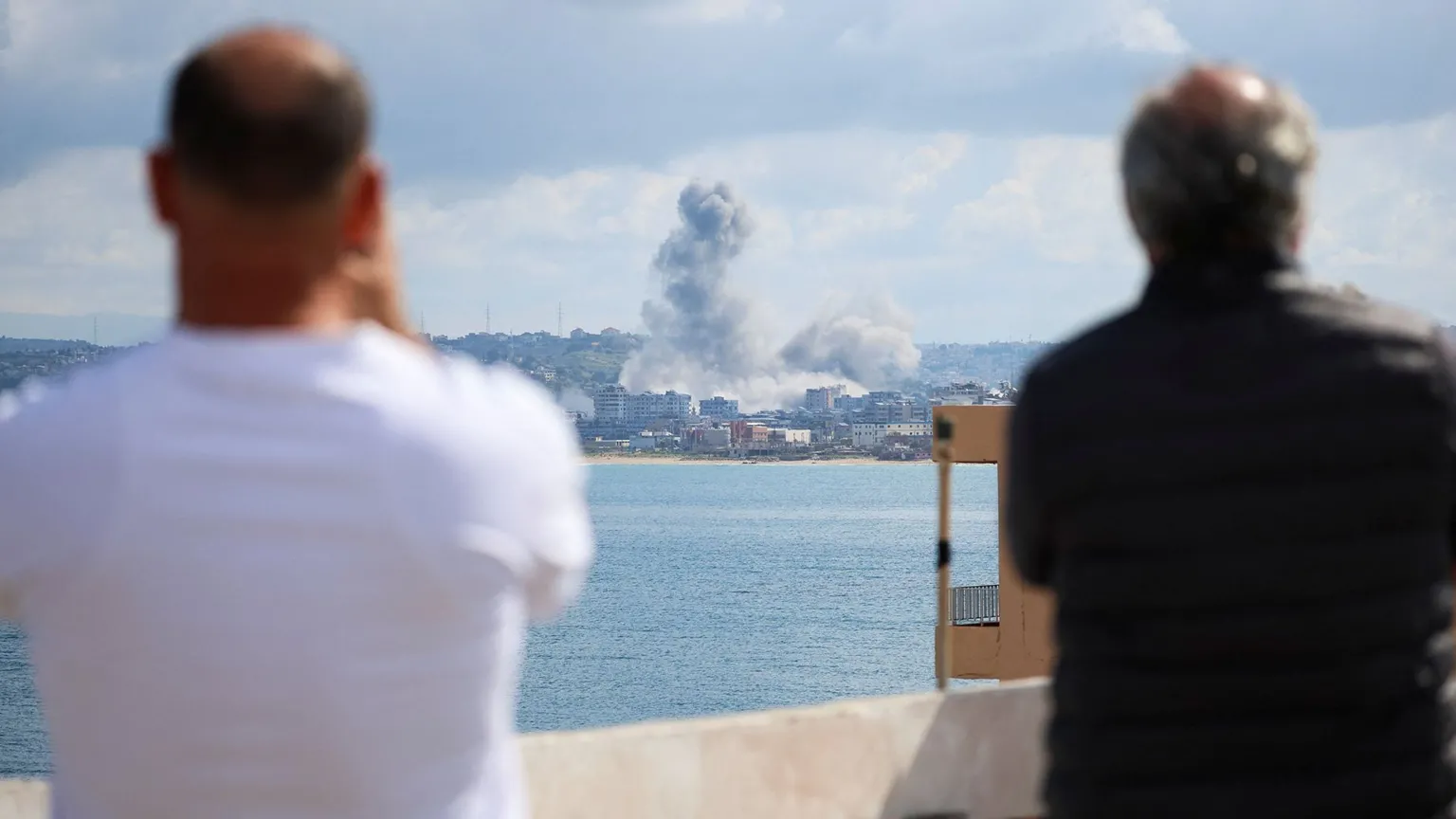

Israeli forces launched a large wave of air strikes across Lebanon on Wednesday, killing at least 182 people and injuring hundreds more, Lebanese officials said, in one of the deadliest escalations of the conflict with the armed group Hezbollah.
Get today's headlines by email 
Israel said the operation targeted more than 100 Hezbollah command centres and military sites within a span of about 10 minutes, describing it as the largest wave of strikes carried out during the current fighting.
The attacks hit several locations including the southern suburbs of Beirut, southern Lebanon and the eastern Bekaa Valley.
Lebanon’s health ministry said at least 182 people had been killed and 890 wounded, warning that the toll could rise as emergency crews continue searching damaged buildings.
Scenes of destruction in Beirut
Hours after one of the most powerful strikes in Beirut’s southern suburbs, rescue teams were still combing through debris in search of survivors.
Amid the rubble were remnants of everyday life — family photographs, clothing and unfinished schoolwork scattered across the wreckage of destroyed homes.
Abdelkader Mahfouz, who had come to visit his injured brother, described the aftermath.
“There was a lot of body parts here. Only people are getting harmed. What should the people do? We can't do anything,” he said.
Ceasefire dispute and regional tensions
The strikes took place as Israeli officials rejected claims that a recently brokered ceasefire between the United States and Iran applied to fighting in Lebanon.
Pakistan, which helped mediate the US-Iran agreement, had suggested the arrangement covered the Lebanese front. But Israeli Prime Minister Benjamin Netanyahu’s office denied that interpretation.
In Washington, US President Donald Trump’s press secretary Karoline Leavitt also said the deal did not include Lebanon.
Hezbollah has not claimed responsibility for any new attacks since the ceasefire announcement, but the group warned it reserved the right to respond. It also advised displaced residents not to return to their homes until a formal ceasefire covering Lebanon is declared.
Lebanon’s presidency said it would continue diplomatic efforts aimed at ensuring the country is included in broader regional peace negotiations.
A war deepening Lebanon’s crisis
The latest escalation comes amid a long-running confrontation between Hezbollah and Israel that intensified after the group launched rockets into Israel following the killing of Iran’s supreme leader Ayatollah Ali Khamenei during the early stages of the wider regional war.
Hezbollah said the attack was also in response to ongoing Israeli strikes inside Lebanon despite a ceasefire agreed in November 2024.
According to Lebanon’s health ministry, more than 1,700 people have been killed in the conflict so far, including at least 130 children. The ministry does not differentiate between civilians and fighters.
Israel says around 1,100 Hezbollah combatants have been killed.
The war has displaced more than 1.2 million people — roughly one fifth of Lebanon’s population — with many forced to flee from predominantly Shia communities in the south.
Villages near the Israeli border have been heavily damaged as Israeli forces attempt to establish what they describe as a security buffer zone intended to dismantle Hezbollah infrastructure and push fighters further north.
The prospect that some areas could remain under Israeli control after the war has raised fears among residents that they may never be able to return home.
Inside Lebanon, Hezbollah has faced criticism from some groups who accuse it of dragging the country into conflict and serving the interests of Iran. Nevertheless, the organisation continues to retain strong support among many Lebanese Shia.
Political tensions and fragile diplomacy
The humanitarian crisis has placed additional strain on Lebanon’s already struggling economy and social fabric.
Schools converted into shelters are overcrowded, while many displaced families are living in makeshift tents, cars or public spaces. The movement of displaced people into other areas has also heightened sectarian tensions.
Following the 2024 ceasefire, Lebanon’s government announced plans to disarm Hezbollah. The group, however, has so far refused to discuss relinquishing its weapons.
President Joseph Aoun, a former army chief, has ruled out using force to disarm the organisation, warning that such a move could deepen divisions and spark internal violence.
After the latest escalation, his government said it was willing to open direct negotiations with Israel — a notable shift given the two countries have no diplomatic relations.
Israel has not responded to the proposal.
Join the discussion? 
Already a member? 
 Adapted by ASEAN Now. Source 9 April 2026
Recommended Comments
Create an account or sign in to comment