



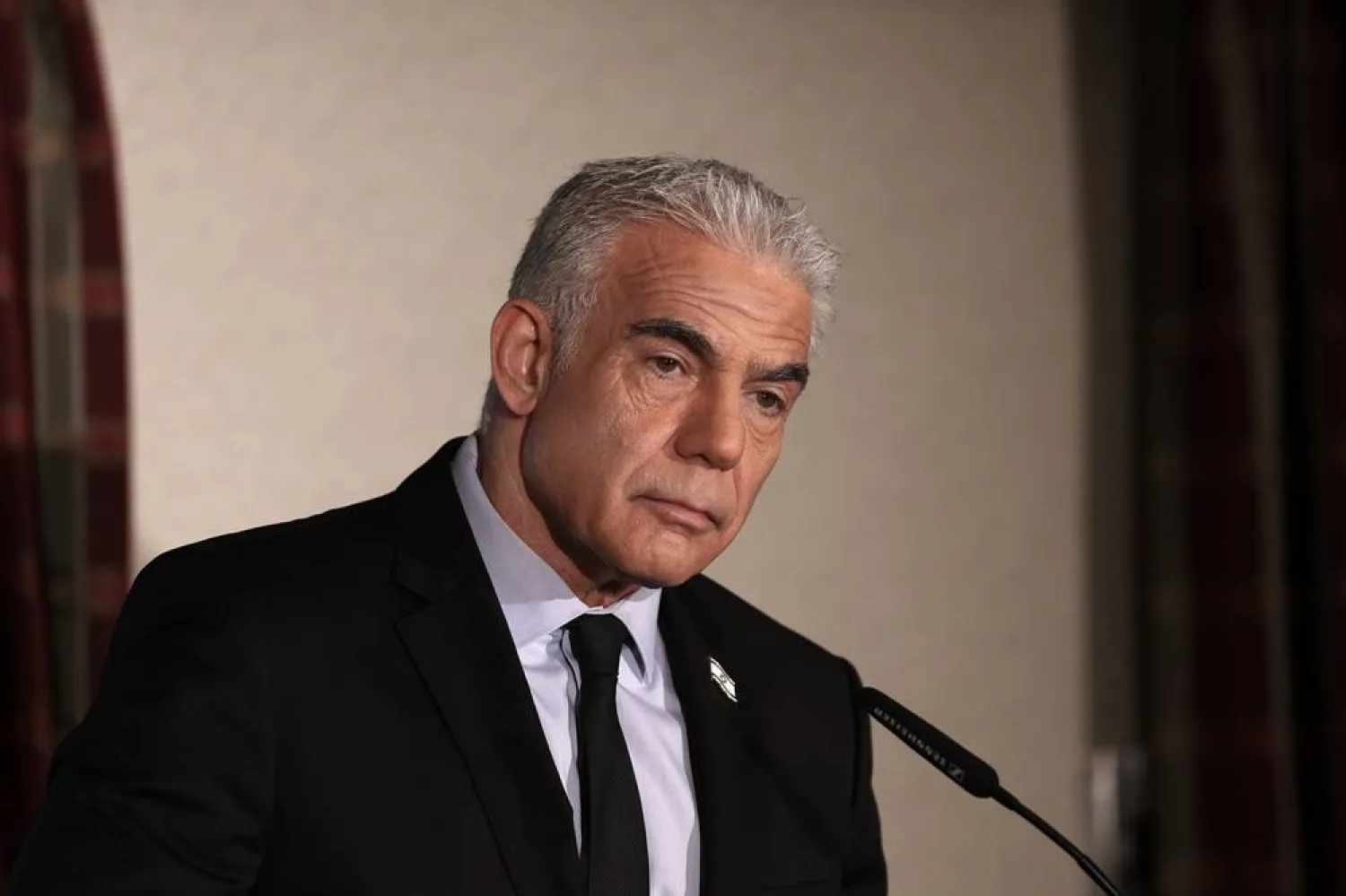

Israel’s opposition leader Yair Lapid has criticised an emerging agreement between the United States and Iran, calling it harmful to Israel and the wider Middle East while accusing Prime Minister Benjamin Netanyahu of failing to influence negotiations with Washington.
Get today's headlines by email 
Speaking to reporters in Jerusalem on Monday, Lapid said the proposed deal under discussion “fails to achieve any of Israel’s goals for the war” and described its details as “disturbing”.
“The deal is bad for Israel, bad for the region, bad for the citizens of Iran,” he said.
War aims and proposed terms
Israel and the US launched military operations against Iran on 28 February, saying they aimed to dismantle Iran’s ballistic missile programme, curb its support for regional proxy groups and prevent Tehran from developing a nuclear weapon.
Both Netanyahu and US President Donald Trump had also said they hoped the conflict would create conditions for the fall of Iran’s government.
According to regional officials, the proposed agreement would require Iran to surrender its stockpile of highly enriched uranium and reopen the strategic Strait of Hormuz. In return, the US would end its blockade of Iranian ports and lift sanctions on Tehran.
The deal would reportedly leave broader negotiations over Iran’s nuclear programme to a later 60-day period. It remains unclear whether the talks would also cover Iran’s missile capabilities or its backing of armed groups across the region.
Lapid thanked Trump for joining Israel in the conflict, but said Netanyahu had failed to maintain influence over Washington during negotiations.
“The Israeli government is at an all-time low in its ability to influence decisions in Washington,” Lapid said, referring to Trump’s recent remark that “Netanyahu will do whatever I want him to do.”
Israel’s position on sovereignty
An Israeli official familiar with conversations between Netanyahu and Trump said the prime minister had repeatedly stressed that Israel retained “freedom of action” against threats in any arena.
“Israel is a sovereign state, we are not a vassal state and we are not a protectorate,” Lapid said.
Lapid currently leads the centrist Yesh Atid party and served briefly as Israel’s prime minister in 2022 under a rotation agreement with former premier Naftali Bennett.
The pair have now merged their political factions ahead of elections due by the end of October, seeking to unite opposition groups against Netanyahu after years of political fragmentation.
Debate over Palestinian statehood
Lapid also addressed the issue of Palestinian statehood, saying the next Israeli government would not pursue a two-state solution in the near future.
He said the aftermath of the 7 October 2023 attacks by Hamas and the wars that followed had fundamentally changed Israeli public opinion.
“There will be no two-state solution in the coming years, because Israelis now understand this will become just another failing terrorist state on our borders,” Lapid said.
At the same time, he said he would oppose unilateral moves that could permanently prevent the creation of a Palestinian state in the future. Lapid added that Bennett had assured him Israel would not move towards annexing the occupied West Bank.
Coalition plans before election
Lapid also ruled out forming a future governing coalition with Arab political parties.
Opinion polls suggest the opposition alliance may struggle to secure a parliamentary majority without support from Arab lawmakers, as happened in 2021 when Lapid and Bennett formed a coalition government with backing from Mansour Abbas and his small Arab faction.
Lapid defended that earlier arrangement as “the right government for the moment” but said Israel’s political climate had shifted after nearly three years of conflict.
He said neither he nor Bennett intended to rely on Abbas’ party in the next election cycle.
Join the discussion? 
Already a member? 
 Adapted by ASEAN Now. Source 27 Ma
-
 1
1
Recommended Comments
Create an account or sign in to comment