



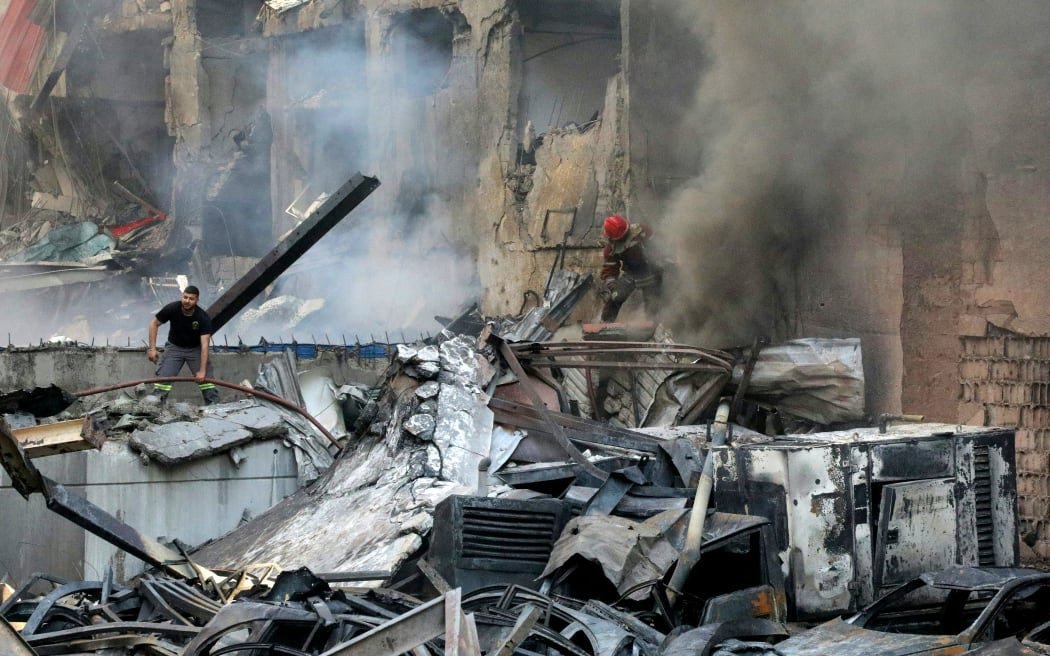

Israeli air strikes hit areas across southern and eastern Lebanon on Sunday, according to Lebanese state media, with reports of casualties as attacks continued despite a ceasefire agreement between Israel and Hezbollah that began on 17 April and has since been extended.
Get today's headlines by email 
The latest bombardment followed a deadly strike a day earlier in Sir al-Gharbiyeh, in southern Lebanon, where the health ministry said 11 people were killed, including a child and six women. Nine others were injured, among them four children and a woman, the ministry added.
Israel’s military has maintained that its operations are aimed at Hezbollah targets in Lebanon, even after the ceasefire came into effect. The Iran-backed group has also continued cross-border activity, including rocket fire on Sunday targeting Israeli forces operating inside Lebanese territory.
Warnings before fresh raids
Lebanon’s National News Agency reported multiple strikes on Sunday across southern and eastern regions, some of which resulted in casualties. Several of the attacks reportedly came shortly before the Israeli military issued evacuation warnings covering more than a dozen villages in southern Lebanon and the eastern Bekaa Valley.
An AFP correspondent described large plumes of smoke rising after strikes on the southern towns of Nabatieh and Zawtar al-Sharqiyah. Lebanon’s civil defence agency said its regional facility in Nabatieh had been destroyed in an overnight strike, with images showing personnel recovering equipment and removing oxygen cylinders from rubble.
The ceasefire, brokered with US involvement, has faced repeated strain as both sides continue to accuse each other of violations. Under the terms published by Washington, Israel retains the right to respond to what it describes as “planned, imminent or ongoing attacks”.
Diplomatic signals and regional talks
Amid the continued violence, political figures in Lebanon and abroad have pointed to possible diplomatic movement between Washington and Tehran. Hassan Fadlallah, a Hezbollah lawmaker recently sanctioned by the United States, said “major transformations are taking place in the region” and suggested a potential US-Iran understanding could include Lebanon in any broader settlement.
He said Iran had made any agreement with the United States conditional on halting the war in Lebanon. Hezbollah leader Naim Qassem also said he had received a message from Iran’s foreign minister Abbas Araghchi, delivered via Pakistani mediators, outlining a proposal that included Lebanon in wider ceasefire efforts.
Qassem expressed cautious hope that a deal between Iran and the United States could soon be completed, saying there were “signs of its completion” and that Lebanon could be included in a full cessation of hostilities.
US criticism and political tensions
US Secretary of State Marco Rubio accused Hezbollah of attempting to push Lebanon “back into chaos”, criticising what he described as the group’s “reckless call to overthrow Lebanon’s democratically elected government”. He said Hezbollah was actively contributing to instability in the country.
Separately, Lebanese authorities have begun direct talks with Israel under US mediation, while insisting those discussions remain separate from Iran-US negotiations.
Hezbollah entered the broader regional conflict on 2 March, launching rockets at Israel in response to the killing of Iran’s supreme leader, according to the group’s position outlined in the source material. Israeli forces are also reported to be operating within an area described as a “yellow line”, extending about 10km inside Lebanon’s southern border.
Join the discussion? 
Already a member? 
 Adapted by ASEAN Now. Source 25 May 2026
Recommended Comments
Create an account or sign in to comment