



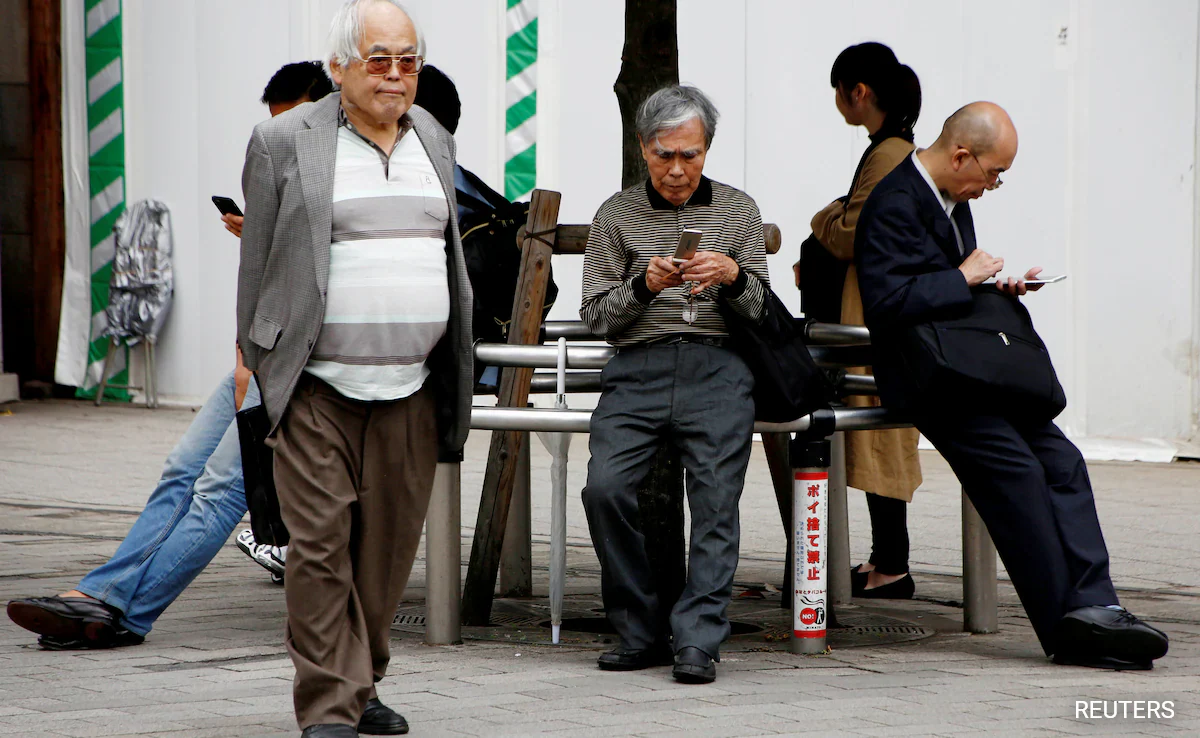

More than 100,000 people in Japan are now aged 100 or older, the health ministry said, marking the first time the figure has crossed that threshold.
The ministry’s latest figures put the number of centenarians at 107,677, the highest total in the world. Women account for 88% of the group. The oldest woman is Kishimoto Fuyo, aged 114, from Kyoto City, while the oldest man is Kato Hikaru, aged 112, from Kumamoto.
Record Centenarian Numbers
Health Minister Kenichiro Ueno said he was pleased that many people are living long, healthy and active lives. He pointed to advances in medicine and technology as reasons behind improved longevity.
At the same time, he warned that Japan faces a growing difficulty in sustaining its social security system as the population ages.
The health ministry’s centenarian survey has been running since 1963. It recorded 153 people aged 100 or above in its first year, rising to 1,000 in 1981 and reaching 10,000 by 1998. The most recent results were published ahead of Japan’s annual “Respect for the Aged” public holiday, when the government honours people turning 100 with a personal letter and a traditional sake cup.
Diet, Activity And Daily Living
Experts commonly link Japan’s long life expectancy to multiple factors, including diet and day-to-day activity.
Japan’s cuisine is typically based on fish, vegetables and rice, with less saturated fat than many Western diets, they say. Older people are also reported to remain mobile through regular walking, using public transport, cycling and stretching.
Japan has been steadily ageing for years. Retail sales of adult nappies have exceeded those for baby products for more than a decade, and companies have introduced products aimed at older customers. These include powered exoskeletons to help support movement and eyewear that automatically adjusts focus.
Fertility Drops And Population Decline
Japan’s demographic outlook remains challenging because fewer children are being born. For a population to replace itself, each woman needs to have an average of 2.1 children. Last year, the country’s total fertility rate fell to a record low of 1.14.
Government data from the National Institute of Population and Social Security research estimates Japan’s population will drop to 87 million by 2070, a decline of 30% from its peak of 128 million in 2008. People aged 65 and older currently make up about 30% of the population, and are expected to reach nearly 40% by 2070.
Japanese authorities have described the shift as an “existential crisis”. Prime Minister Sanae Takichi said the decline amounts to a “quiet emergency”. In 2025, Japan’s population decreased in 45 prefectures, with declines also recorded across most regions, and the pace of reduction is said to be accelerating.
The government has introduced programmes and subsidies to encourage young people to have more children, but they have not boosted birth rates. Experts say the causes are varied, including lower marriage rates and more women entering the workforce, along with rising costs of raising children.
While immigration has increased in recent years, foreign nationals make up only about 3% of the population, and opposition to accepting more migrants has grown.
Questions Over Centenarian Data
Some previous studies have questioned whether global centenarian figures are fully accurate, citing possible data errors and unreliable public records, including cases where birth certificates were missing or incomplete.
A government audit of family registries in Japan in 2010 found more than 230,000 people listed as being aged 100 or older who could not be accounted for, including some who had died decades earlier. The miscount was attributed to inconsistent record-keeping, alongside suspicions that some families may have tried to conceal deaths of elderly relatives to keep receiving pensions.
Join the discussion? 

16 September 2026
Recommended Comments
Create an account or sign in to comment