



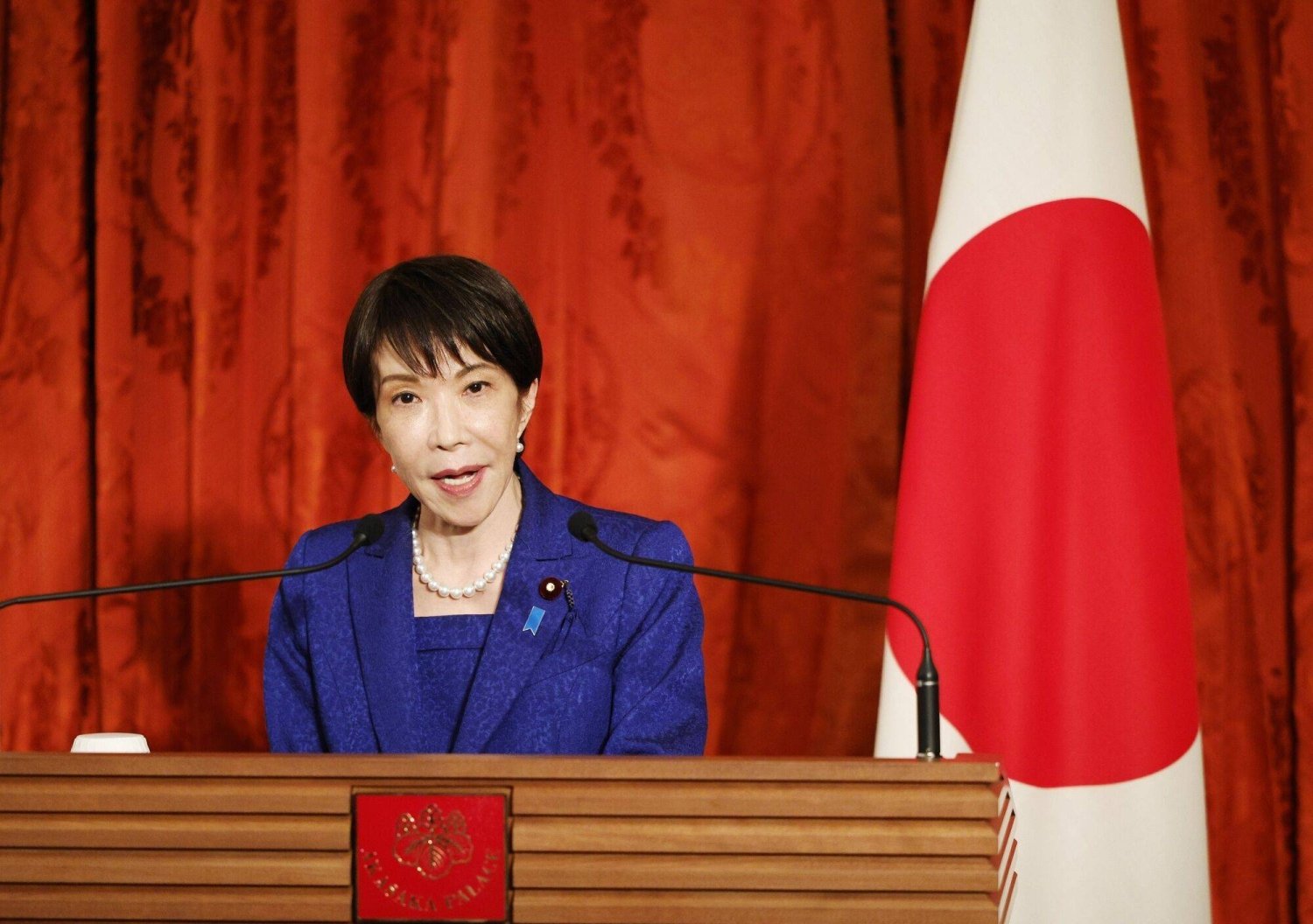

Japan has relaxed long-standing limits on its arms exports, allowing the sale of lethal weapons to a broader group of partner nations in a move that signals a significant evolution in its post-war defence posture.
Get today's headlines by email 
The policy change, announced on Tuesday, removes previous restrictions that confined exports largely to non-combat equipment. Under the revised rules, Japan will be permitted to transfer lethal military hardware to countries with which it maintains defence agreements.
Government officials say the move is intended to strengthen Japan’s security partnerships and contribute to regional stability at a time of growing geopolitical tensions.
Expanded defence exports
For decades, Japanese arms exports were tightly restricted, reflecting the country’s pacifist principles established after the Second World War. Previously, exports were limited to five categories of equipment: rescue, transport, warning, surveillance and minesweeping.
Under the new framework, those limits will be lifted. Japan will now be able to export lethal weapons to 17 partner nations that have defence cooperation arrangements with Tokyo, including the United States and the United Kingdom.
A prohibition on arms sales to countries involved in active conflicts will remain in place. However, the rule does not apply to nations that have formal defence agreements with Japan. Officials have also indicated that exceptions may be considered in what they described as “special circumstances”.
Prime Minister Sanae Takaichi said the policy reflected a changing global security environment. Writing on social media, she said no single country could safeguard its peace and security alone amid increasingly complex threats.
She stressed, however, that the policy shift did not represent a departure from Japan’s broader commitment to peace. According to Takaichi, the government would proceed cautiously when deciding whether arms transfers should be approved.
Chief Cabinet Secretary Minoru Kihara said the policy was aimed at protecting Japan’s security while supporting stability across the region.
Regional reactions
China expressed strong concern about the decision, describing it as a step towards militarisation.
Beijing’s foreign ministry said it was closely monitoring the development and would oppose what it characterised as a reckless shift in Japan’s defence policy.
The announcement coincided with ongoing military exercises involving the United States and the Philippines. Japan’s Self-Defence Forces are participating in the annual drills as combatants for the first time rather than observers.
The exercises are taking place in parts of the Philippines close to disputed waters and islands claimed by China, including areas near Taiwan.
Beijing considers Taiwan a breakaway province and has not ruled out using force to bring the self-governed island under its control.
South Korea also responded cautiously, saying Japan’s defence policy should ideally continue to reflect the principles of its pacifist constitution while supporting peace and stability in the region.
Relations between Seoul and Tokyo remain shaped in part by Japan’s colonial rule over the Korean peninsula between 1910 and the end of the Second World War, a period marked by forced labour and the sexual exploitation of Korean women.
Gradual shift from pacifism
Japan’s pacifist stance was embedded in its 1947 constitution, which renounces war as a means of settling international disputes and states that the country will not maintain military forces with war potential.
While pacifism has long been central to Japan’s national identity, successive governments have gradually eased some restrictions on defence policy.
In 2014, then Prime Minister Shinzo Abe relaxed a blanket ban on arms exports, allowing Japan to collaborate with allies on weapons development and opening limited opportunities for defence sales.
Further reforms in 2023 under Prime Minister Fumio Kishida allowed exports of completed lethal weapons for the first time since the war.
Takaichi has also voiced support for revising the constitution’s pacifist provisions, particularly Article 9, which formally renounces war.
Supporters argue that Japan must adapt to a more challenging security environment shaped by the presence of China, Russia and North Korea. Critics, however, warn that expanding military capabilities could increase the risk of Japan becoming involved in future conflicts.
Join the discussion? 
Already a member? 
 Adapted by ASEAN Now. Source 22 April 2026
Recommended Comments
Create an account or sign in to comment