



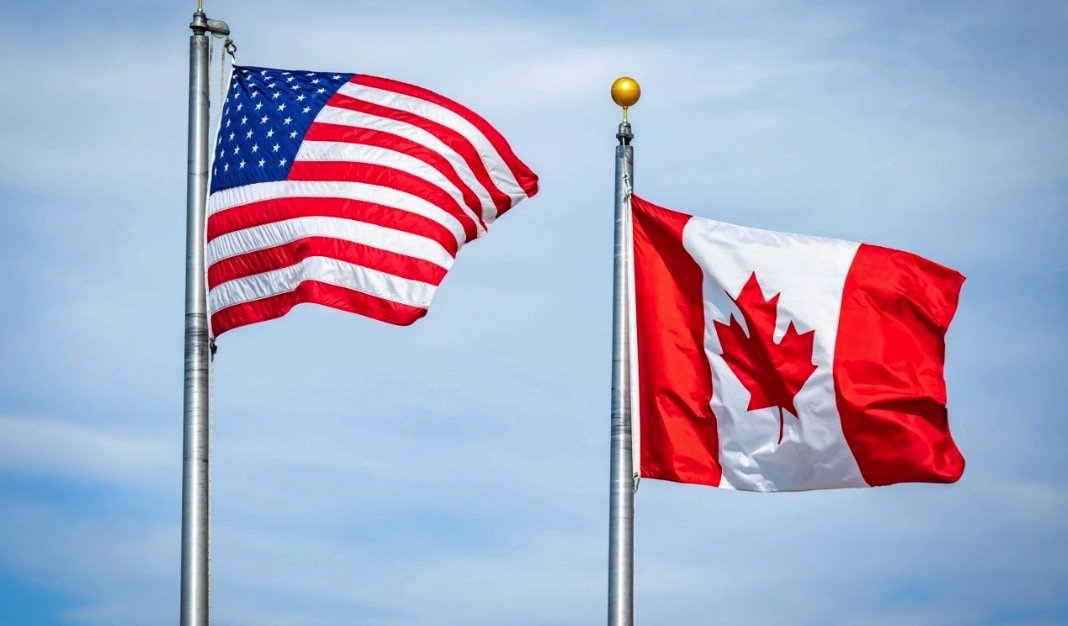

A change to Canada’s citizenship rules is prompting a surge of interest among Americans who may now qualify for dual nationality through their family heritage. Immigration lawyers in both countries say they have been inundated with inquiries since the revised law took effect on Dec. 15. The change expands eligibility for citizenship by descent, potentially allowing millions of people in the United States with Canadian ancestry to claim citizenship.
Get today's headlines by email 
For some applicants, the discovery has come as a surprise.
Zack Loud of Farmington, Minnesota, said he learned that he and his siblings are already regarded as Canadian citizens under the new rules because their grandmother was born in Canada.
He said the recognition of citizenship has made the prospect of living or working north of the border more appealing. Loud added that he and his wife had already been considering employment opportunities abroad, but the new status has pushed Canada higher on their list.
Surge in legal inquiries
Immigration attorneys say the level of interest has risen sharply since the change was introduced.
Nicholas Berning, an immigration lawyer at Boundary Bay Law in Bellingham, Washington, said demand for assistance has surged.
He said his practice has been “pretty much flooded” with clients seeking help preparing applications and gathering documentation, forcing the firm to redirect resources away from other legal work.
Amandeep Hayer, an immigration lawyer based in the Vancouver area, said his firm previously handled around 200 citizenship cases annually. Since the new law came into effect, he said, the office has been conducting more than 20 consultations each day.
Expanded citizenship by descent
Canada has modified its citizenship legislation several times over the decades to address historical legal interpretations and discriminatory provisions.
Previously, citizenship passed automatically through only one generation born outside the country — typically from a Canadian parent to their child.
Under the revised framework, individuals born before Dec. 15 may qualify if they can demonstrate descent from a Canadian ancestor, which could include a grandparent, great-grandparent or earlier relative.
For those born on or after Dec. 15, the rules require proof that a Canadian parent lived in Canada for at least 1,095 days.
According to Hayer, individuals who meet the ancestry requirements are already legally considered citizens, but they must obtain a certificate to formally prove their status.
He said the application process effectively confirms a right that already exists. “You are Canadian, and you're considered to be one your whole life,” he explained.
Political and practical motivations
Applicants cite a range of reasons for pursuing citizenship, including family heritage, job prospects and political developments in the United States.
Michelle Cunha of Bedford, Massachusetts, said decades of political activism led her to reconsider her future in the United States. She decided to pursue Canadian citizenship and relocate after concluding that the country offered new opportunities.
Others say international travel or domestic policy debates have encouraged them to explore the option.
Troy Hicks of Pahrump, Nevada, said he began considering citizenship after a recent trip abroad highlighted how American politics shapes perceptions of U.S. travelers.
Maureen Sullivan of Naples, Florida, said she saw Canadian citizenship as a form of security for her family after immigration enforcement activity near her nephew’s school in Minnesota raised concerns.
Costs and processing times
The application fee for proof of citizenship is relatively modest — 75 Canadian dollars, about $55.
However, applicants may incur additional expenses if they hire lawyers or genealogists to track down records such as birth, marriage and death certificates needed to establish family lineage.
Cunha said she expects to spend about $6,500 after hiring legal assistance.
Others have completed applications independently using online guidance. Mary Mangan of Somerville, Massachusetts, said many applicants can likely manage the process without professional help.
Processing times are currently estimated at around 10 months, according to Immigration, Refugees and Citizenship Canada, with more than 56,000 applications awaiting decisions.
Debate within Canada
The increase in interest from Americans has prompted mixed reactions in Canada.
Fen Hampson, a professor of international affairs at Carleton University in Ottawa, said Canadians generally view immigration positively.
However, he said some people worry that a surge in ancestry-based applications could slow processing for refugees and asylum seekers.
Others are skeptical about individuals with only distant family connections seeking passports without substantial ties to the country, a practice sometimes described as “citizenship of convenience.”
Join the discussion? 
Already a member? 
 Adapted by ASEAN Now. Source 25 April 2026
Recommended Comments
Create an account or sign in to comment