



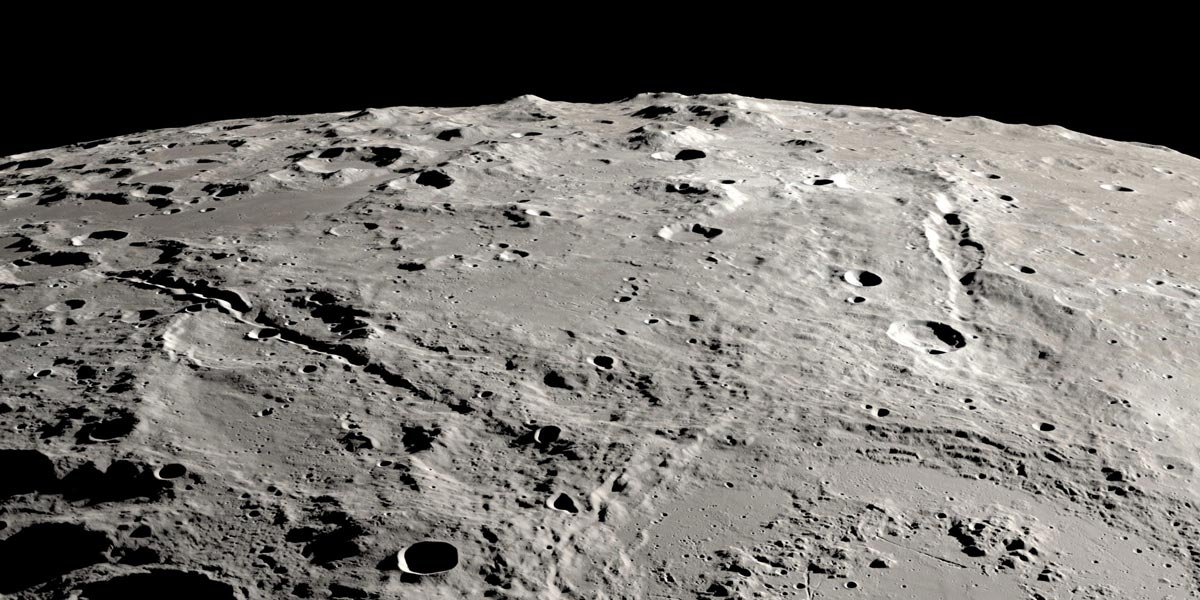

Nasa has outlined a series of robotic missions, drones and lunar vehicles it plans to send to the Moon as part of a wider effort to establish a permanent US base on the lunar surface.
Get today's headlines by email 
Several private companies, including Blue Origin, have been selected to build the equipment. The programme forms part of the United States’ push to return astronauts to the Moon before President Donald Trump leaves office in 2028.
The plans come as competition between the US and China over lunar exploration intensifies. China aims to land astronauts on the Moon by 2030 and continues to expand its space programme.
Robotic missions to pave way for lunar base
On Monday, China launched the Shenzhou-23 mission, carrying astronauts to the Tiangong space station space station.
Earlier this year, Nasa announced a $20bn initiative to build a permanent base near the Moon’s south pole by 2032. The proposed outpost would use both solar and nuclear energy.
Nasa administrator Jared Isaacman said the latest announcements showed the US would “never give up the Moon again”.
China challenge adds pressure to Moon programme
A permanent base on the Moon could support scientific research, future mining operations and eventual missions to Mars.
However, some experts believe Nasa’s timetable may be difficult to achieve.
Although the US successfully sent four astronauts around the Moon during the Artemis II mission in April, concerns remain about whether the agency can develop a reliable system for landing astronauts on the lunar surface in time.
Dr Simeon Barber told BBC News that China could still become the next nation to land humans on the Moon.
“It would not surprise me at all if China gets there first,” he said, pointing to delays in developing lunar landing technology.
Landers, drones and lunar vehicles planned
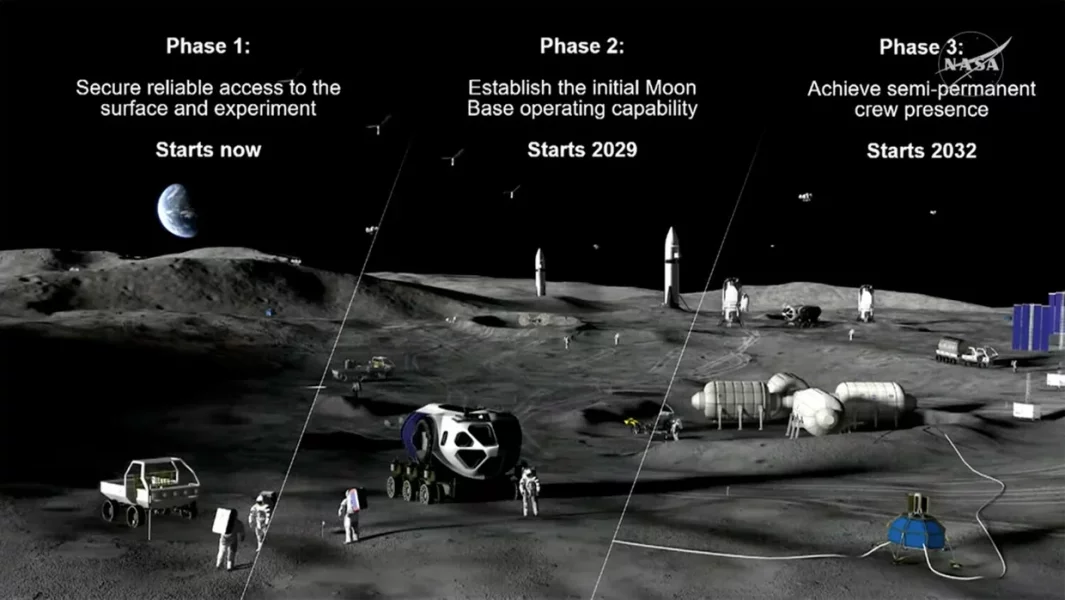
Nasa’s Ignition Moon Base programme is divided into three stages.
The first phase focuses on robotic exploration before astronauts arrive. The agency plans to send robotic landers and hopping drones to survey and map difficult terrain near the lunar south pole.
Cargo vehicles and rovers would also be deployed to transport scientific instruments, communications equipment and astronauts across the surface.
On Tuesday, Nasa said contracts had been awarded to companies including Blue Origin, Intuitive Machines and Astrobotic.
Courtesy of CBS News
Blue Origin’s proposed lander, Endurance, is expected to perform precise autonomous landings and navigation. Astrobotic’s Griffin-1 lander is planned to touch down near Nobile Crater close to the Moon’s south pole.
The missions will also deliver scientific instruments, including high-resolution cameras and laser-based landing systems.
According to Moon Base programme executive Carlos García-Galán, the robotic phase is expected to continue until 2029, involving 25 launches and the delivery of four metric tonnes of cargo to the Moon.
Power systems and housing planned by 2032
The next phase would involve building solar and nuclear power facilities on the Moon, including fission reactors designed to provide long-term energy supplies.
By 2032, Nasa hopes astronauts will be able to live in semi-permanent housing on the lunar surface. Long-range rovers would allow crews to travel greater distances across the Moon.
The Moon’s south pole is seen as especially valuable because of frozen water deposits that could provide drinking water and oxygen.
Much of the project depends on the readiness of the Human Landing System being developed by SpaceX. The spacecraft, known as Starship, has experienced repeated delays and technical setbacks.
Dr Barber said the biggest challenge remained landing astronauts safely on the Moon. He added that political pressure appeared to be influencing the pace of the announcements.
Join the discussion? 
Already a member? 
 Adapted by ASEAN Now. Source 27 May 2026
-
 1
1
Recommended Comments
Create an account or sign in to comment