



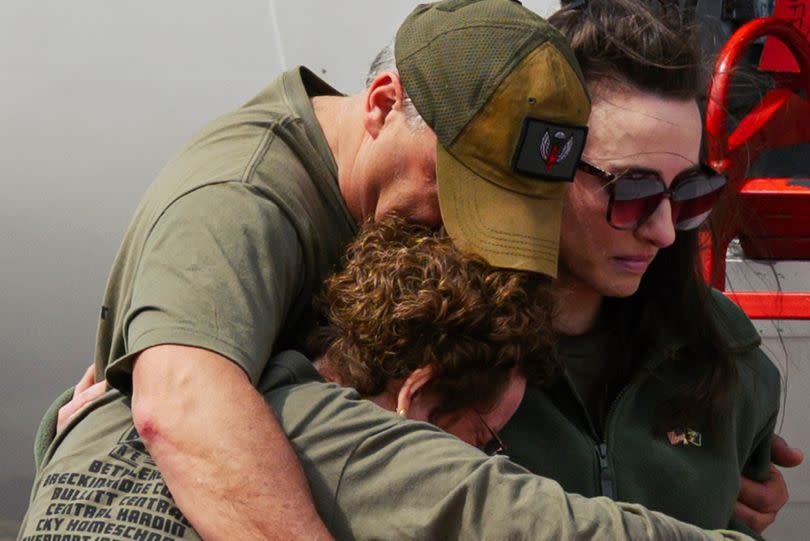

Nearly 400 United States service members have been wounded since the start of the conflict with Iran, according to a US official, as diplomatic efforts to halt the fighting have so far failed to produce a peace agreement.
Get today's headlines by email 
The injuries come amid ongoing hostilities between Washington and Tehran, following large-scale military operations launched earlier this year.
US Launches Major Combat Operations
On 28 February, US President Donald Trump announced the start of what he described as “major combat operations” against Iran. The campaign involved extensive joint strikes carried out by US and Israel targeting Iranian military and government facilities.
The operations marked a significant escalation in tensions between the two countries, which have long been at odds over regional security and Iran’s nuclear programme.
Washington later issued an ultimatum demanding that Iran fully reopen the Strait of Hormuz, one of the world’s most important oil transit routes. The US warned that failure to do so would result in broad attacks on Iran’s critical infrastructure.
Hours before the deadline expired, Trump said the United States would delay planned air strikes for two weeks after Iran indicated it would reopen the strategic waterway.
Talks Fail to Produce Agreement
Diplomatic negotiations between the US and Iran were subsequently held in Pakistan in an attempt to de-escalate the conflict.
However, the talks ended without a peace deal. Trump later said the main obstacle in the negotiations remained Iran’s nuclear programme.
According to the president, the United States was prepared to take further action if progress was not made. He announced that Washington would begin enforcing a blockade of the Strait of Hormuz starting at 10:00 a.m. Eastern Time on Monday.
The waterway is vital for global energy markets, with a large share of the world’s oil shipments passing through the narrow channel between the Persian Gulf and the Gulf of Oman.
Fighting Continues in Lebanon
While discussions with Iran have stalled, military operations have also continued elsewhere in the region.
Israeli forces have maintained ground operations and conducted intensive strikes in Lebanon, where they are fighting the Iran-backed militia Hezbollah.
Israeli Prime Minister Benjamin Netanyahu said he supported the ceasefire arrangement with Iran but stressed that it did not apply to Lebanon.
Netanyahu said the agreement related only to hostilities between Israel and Iran, despite objections raised by Tehran that the ceasefire should extend to all related fronts.
The continued fighting in Lebanon has added another layer of complexity to the wider regional conflict, raising concerns that tensions could further escalate even if a broader deal with Iran is eventually reached.
Officials have not yet provided detailed information about the circumstances in which the nearly 400 US service members were wounded, but the figure highlights the growing human toll of the conflict as diplomatic efforts struggle to bring the fighting to an end.
Join the discussion? 
Already a member? 
 Adapted by ASEAN Now. Source 15 April 2026
Recommended Comments
Create an account or sign in to comment