




Israeli Prime Minister Benjamin Netanyahu has said he ordered the Israeli military to expand its control over the Gaza Strip to 70% of the territory, a move that could further undermine a fragile ceasefire agreement brokered by the United States.
Get today's headlines by email 
Speaking at a conference in an Israeli settlement in the occupied West Bank, Netanyahu said Israeli forces currently controlled about 60% of Gaza and that he had directed the army to increase that share.
“We are currently squeezing Hamas,” he said. “We now control 60% of the territory in the strip. You know, we were at 50, we moved to 60. My directive is to move to … 70%.”
Ceasefire under pressure
Under a US-backed ceasefire agreement reached in October, Israeli forces withdrew to a demarcation line that left Israel in direct control of around 53% of Gaza, while the remaining territory stayed under Hamas administration pending further negotiations.
Since then, Israeli troops have steadily expanded their presence westward into areas previously outside their control. Israel has also widened what it describes as a buffer or “no man’s land”, where soldiers can restrict movement and open fire on perceived threats.
The expansion has raised concerns among humanitarian agencies and analysts, who say it would breach both the ceasefire arrangement and a UN Security Council resolution endorsing it.
The peace framework proposed by US President Donald Trump stated that no Palestinians would be forced to leave Gaza and that residents who chose to depart would be free to return later.
Israeli Defence Minister Israel Katz said this week that the government hoped large numbers of Palestinians would leave Gaza through what he called “voluntary migration”. Human rights groups have accused Israel of attempting to make conditions in the territory unlivable in order to force displacement.
Humanitarian concerns grow
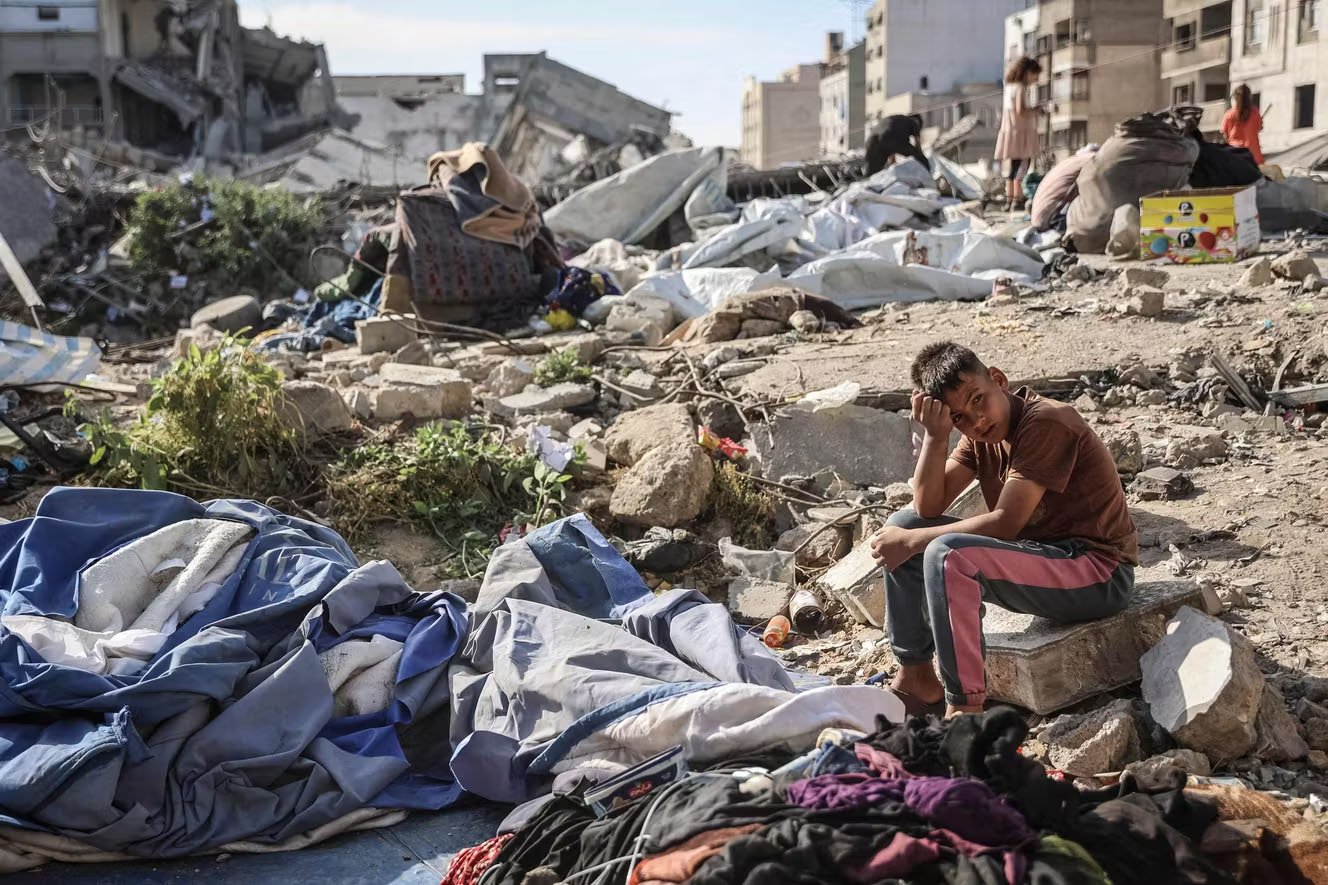
Aid officials and analysts warned that further territorial expansion could worsen conditions for Gaza’s 2.2 million residents, many of whom have already been displaced multiple times during the war.
Muhammad Shehada of the European Council on Foreign Relations said the proposal would effectively nullify the existing ceasefire framework.
He said the remaining areas available to civilians were already severely overcrowded, with displaced families living in makeshift shelters across much of western Gaza.
Israeli forces have continued military operations during the ceasefire period, including airstrikes and shootings near the demarcation line. More than 900 Palestinians have reportedly been killed since the truce began eight months ago.
A recent UN briefing seen by the Guardian described daily tank advances near Jabalia in northern Gaza and reported increased military activity east of Khan Younis in the south.
Militias accused of forcing evacuations
Israeli-backed armed groups have also become increasingly active near the ceasefire line, according to residents and researchers.
One militia linked to Gaza figure Ashraf al-Mansi has reportedly advanced westward around Jabalia while urging residents to leave their homes.
Wael Nayef Abu al-Ajeen, a resident east of Deir al-Balah, said armed men entered his area earlier this month and ordered families to evacuate by nightfall.
Researchers from the Armed Conflict Location and Event Data Project said militias had been involved in killings, arrests and intimidation of civilians in areas near the Israeli-controlled zone.
Uncertainty over negotiations
The future of ceasefire negotiations remains unclear.
A UN Security Council resolution in November assigned oversight of the truce to a US-backed Board of Peace led in Gaza by diplomat Nickolay Mladenov. His recent report drew criticism for focusing blame on Hamas while critics said it did not sufficiently address Israeli actions.
Israeli analyst Gershon Baskin said he believed negotiations with Hamas had effectively collapsed.
He said the United States could now shift toward a plan focused on reconstruction inside Israeli-controlled areas while screening Palestinians seeking access for links to Hamas or other armed groups.
Join the discussion? 
Already a member? 
 Adapted by ASEAN Now. Source 29 May 2026
Recommended Comments
Create an account or sign in to comment