



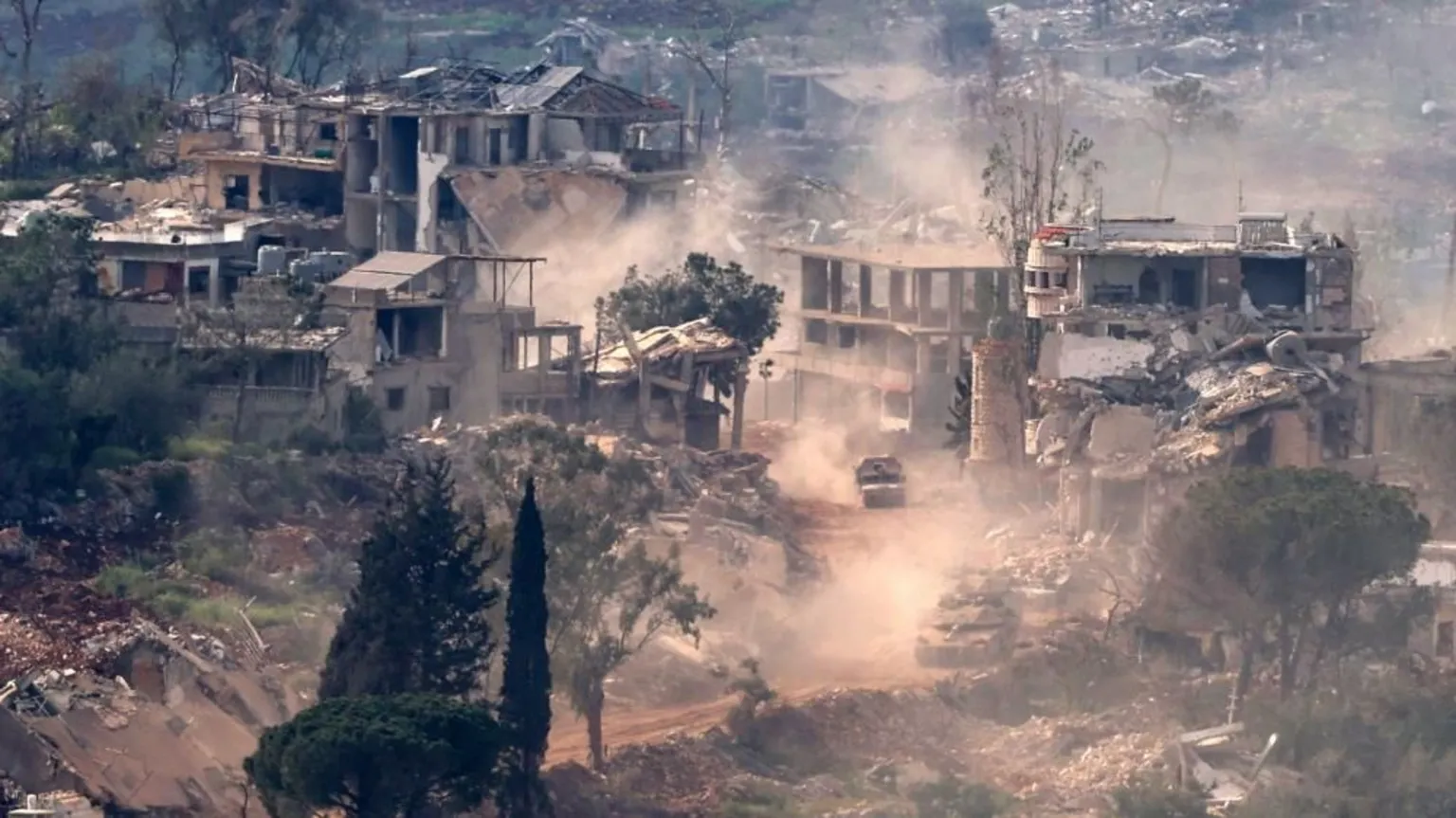

Israeli Prime Minister Benjamin Netanyahu has instructed the military to intensify attacks on Hezbollah targets in Lebanon, just days after a ceasefire between the two sides was extended by three weeks. The directive was followed by fresh Israeli strikes in southern Lebanon on Saturday that Lebanese officials say killed at least six people.
Get today's headlines by email 
The escalation comes amid growing strain on the fragile truce, which has reduced but not completely halted cross-border hostilities.
Deadly strikes in southern Lebanon
According to Lebanon’s health ministry, four people were killed when Israeli strikes hit a truck and a motorcycle in the town of Yohmor al-Shaqeef.
Another attack on the town of Safad al-Battikh left two people dead and injured 17 others, officials said.
The Israel Defense Forces (IDF) said it had killed three Hezbollah members travelling in what it described as a vehicle carrying weapons. The military added that another fighter riding a motorcycle was also killed.
The IDF said two additional armed Hezbollah members were killed in the Litani River area, where Israeli troops remain deployed inside a self-declared buffer zone. The army said the individuals posed a threat to Israeli soldiers operating in southern Lebanon.
Later, the Israeli military reported detecting what it called a “suspicious aerial target” near the Israeli border community of Malkia. It described the incident as another breach of the ceasefire agreement.
Hezbollah response and rising tensions
Hezbollah said it had fired on an Israeli army vehicle in southern Lebanon in retaliation for the strike in Yohmor al-Shaqeef.
Following Netanyahu’s order to step up military action, Lebanon’s state-run National News Agency reported several additional Israeli strikes in the region. These included two rapid attacks in towns in Bint Jbeil district, another strike in Tyre district, and further bombardments in Nabatieh district.
The Israeli military said it had targeted infrastructure used by Hezbollah for military purposes across southern Lebanon. It added that operations would continue against what it described as threats to Israeli civilians and soldiers, acting on instructions from the government.
Israel continues to maintain a presence in parts of southern Lebanon and has been carrying out large-scale demolitions in the area.
Concerns over attacks on journalists
Separately, an international press freedom group criticised recent violence affecting journalists covering the conflict.
The Media Freedom Coalition said attacks on journalists in Lebanon were unacceptable after a reporter was killed earlier in the week.
The group — co-chaired by the governments of the United Kingdom and Finland — urged all sides to ensure that media workers can operate safely.
A Lebanese journalist, Amal Khalil, was killed in an Israeli strike on Wednesday. Freelance photographer Zeinab Faraj was injured in the same attack.
Lebanese officials say the journalists had taken shelter inside a house after an initial air strike struck a vehicle nearby, killing two men. They accuse Israeli forces of deliberately targeting them.
The IDF has denied targeting journalists.
Join the discussion? 
Already a member? 
 Adapted by ASEAN Now. Source 26 April 2026
Recommended Comments
Create an account or sign in to comment