



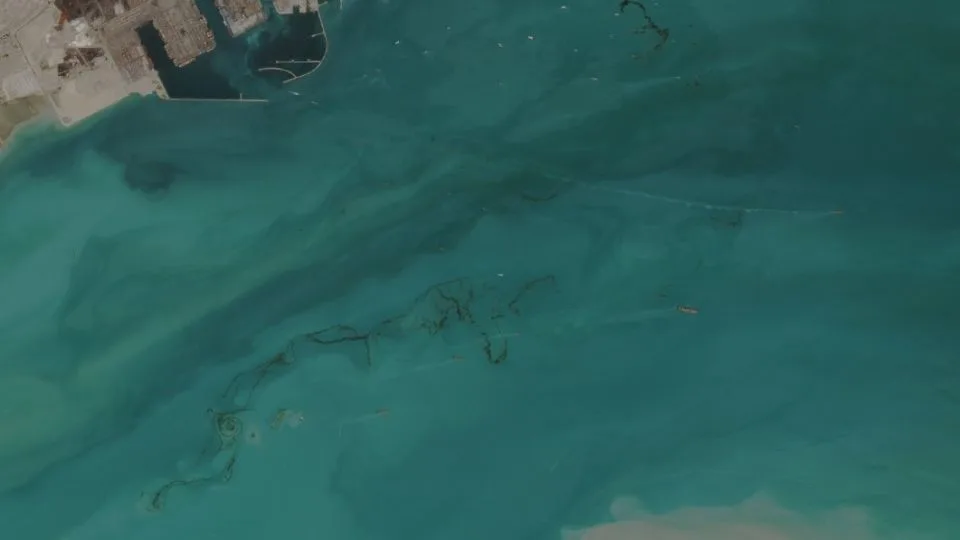

Satellite imagery is revealing several oil spills in the Persian Gulf following attacks on vessels and energy facilities during the conflict involving Iran, the United States and Israel, raising concerns among experts about potential environmental damage across the region.
Get today's headlines by email 
Images captured from space show oil slicks spreading in several locations in the Gulf, a waterway known for its rich marine biodiversity and its importance to communities that depend on coastal resources. Environmental specialists say the contamination could threaten wildlife and livelihoods along the shoreline.
Spill near Strait of Hormuz
One satellite image taken on 7 April shows an oil slick extending more than five miles in the Strait of Hormuz, close to Iran’s Qeshm Island.
According to Greenpeace Germany, the spill is linked to the Iranian vessel Shahid Bagheri, which was struck by US forces on 28 February. The damage caused oil to leak into surrounding waters, Greenpeace spokesperson Nina Noelle told CNN.
The Strait of Hormuz is one of the world’s most strategically important shipping routes for energy exports, and incidents in the area can have both environmental and economic consequences.
Damage at Lavan Island
Separate satellite images show oil spreading into waters around Lavan Island after what Iranian state media described as a strike by hostile forces on an oil installation near the island’s coastline on 7 April.
Video circulating on social media and later verified by CNN shows a large fire breaking out at an Iranian refinery on the island.
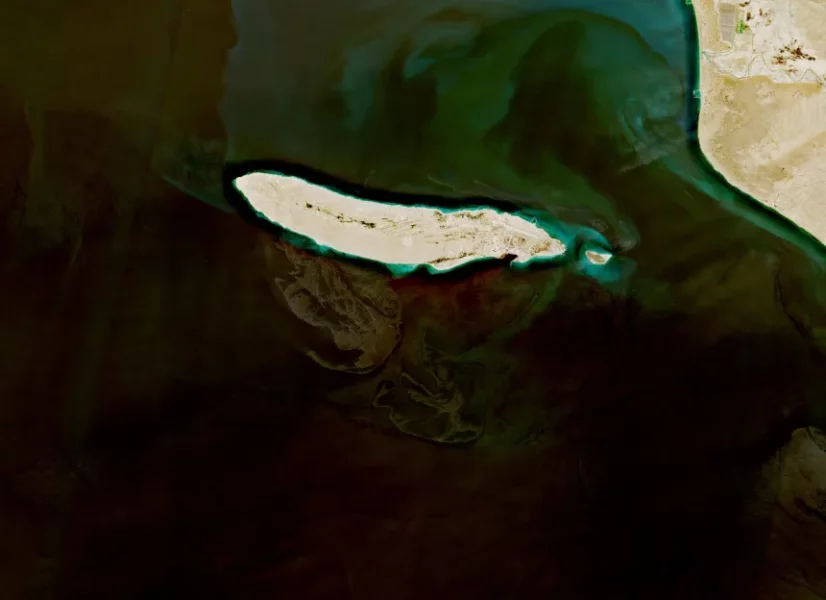
Oil around Iran’s Lavan Island as seen from satellite images taken April 10. Sentinel-2/European Space Agency
Wim Zwijnenburg, a project leader at the Dutch peace organisation PAX who monitors environmental impacts of conflict in the region, said the attack on Lavan constituted a major environmental emergency.
He said at least five locations on the island were damaged, resulting in oil leaking into the surrounding sea.
The spill is also reaching nearby Shidvar Island, he added. The small coral island, located roughly one mile east of Lavan, is a protected site that supports a range of wildlife including turtles and seabirds.
Additional spills reported near Kuwait
Satellite imagery has also shown oil slicks off the coast of Kuwait on 6 April.
Iran’s Islamic Revolutionary Guard Corps said it had targeted fuel and petrochemical facilities in several Gulf countries, including Kuwait, in retaliation for an earlier attack on a petrochemical complex in southwestern Iran.
Environmental specialists warn that oil contamination in the Gulf could affect coastal populations, particularly fishing communities that rely on marine resources for income and food.
Risks to marine life and water supplies
Experts say oil spills can harm marine ecosystems in several ways, including by poisoning or trapping animals such as turtles, dolphins and whales.
Oil contamination can also damage habitats such as mangroves and disrupt the broader marine food chain.
Another concern is the potential impact on desalination plants that supply drinking water across the Gulf. Nearly 100 million people in the region depend on desalinated seawater, and oil pollution could interfere with filtration systems.
While the full scale of environmental damage remains unclear, analysts say the risk could increase if further attacks target ships in the region.
Data from Greenpeace Germany indicates that around 75 large oil tankers are currently in the Gulf, together carrying nearly 19 billion litres of crude oil.
Cleaning up spills in the area could also prove difficult. Greenpeace says oil contamination in mangrove and coastal habitats is particularly challenging to remove because of difficult terrain, restricted access and complex ecosystems.
Those efforts may become even harder if fighting in the region continues, limiting the ability of response teams to reach affected areas.
Join the discussion? 
Already a member? 
 Adapted by ASEAN Now. Source 22 April 2026
Recommended Comments
Create an account or sign in to comment