



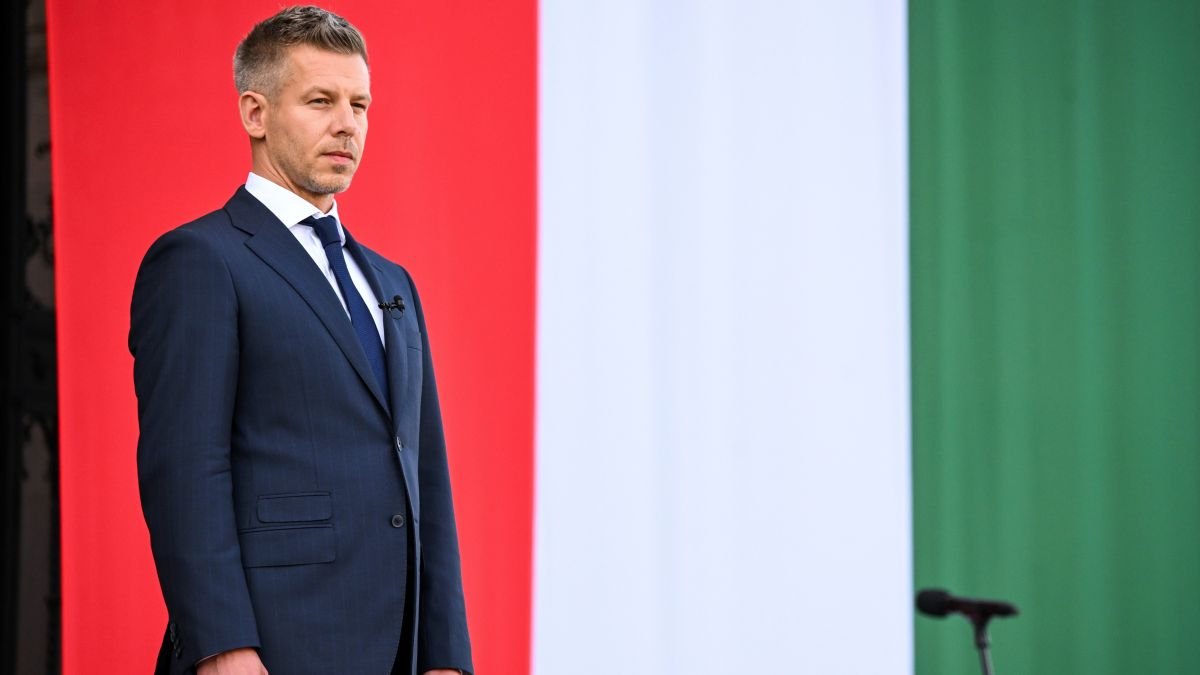

Hungary’s new prime minister, Péter Magyar, has taken office after his Tisza party secured a sweeping election victory that ended 16 years of rule by Viktor Orbán.
Get today's headlines by email 
Speaking after being sworn in before parliament in Budapest, Magyar pledged to govern in service of the country rather than dominate it. “I will not rule over Hungary — I will serve my country,” he said following the oath ceremony.
The result marked a dramatic political shift. Tisza, founded only two years ago, captured 141 seats in Hungary’s 199-member parliament, surging from having no representation previously. Orbán’s governing Fidesz party saw its parliamentary strength collapse from 135 seats to just 52.
Thousands were expected to gather outside parliament along the Danube in Budapest for what organisers described as a “celebration of freedom and democracy”. Magyar has framed the moment as a decisive break with the previous political era, urging Hungarians to step through what he called a “gateway of regime change”.
Collapse of the old governing bloc
Following the defeat, Orbán and several senior figures from Fidesz decided not to take their seats in the new parliament. The party has signalled only a broad intention to regroup politically, leaving its immediate future unclear.
Meanwhile, allegations of corruption linked to the previous administration continue to surface. The outgoing government had overseen Hungary largely unchallenged since 2010.
Members of the incoming administration say they intend not only to change leadership but to overhaul the system of governance.
“The main priority is to set up the government on the ruins of the previous one,” said Zoltán Tarr, the incoming minister for social relations and culture. He added that the new leadership expects to inherit a difficult economic situation but said the scale of the challenge remains uncertain.
Economic concerns and political scrutiny
Officials say public finances are under strain following a surge in government spending during the final months of the Orbán administration. That spending came after years in which state contracts and funds were widely directed toward business networks linked to Fidesz.
Hungary’s budget deficit has already climbed close to the full-year target set by the previous government.
The new administration has sought to demonstrate a break with past practices. Businessman György Wáberer, who switched his support from Fidesz to Tisza shortly before the election, revealed he had donated €280,000 to the party. Magyar ordered the funds returned.
Questions over ethics also surfaced when Magyar’s brother-in-law, Márton Melléthei-Barna, was nominated for justice minister. After criticism online, he withdrew from consideration, saying he did so to ensure no doubts overshadowed the transition.
Incoming ministers say they will avoid political retaliation against their predecessors but insist that financial wrongdoing will be investigated. Plans are underway to establish an office dedicated to recovering misused public assets.
Tarr stressed that any investigations would follow legal procedures rather than political retribution.
Investigations and EU tensions
Authorities have already begun several inquiries. One investigation involves the media network linked to businessman Gyula Balásy, whose companies received government contracts and ran pro-government campaigns targeting critics including philanthropist George Soros, Ukrainian president Volodymyr Zelensky and Magyar himself.
Balásy recently said he was willing to hand over his companies and investments to the state, although he denied any wrongdoing. Some company accounts connected to his businesses have been frozen.
Another investigation concerns Hungary’s National Cultural Fund, including its Urban Civil Fund, which has a budget of about €64.9m. Authorities are examining claims that money may have been directed toward Fidesz candidates.
The government’s most urgent challenge may lie in relations with the European Union. Around €17bn in EU funding has been withheld by the European Commission during Orbán’s tenure.
Commission officials have indicated that some of those funds could be permanently lost.
Hungary must also decide its stance on an EU migration pact set to take effect on 12 June. The country continues to face daily fines of €1m for failing to comply with rulings by the European Court of Justice over migrant policies.
Despite the challenges, Tarr said the new leadership remains optimistic about working with EU partners while responding to domestic concerns about migration, Ukraine’s possible EU membership and Hungary’s continued reliance on Russian energy supplies.
Join the discussion? 
Already a member? 
 Adapted by ASEAN Now. Source 11 May 2026
Recommended Comments
Create an account or sign in to comment