



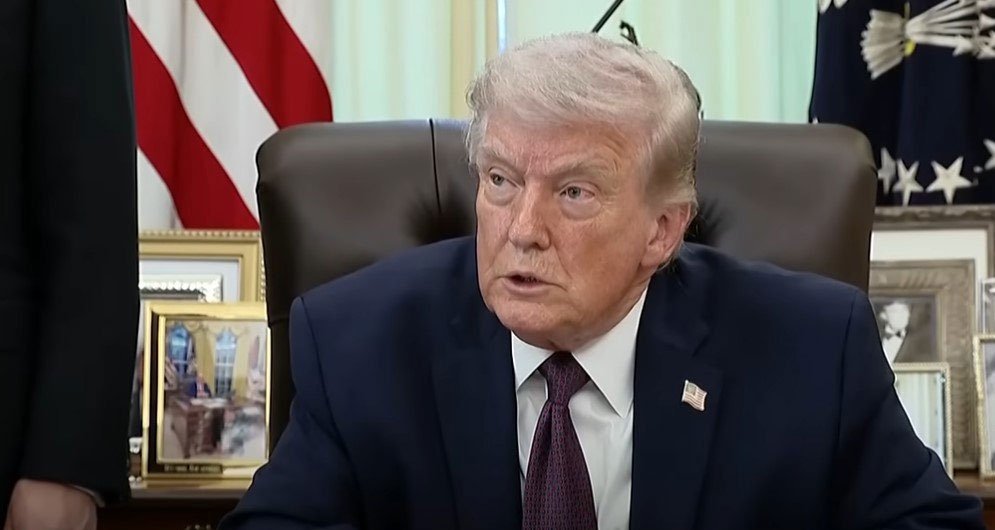

Public surveys suggest many Americans are uneasy with President Donald Trump’s efforts to attach his name and image to government projects, buildings and symbols, with several proposals drawing strong opposition across party lines.
Get today's headlines by email 
When historians assess the presidency of Donald Trump, some analysts suggest his ambition to leave a visible personal imprint on public institutions may become a defining feature.
Among the most visible initiatives is a plan to demolish the East Wing of the White House and replace it with a large ballroom designed for official receptions and high-profile gatherings. The proposal emerged during a period of economic strain and quickly became controversial.
Plans to reshape Washington
Early polling showed significant opposition. A recent survey conducted by The Washington Post and ABC News indicates attitudes have remained unchanged.
According to the poll, 56% of Americans oppose demolishing the East Wing and constructing the ballroom, while 28% support the idea. The same margin was recorded in October, suggesting little shift in opinion despite months of debate.
Trump has said the ballroom would be financed through private donations, but some Republicans recently floated the possibility of allocating roughly $400 million in taxpayer funding for the project.
Security argument fails to sway opinion
The ballroom plan briefly resurfaced in political debate following a shooting incident linked to the annual White House Correspondents' Dinner, traditionally held at the Washington Hilton.
Some Republicans argued a ballroom at the White House could provide a more secure venue for the event. However, the Washington Post–ABC poll, conducted both before and after the shooting, found no statistically meaningful shift in public opinion tied to the incident.
Overall opposition remained roughly two to one. Among those expressing strong views, opponents outnumbered supporters by about three to one.
Monument and currency proposals face pushback
Other proposals linked to Trump’s personal branding have also drawn criticism.
One plan calls for a 250-foot triumphal arch to be constructed between the Lincoln Memorial and Arlington National Cemetery. Polling shows 52% of Americans oppose the project, while 21% support it.
Support among Republicans is limited: just over half back the idea. Independent voters oppose it by nearly five to one.
Another initiative has proved even more unpopular. The United States Department of the Treasury has explored placing Trump’s signature on paper currency, something not previously done while a president remains in office.
Survey results show 68% of Americans oppose the move, compared with only 12% in favor. Even among Republicans, opposition outweighs support.
Naming buildings while in office
Separate research released by Pew Research Center found little enthusiasm for naming government buildings after Trump during his presidency.
Only 9% of Americans said doing so while he remains in office would be appropriate. Another 21% said such recognition could be acceptable after he leaves the White House, while half of respondents said it would not be appropriate at all.
Public opinion about broader cultural changes tied to Trump appears similarly skeptical.
A January survey by CNN found 62% of Americans believed Trump had “gone too far” with changes affecting institutions such as the John F. Kennedy Center for the Performing Arts and the Smithsonian Institution.
That figure was the highest level of opposition recorded among eight policy initiatives tested in the poll.
Political impact uncertain
Trump’s approval ratings have often remained stable despite controversy during his political career. However, the recent surveys suggest that proposals seen as personalizing government institutions may resonate negatively with a broad segment of the public.
With the administration facing additional pressure from issues including the Iran conflict and rising fuel prices, polling indicates that efforts to attach Trump’s name or symbolism to public landmarks and institutions are unlikely to improve public sentiment.
Join the discussion? 
Already a member? 
 Adapted by ASEAN Now. Source 3 May 2026
Recommended Comments
Create an account or sign in to comment