



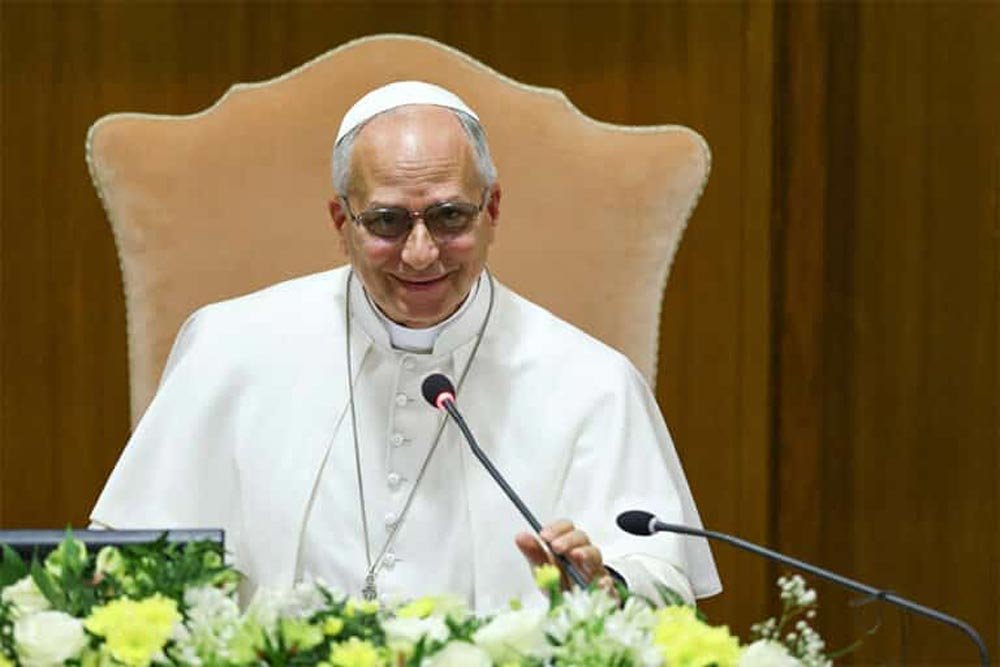

Pope Leo has issued the first major teaching document of his papacy, warning that artificial intelligence must be “disarmed” and urging global action to prevent the technology from enabling exploitation, warfare and social manipulation.
Get today's headlines by email 
In the encyclical Magnifica Humanitas (“Magnificent Humanity”), the Pope argued that humanity faced a moral turning point similar to earlier historical failures to confront slavery and colonialism.
“The word is strong, I know, but deliberately chosen because this moment needs words capable of attracting attention,” he said of his call to “disarm” AI.
Encyclicals are formal letters traditionally addressed to Catholic bishops, but modern popes have increasingly used them to address global political, social and ethical issues.
Slavery parallels
A central theme of the document was the comparison between historical slavery and what the Pope described as emerging forms of “digital slavery”.
Leo warned that AI systems risked normalising exploitation both through the conditions under which some technologies are developed and through the ways they are deployed.
“It was impossible not to feel deep sorrow when contemplating the immense suffering and humiliation endured by so many,” the Pope wrote in one of the Vatican’s strongest apologies for the Catholic Church’s role in slavery. He added that he “sincerely asked for pardon” in the name of the Church.
The Pope also referred to the dangers of “digital colonialism”, drawing parallels between abuses committed during the colonial era and modern technology practices.
He said humanity risked repeating past moral failures if governments and companies failed to establish safeguards around AI.
Warning over warfare and politics
The encyclical sharply criticised the growing use of AI in military systems and warned against the development of an AI arms race.
“No algorithm can make war morally acceptable,” the Pope wrote.
He argued that reducing direct human control over weapons systems made it harder to justify war ethically and could lower the threshold for violence by transforming defence into predictive threat analysis.
The Pope also expressed concern about the political effects of AI, including the manipulation of images and videos that could expose people to misleading or biased information.
Leo urged those developing the technology to recognise what he called their “ethical and spiritual responsibility”.
“Every design choice reflects a vision of humanity,” he said in a direct appeal to AI developers.
AI leaders join Vatican launch
In an unusual move, the Pope personally presented the encyclical at the Vatican alongside AI researchers, including Christopher Olah, co-founder of Anthropic.
Olah said AI companies often operated within incentives that could conflict with ethical decision-making.
“The questions raised by AI are bigger than the AI research community,” he said, adding that responsibility for regulating the technology could not rest solely with computer scientists.
The Pope has previously compared the need for AI protections to labour and human dignity reforms introduced during the industrial revolution.
However, questions remain about how much influence the Vatican can exert over the rapidly advancing technology sector.
The late Pope Francis issued repeated warnings about climate change after publishing his 2015 encyclical Laudato Si, later expressing disappointment at the lack of global action.
Pope Leo has now established a commission to continue work on AI ethics, though the long-term impact of the Vatican’s intervention remains uncertain.
Join the discussion? 
Already a member? 
 Adapted by ASEAN Now. Source 26 May 2026
Recommended Comments
Create an account or sign in to comment