



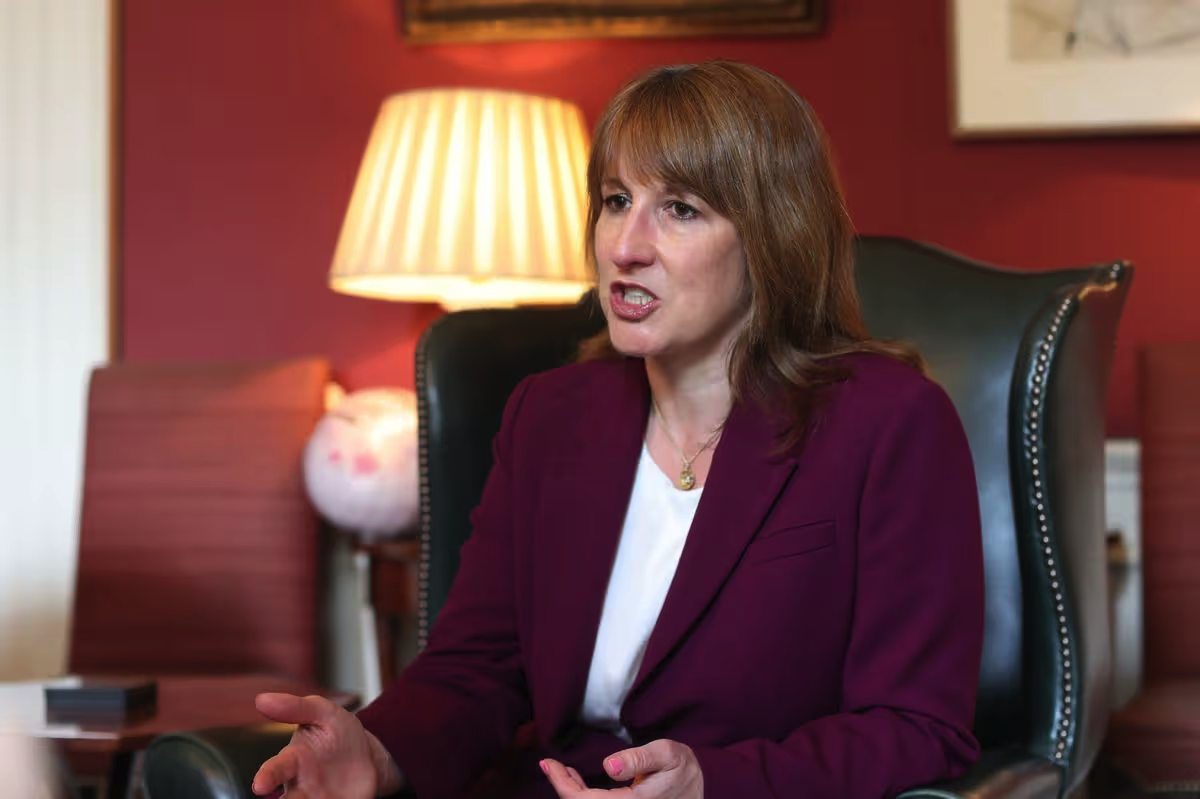

UK Chancellor Rachel Reeves has said the United States made a “mistake” by abandoning diplomatic talks with Iran and entering into a military conflict, warning that the war risks severe economic consequences and has not made the world safer.
Get today's headlines by email 
Speaking at CNBC’s Invest in America forum in Washington, D.C., Reeves called for de-escalation, arguing that renewed diplomacy would provide the most effective path toward stability.
“The best economic policy now, not just for the UK but globally, is to de-escalate,” she said.
Her comments represent some of the strongest criticism from a senior British official since the United States launched military operations against Iran more than six weeks ago, in coordination with Israel.
Economic fallout and global concerns
The conflict has raised fears of a wider economic slowdown. The International Monetary Fund recently warned that the fighting could push the global economy toward recession, with the United Kingdom potentially among the hardest-hit advanced economies.
Energy prices have surged since hostilities began, largely because of disruption to shipping through the Strait of Hormuz, a critical route for global oil and gas exports.
Reeves said damage to energy infrastructure in the Middle East was already driving long-term economic risks.
She also confirmed that the UK government would not take part in the US-led military blockade of the Strait of Hormuz, which Washington has used as part of its strategy to pressure Iran.
“Our growth will be higher and inflation will be lower if the conflict comes to an end,” Reeves said, noting the UK’s vulnerability as a net importer of gas.
Diplomacy versus military action
Reeves said she shared the US administration’s concerns about Iran’s leadership but questioned the decision to abandon negotiations.
According to the chancellor, diplomatic channels had been open before the conflict began and offered a more effective route to addressing concerns over Iran’s nuclear programme.
“Iran does not currently have a nuclear weapon,” she said, adding that diplomacy was the best way to prevent it from acquiring one.
Reeves also criticised the lack of clarity about the US objectives in the war. She said it was unclear whether Washington aimed to force regime change, dismantle Iran’s nuclear program, or push Tehran back to the negotiating table.
The US has recently shifted its focus toward reopening the Strait of Hormuz to commercial shipping.
“If that’s the aim, well it was open a few weeks ago,” Reeves said.
Strains in the ‘special relationship’
Despite the disagreement, Reeves said relations between the UK and the US remained strong.
“Friends are allowed to disagree,” she said.
However, comments from US President Donald Trump suggested tensions between the allies.
Asked about the “special relationship” between the two countries in an interview with Sky News, Trump replied: “With who?”
He added that relations “had been better”, accusing Britain of failing to provide support when requested.
Meanwhile, the US Treasury Secretary Scott Bessent defended the conflict, saying some economic damage was justified if it reduced security risks posed by Iran.
UK leaders seek path to ceasefire
Reeves said the UK prime minister Keir Starmer and French President Emmanuel Macron were due to hold talks aimed at ensuring safe navigation through the Strait of Hormuz if a ceasefire can be reached.
The IMF has already lowered its forecast for UK economic growth this year to 0.8%, down from a January estimate of 1.3%.
Despite the downgrade, Reeves said she remained confident the UK economy could outperform expectations.
Earlier this week she told the Daily Mirror she was “frustrated and angry” that the United States had entered the war without a clear exit strategy.
The UK government has also said it has no intelligence assessment indicating that Iran intends to target Europe with missiles.
Join the discussion? 
Already a member? 
 Adapted by ASEAN Now. Source 16 April 2026
Recommended Comments
Create an account or sign in to comment