



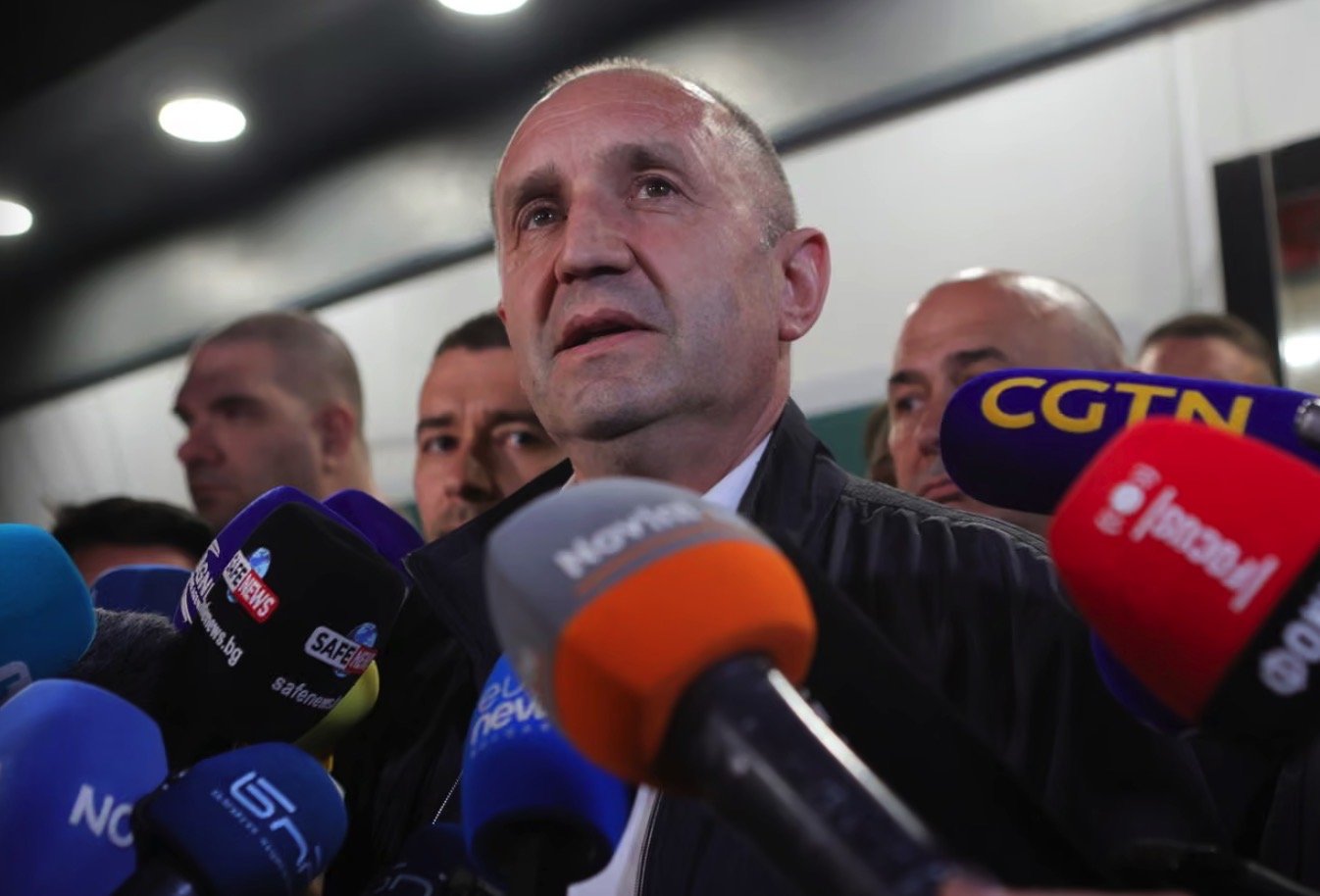

Former Bulgarian president Rumen Radev’s political movement has secured an outright parliamentary majority, potentially ending years of unstable coalition governments while prompting debate about the country’s future direction within the European Union.
Get today's headlines by email 
Final results released on Monday showed the Progressive Bulgaria party winning 44.6% of the vote in Sunday’s election. The result is projected to give the party 131 of the 240 seats in the national assembly.
The outcome marks the first time since 1997 that a single political force has achieved a parliamentary majority in Bulgaria.
First clear mandate after years of political deadlock
The vote follows a prolonged period of political instability. Bulgaria has held eight elections since 2021, when widespread anti-corruption protests forced the resignation of the government led by long-serving pro-European prime minister Boyko Borissov.
Radev’s party finished far ahead of its main rivals. Borissov’s conservative GERB party received 13.4% of the vote, while the pro-European We Continue the Change–Democratic Bulgaria (PP-DB) alliance secured 12.6%.
Speaking after the result became clear, Radev said the vote reflected public frustration with entrenched corruption and established political groups.
“This is a victory of hope over distrust, a victory of freedom over fear, and finally, if you will, a victory of morality,” he said.
Balancing relations with the EU and Russia
Although Radev has affirmed Bulgaria’s commitment to its European path, he has been critical of several European Union policies. He previously called for a referendum on the country’s decision to adopt the euro, though the proposal did not proceed.
In a message posted online, European Council president António Costa congratulated Radev and said he looked forward to cooperation on “a prosperous, autonomous and secure Europe”.
Radev has also repeatedly argued for restoring more pragmatic relations with Moscow and resuming the flow of Russian energy supplies to Europe. Kremlin spokesperson Dmitry Peskov said Russia welcomed remarks from European leaders, including Radev, supporting dialogue.
The 62-year-old former fighter pilot stepped down from the largely ceremonial presidency in January to run in the election on an anti-corruption platform. During his campaign he criticised a defence agreement between Bulgaria and Ukraine and opposed sending Bulgarian weapons to Kyiv.
However, he has pledged not to block future EU decisions and has consistently rejected accusations that he is aligned with the Kremlin.
Reform prospects and political reactions
Radev’s parliamentary majority does not reach the 160-seat threshold required to pass major constitutional changes, including a comprehensive overhaul of Bulgaria’s judicial system.
Analysts say cooperation with the PP-DB coalition could make such reforms possible, as the alliance has identified judicial reform as a central priority.
Some observers remain cautious about the prospects for meaningful change. Dimitar Keranov of the German Marshall Fund’s European resilience programme said the country’s political system still faces deep structural problems.
“The corrupt system remains,” he said, warning that political stability alone does not guarantee reform.
Mixed reactions among voters
Voter turnout exceeded 50%, significantly higher than in recent elections.
Some voters welcomed the result as an opportunity for political renewal. Martin Todorov, who returned to Bulgaria after more than a decade in the United Kingdom, said he hoped the new government would bring change.
Others expressed concern about the country’s direction. Yana Kuzoff, an actor in Sofia, said she feared the outcome could move Bulgaria closer to Russia.
“Our parents fought many years ago to live a normal modern life like Europeans,” she said.
Join the discussion? 
Already a member? 
 Adapted by ASEAN Now. Source 21 April 2026
Recommended Comments
Create an account or sign in to comment