



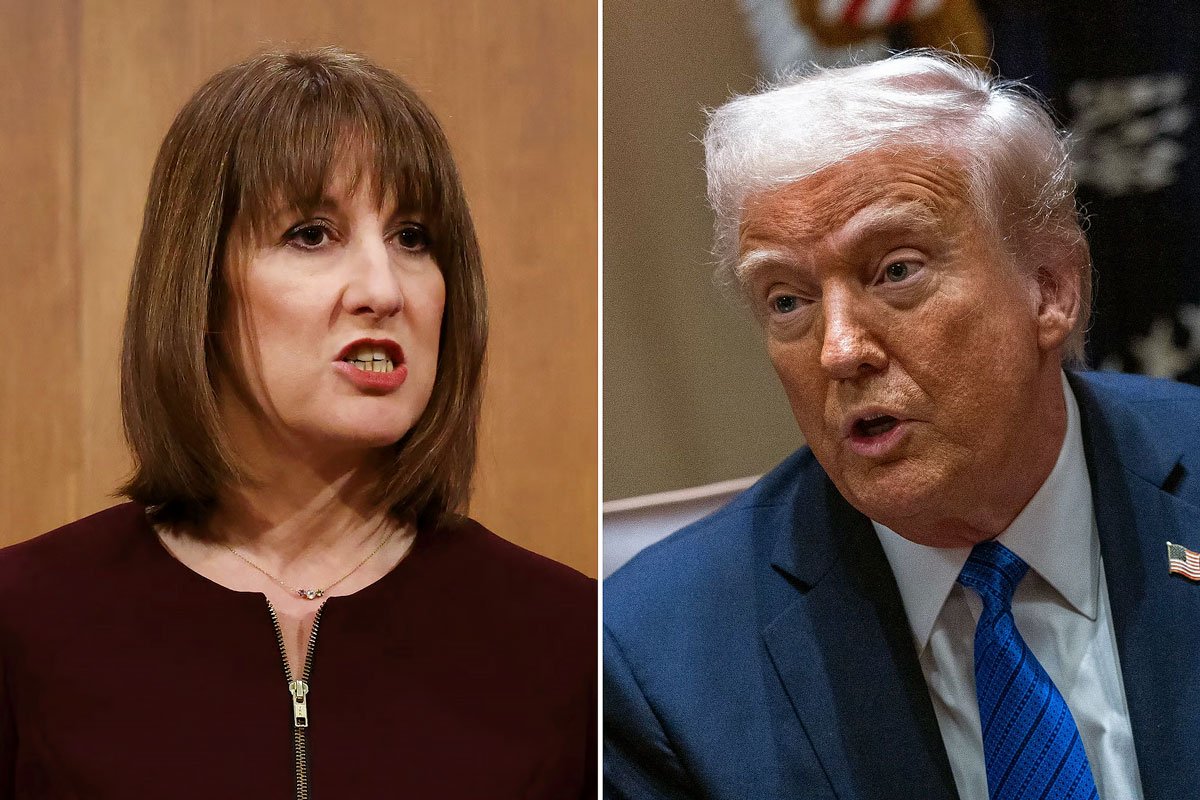

UK Chancellor Rachel Reeves says she is “angry” that Donald Trump decided to launch military action against Iran, warning the conflict risks damaging the economy and increasing pressure on households.
Get today's headlines by email 
Speaking on BBC Radio 2, Reeves said the war lacked a clear exit strategy and could bring significant economic consequences.
She said the conflict was already affecting the global economy and could result in higher inflation, weaker economic growth and reduced tax revenues.
Reeves also stressed that the UK government had chosen not to enter the war.
Reeves attacks decision to go to war
The comments mark a sharper criticism of Trump than those made by Prime Minister Keir Starmer earlier in the day. Starmer said he would not change his stance on the conflict despite pressure from Washington.
Relations between the UK and the US have become strained since Britain refused to allow American forces to use UK bases for the first wave of strikes on Iran.
Starmer later approved their use for defensive operations against Iranian missile attacks, but tensions between the two governments have continued.
Economic concerns and energy pressure
Reeves said the government was monitoring the economic effects of the conflict and working to stabilise energy supplies.
She said officials were trying to secure oil and gas deliveries to the UK to maintain supply and help reduce price pressures.
Rising energy costs have already intensified the cost-of-living debate in Britain.
Opposition parties have urged the government to set out stronger measures to protect households from higher bills.
The Conservatives and Reform UK have called for value-added tax to be removed from household energy bills and want a planned increase in fuel duty to be scrapped.
The Liberal Democrats have also opposed the fuel duty rise. The Green Party of England and Wales say ministers should commit billions of pounds to support energy bills when the price cap is recalculated in July.
Plaid Cymru has asked the government to clarify what assistance would be offered if bills rise further, while the Scottish National Party argues Scotland should control its own energy policy.
Fuel duty is scheduled to increase in September as a temporary 5p reduction introduced after the Russian invasion of Ukraine is phased out.
Government talks and wider geopolitical impact
Reeves and Environment Secretary Emma Reynolds also met supermarket executives to discuss ways to keep food prices stable and strengthen supply chains.
Helen Dickinson, chief executive of the British Retail Consortium, described the meeting as constructive and said supermarkets were working to keep food affordable while maintaining supply resilience.
Earlier, Starmer said the conflict had strengthened the case for closer economic cooperation between the UK and the European Union.
He argued that global instability made stronger partnerships with European allies increasingly important.
Opposition Conservatives criticised the government’s economic strategy. Shadow chancellor Mel Stride said tax increases and climate policies were pushing up costs for households.
Reform UK’s treasury spokesman Robert Jenrick accused Starmer of using the conflict to justify deeper economic integration with the EU.
Meanwhile, Heledd Fychan of Plaid Cymru welcomed the prime minister’s comments on closer European cooperation.
Diplomatic efforts are continuing to address the conflict’s wider impact. Foreign Secretary Yvette Cooper will host an online meeting of 35 countries, including European and Gulf states, to discuss reopening the Strait of Hormuz.
Iran has effectively blocked the key shipping route, disrupting one of the world’s busiest oil channels and pushing global energy prices higher.
Join the discussion? 
Already a member? 
 Adapted by ASEAN Now. Source 2 April 2026
Recommended Comments
Create an account or sign in to comment