



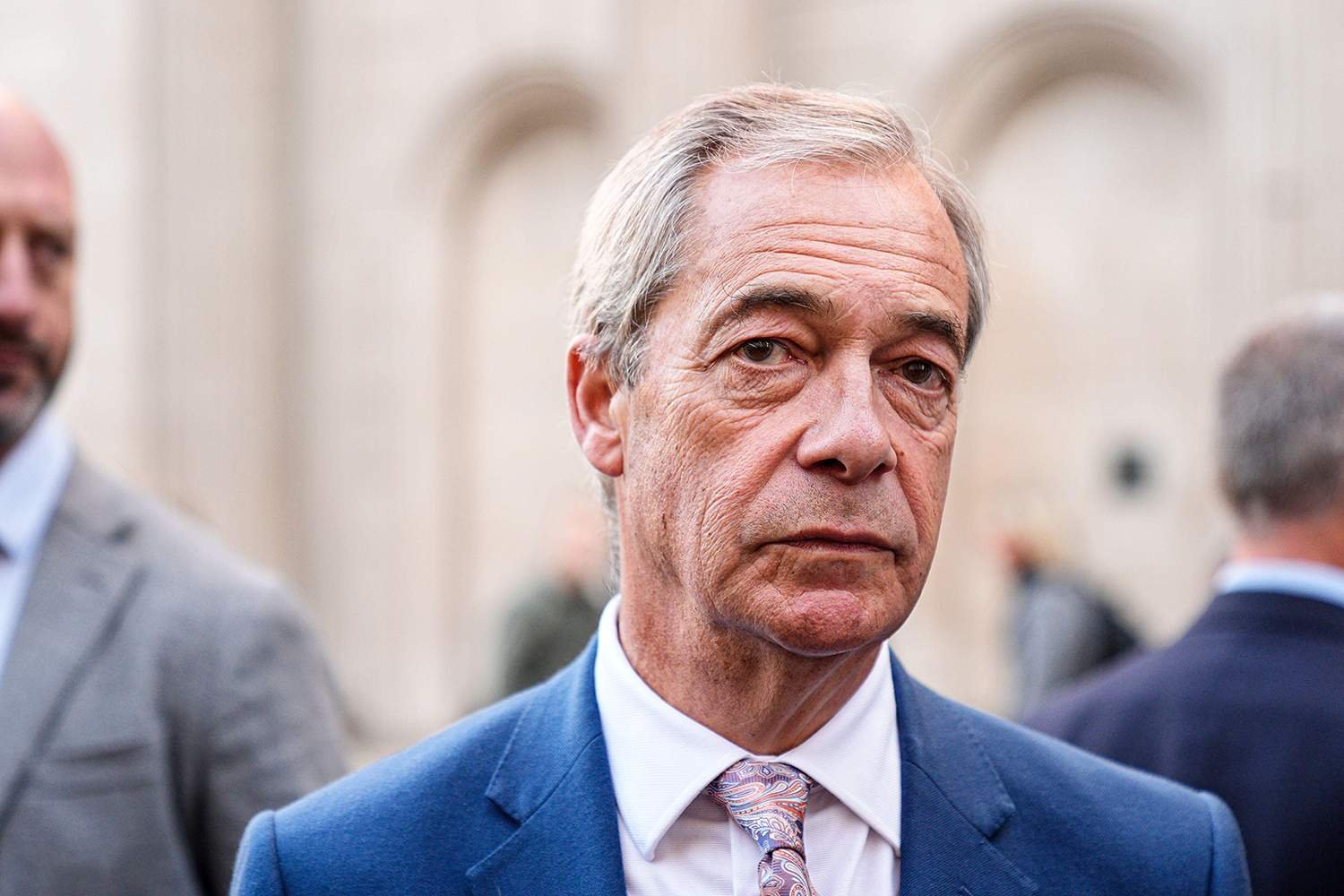

Reform UK has said it would refuse to issue visas to nationals from countries that formally pursue slavery reparations from Britain if the party were to form a government.
Get today's headlines by email 
The policy, announced by the party led by Nigel Farage, would apply to all visa categories, including those for tourism, study and employment. Reform said the measure would target governments that develop official approaches to seeking reparations from the UK over its role in the transatlantic slave trade.
Britain transported an estimated three million Africans across the Atlantic before the practice was abolished in the early 19th century.
Successive British governments have rejected calls for reparations, which have ranged from demands for financial compensation to symbolic gestures such as formal apologies.
Reform outlines proposed visa policy
Reform said the visa restrictions would apply to countries that formally pursue reparations claims against Britain. The party listed examples of actions it would consider to be such demands, including the creation of national reparations committees, legal claims in courts, motions submitted at the United Nations, or official government declarations.
Several Caribbean and African countries were identified by the party as already pushing for reparations. These included Barbados, Jamaica, Nigeria and Ghana.
Reform said that if any country formally demanded reparations, a future government led by the party would “immediately halt” the issuance of new visas to its nationals.
Zia Yusuf, the party’s home affairs spokesman, argued that demands for reparations overlook Britain’s role in abolishing slavery. He said the country “made huge sacrifices to be the first major power to outlaw slavery and enforce this prohibition”.
Debate over reparations intensifies
The proposal follows renewed international discussion about reparations. Last month the United Nations General Assembly adopted a resolution describing the transatlantic slave trade as “the gravest crime against humanity”.
The resolution stated that reparations claims represent a step toward addressing historical injustices experienced by Africans and people of African descent.
It passed with 123 votes in favour and three against, while the United Kingdom was among the countries that abstained.
Calls for reparations have also been led by the Caribbean Community (Caricom), which more than a decade ago produced a 10-point plan for what it calls “reparatory justice”. The proposals include a formal apology from former colonial powers, debt cancellation and investment programmes to address education and public health issues.
Political reaction in Britain
Reform’s announcement drew criticism from other UK political parties.
A spokesperson for the Labour Party described the policy as a “desperate gimmick”. The Conservative Party declined to comment.
Will Forster, the immigration and asylum spokesperson for the Liberal Democrats, said the proposal amounted to “chasing cheap headlines by threatening our allies” and warned it could harm the British economy and public services.
The Green Party of England and Wales pointed to a statement from one of its internal groups welcoming the UN resolution supporting reparations discussions.
At a summit of Commonwealth leaders in October 2024, members agreed that the “time has come” to discuss reparations related to the slave trade, despite efforts by the UK government to avoid placing the issue on the agenda.
Prime Minister Keir Starmer said at the time that no financial compensation had been discussed and reiterated the government’s position that Britain would not pay reparations.
Join the discussion? 
Already a member? 
 Adapted by ASEAN Now. Source 8 April 2026
Recommended Comments
Create an account or sign in to comment