



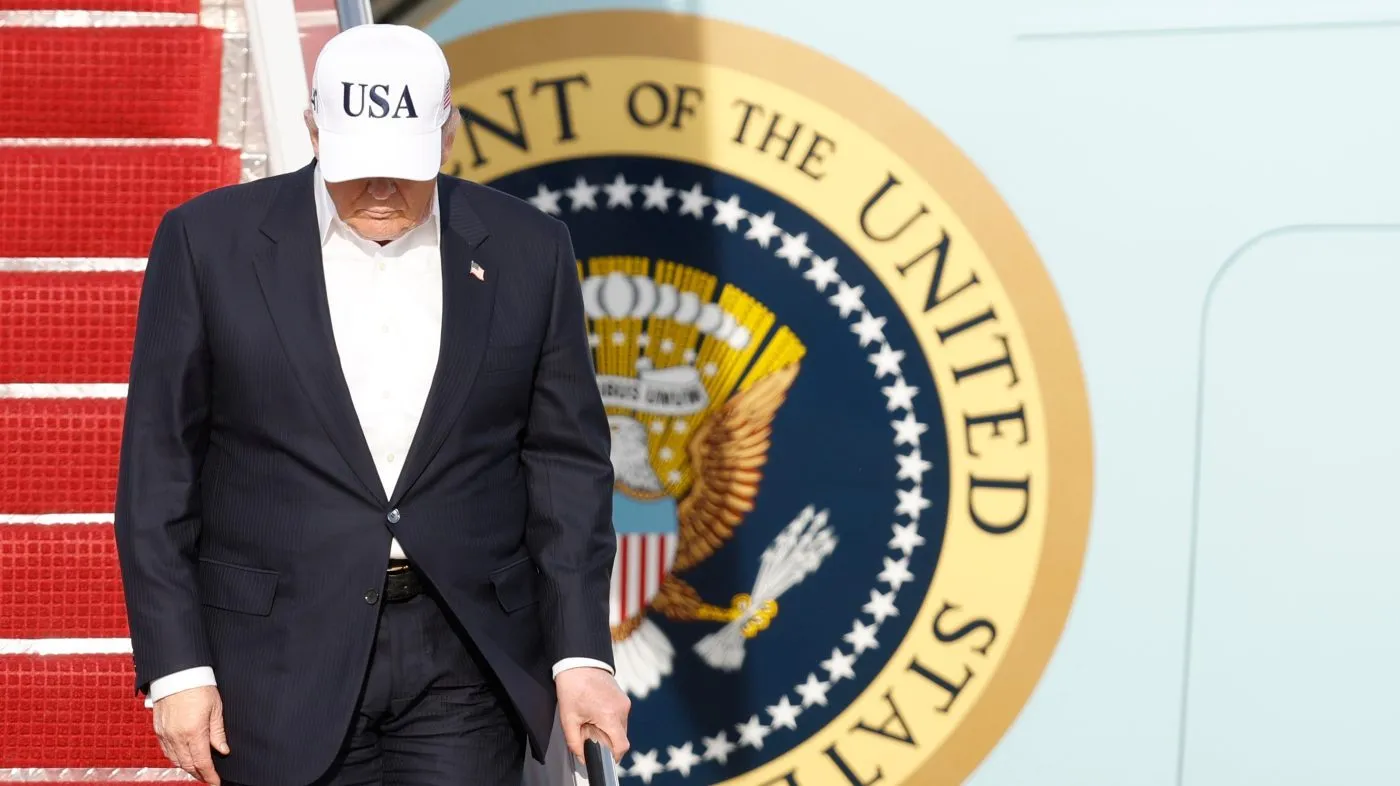

Republican strategists are growing increasingly uneasy over President Donald Trump’s declining approval ratings, warning that weak polling could pose a serious challenge for the party as it prepares for the next midterm elections.
Get today's headlines by email 
A new survey by the The New York Times and Siena College, released on Monday, found Trump’s approval rating has dropped to one of its lowest levels of his second term. The poll reported that 37% of respondents approved of the president’s performance, while 59% disapproved. In the previous survey by the same organizations, Trump’s approval stood at 40%, with 57% expressing disapproval.
Economic concerns weigh on voters
The survey also pointed to growing public anxiety over rising living costs, including inflation and fuel prices, as well as concern about the United States’ involvement in the war with Iran. Some Republican insiders say these issues are contributing to a difficult political climate for the party.
Publicly, Republican leaders have sought to project confidence ahead of the midterms. Privately, however, some party figures acknowledge that economic pressures linked to the ongoing conflict could hurt their electoral prospects.
One Republican consultant who works with candidates in competitive races described the situation as serious, arguing that Trump campaigned heavily on improving the economy and addressing immigration. The consultant said that if the president’s approval ratings remain in the low 30% range by November, Republican candidates could face significant setbacks.
Strategists warn of challenging environment
Kevin Madden, a veteran Republican strategist, said there is still time for the president and his party to improve their standing before voters head to the polls. However, he described the current political environment as difficult for Republican candidates.
Madden said indicators such as presidential approval ratings, measures of whether voters believe the country is moving in the right direction, and consumer sentiment provide a snapshot of the political climate facing candidates in local races. At present, he said, those indicators suggest an unfavourable environment for Republicans.
Despite the troubling polling, Republicans note that recent redistricting efforts could help limit potential losses by creating more favourable electoral maps in some areas.
Critics highlight unmet campaign promises
Some Republican strategists critical of Trump argue that voter frustration reflects disappointment with the administration’s performance since he returned to office in January 2025.
Susan Del Percio, a Republican strategist who does not support the president, said many voters expected stronger economic conditions and fewer foreign conflicts following Trump’s campaign promises. Instead, she said, voters are confronting higher prices, tariffs and international tensions.
Del Percio suggested that early support for Trump’s trade policies may be fading as economic pressures continue. She compared the situation to the political fallout faced by George H. W. Bush after he reversed his pledge of “no new taxes” during his presidency. Democrats later capitalised on that issue during the election cycle that ultimately brought Bill Clinton to power.
Democrats cautious despite improved outlook
As the midterm campaign season approaches, Democrats say they see growing opportunities to regain control of Congress, including the House and possibly the Senate.
However, some Democratic strategists warn their party not to rely solely on Trump’s unpopularity. Joel Payne, a Democratic strategist, said criticism of the administration may help Democrats in the short term but will not resolve deeper public distrust of political institutions.
Payne argued that many voters remain frustrated with both major parties and said Democrats must present a stronger agenda if they want to build lasting support.
Midterms approach amid uncertain mood
For now, Republican strategists acknowledge the party faces a difficult political moment as economic concerns dominate public debate.
One Republican consultant said candidates in competitive races should be worried about the current climate, adding that shifts in voter perception can take time. Ultimately, the consultant said, voters tend to make decisions based on their economic circumstances.
Del Percio echoed that view, saying there may be limited time before the elections for political conditions to change significantly.
Join the discussion? 
Already a member? 
 Adapted by ASEAN Now. Source 20 May 2026
Recommended Comments
Create an account or sign in to comment