



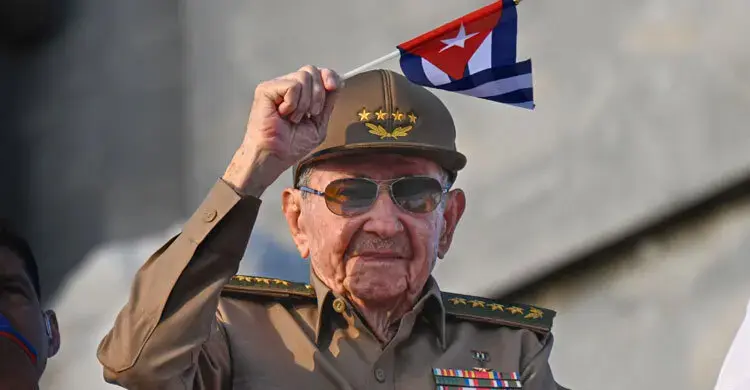

Russia and China have criticised the United States after federal prosecutors charged former Cuban president Raúl Castro with murder over the 1996 downing of two aircraft operated by a Cuban-American dissident group.
Get today's headlines by email 
The case has intensified tensions between Washington and Havana as US President Donald Trump continues to increase pressure on Cuba’s communist government through sanctions and diplomatic threats.
Moscow and Beijing denounce indictment
China’s foreign ministry accused the US of using its legal system and sanctions as tools of coercion against Cuba, one of Beijing’s long-standing allies.
Foreign ministry spokesman Guo Jiakun said Washington should stop “threatening force at every turn” and abandon efforts to pressure Havana “under any pretext”.
Russia also condemned the move. Kremlin spokesman Dmitry Peskov told Russian state media that US actions against Cuba “cannot be condoned”, describing the pressure campaign as methods that “border on violence”.
He said such measures should never be used against current or former heads of state.
Charges linked to 1996 plane shootdown
US prosecutors announced the indictment on Wednesday, accusing Castro and five others of involvement in the destruction of two planes operated by the exile group Brothers to the Rescue.
The aircraft were travelling between Cuba and Florida in 1996 when they were shot down, killing four people, including three US citizens.
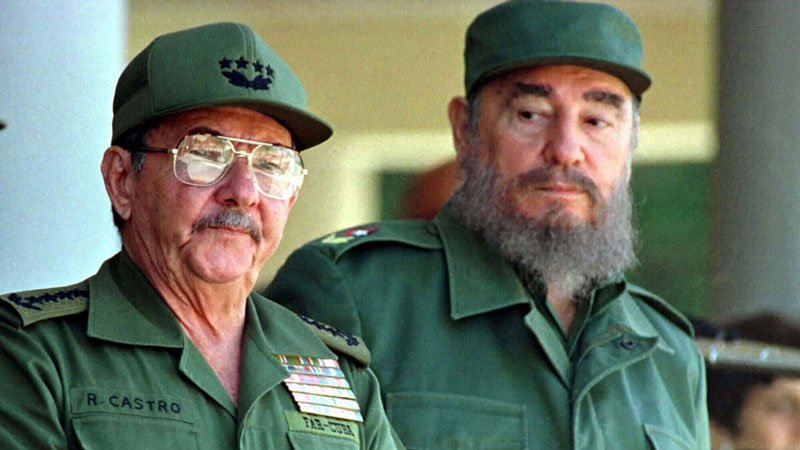
At the time, Castro was serving as head of Cuba’s armed forces. He stepped down as president in 2018 after nearly a decade in office following the rule of his brother, Fidel Castro.
US officials say the offences carry possible penalties ranging from life imprisonment to death.
The incident has remained a major source of dispute between Cuba and the United States for decades, particularly among Cuban exiles living in Florida.
Cuba’s current president, Miguel Díaz-Canel, rejected the charges, calling them “a political manoeuvre” lacking any legal basis.
Trump increases pressure on Havana
The indictment comes amid a broader escalation in US pressure on Cuba under the Trump administration.
Washington has imposed new sanctions targeting Cuba’s energy, defence, financial and security sectors. The US has also tightened restrictions on oil shipments to the island, worsening fuel shortages, blackouts and food supply problems.
Trump has repeatedly suggested that Cuba’s government could collapse under growing pressure. Since the capture of former Venezuelan president Nicolás Maduro earlier this year, he has publicly stated that Cuba was “ready to fall”.
US Secretary of State Marco Rubio declined to say whether the administration planned to bring Castro to the United States for trial.
Speaking in Florida, Rubio said Castro had “openly admits and brags about” ordering the planes to be shot down. Asked about possible US-backed regime change in Cuba, he said Washington preferred a negotiated solution but added the president could act if national security was threatened.
Rubio also issued a message in Spanish to Cubans, portraying US actions as an opportunity for political change and greater freedoms similar to those enjoyed by Cuban-Americans.
Oil shortages deepen crisis
Cuban and US officials have reportedly held talks for several months aimed at easing tensions between the two countries.
However, Washington has continued to increase pressure while Cuba faces worsening economic conditions. A recent Russian oil shipment that reached the island earlier this year has already been exhausted.
Before Maduro’s removal from power in Venezuela, his government was believed to supply Cuba with around 35,000 barrels of oil per day, helping Havana withstand years of Western sanctions.
Join the discussion? 
Already a member? 
 Adapted by ASEAN Now. Source 22 May 2026
Recommended Comments
Create an account or sign in to comment