



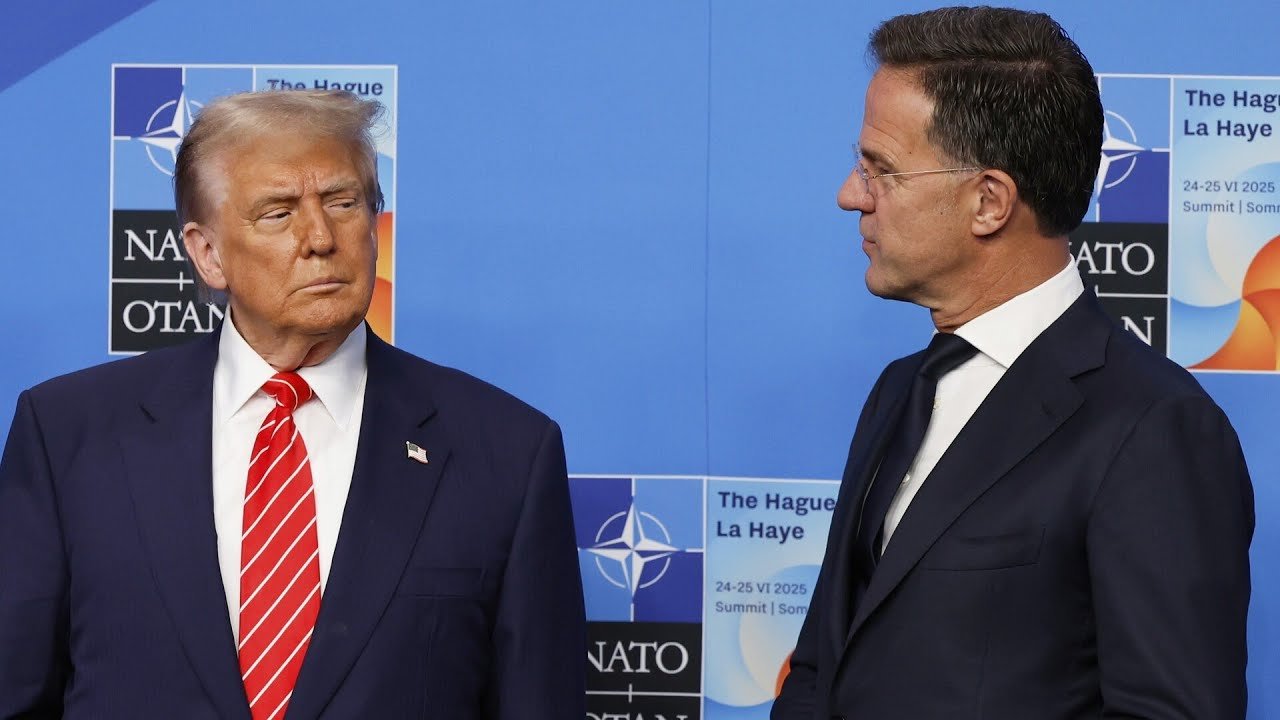

The head of North Atlantic Treaty Organization has said Donald Trump expressed clear frustration over the refusal of US allies to take part in the recent conflict with Iran, following a private meeting in Washington.
Get today's headlines by email 
NATO Secretary General Mark Rutte told CNN that the US president had voiced dissatisfaction with the alliance’s response to the crisis but described their discussion as open and direct.
“He clearly told me what he thought of what happened over the last couple of weeks,” Rutte said. “It is a nuanced picture.”
The meeting took place shortly after the United States and Iran agreed to a two-week ceasefire that includes reopening the strategically vital Strait of Hormuz.
Trump criticises NATO allies
Before meeting Rutte, Trump had sharply criticised the military alliance, calling it a “paper tiger” and questioning its reliability after member states declined to support Washington’s military actions in the Iran conflict.
After the talks, Trump repeated his criticism in a message posted on Truth Social.
“NATO WASN’T THERE WHEN WE NEEDED THEM, AND THEY WON’T BE THERE IF WE NEED THEM AGAIN. REMEMBER GREENLAND, THAT BIG, POORLY RUN, PIECE OF ICE!!!” he wrote.
Earlier in the week, Trump had also linked his frustration with the alliance to opposition among NATO members to his proposal for the United States to take control of Greenland.
Rutte declined to say whether Trump had raised the possibility of withdrawing the United States from NATO during their meeting, but said their conversation had been “very frank, very open” between “two good friends”.
Tensions over Iran conflict
The meeting occurred at a sensitive moment, less than a day after the ceasefire agreement between Washington and Tehran was announced.
The temporary truce followed rising tensions over access through the Strait of Hormuz, a key shipping route for global oil supplies. Trump had previously warned Iran that failure to ensure safe passage through the waterway by a deadline set by Washington could lead to severe consequences, including threats to Iranian infrastructure.
The closure of the strait during the conflict pushed global oil prices higher and increased pressure for international intervention to secure the passage.
Trump had argued that reopening the route should not be solely the responsibility of the United States, urging countries that rely heavily on energy shipments through the strait to take a more active role.
“Go to the strait and just take it,” Trump said last week.
Debate over NATO’s future role
The tensions have renewed debate about the United States’ commitment to NATO, a 32-member military alliance built around collective defence.
Under the organisation’s core principle, an attack on one member is treated as an attack on all. The clause has been invoked only once, following the September 11 attacks in 2001, when NATO allies supported the United States.
Despite that history, Trump has long criticised the alliance and has previously suggested the United States could withdraw. However, US lawmakers passed legislation in 2023 requiring congressional approval before any president can formally leave NATO.
Earlier on Wednesday, White House press secretary Karoline Leavitt acknowledged that the issue could come up in discussions between Trump and Rutte.
“I think it’s something the president will be discussing in a couple of hours with Secretary General Rutte,” she said.
Political reactions in Washington
Republican Senator Mitch McConnell defended the alliance, noting that NATO partners had supported the United States in past conflicts.
“Following the September 11 attacks, Nato allies sent their young servicemembers to fight and die alongside America’s own in Afghanistan and Iraq,” he said in a statement.
McConnell urged the administration to maintain clear and consistent support for the alliance, warning that disputes with partners could undermine efforts to counter global adversaries.
Separately, US Secretary of State Marco Rubio met Rutte at the US State Department earlier in the day. According to a department statement, the discussions covered the Iran conflict, diplomatic efforts related to the war in Ukraine, and cooperation with NATO allies.
The alliance has faced growing strain over the past year, including disagreements about support for Ukraine and Trump’s suggestion that the United States could seek control of Greenland, a territory belonging to Denmark.
Meanwhile, British Prime Minister Keir Starmer is expected to travel to Gulf states to support diplomatic efforts surrounding the ceasefire and plans for security in the Strait of Hormuz.
Join the discussion? 
Already a member? 
 Adapted by ASEAN Now. Source 10 April 2026
Recommended Comments
Create an account or sign in to comment