



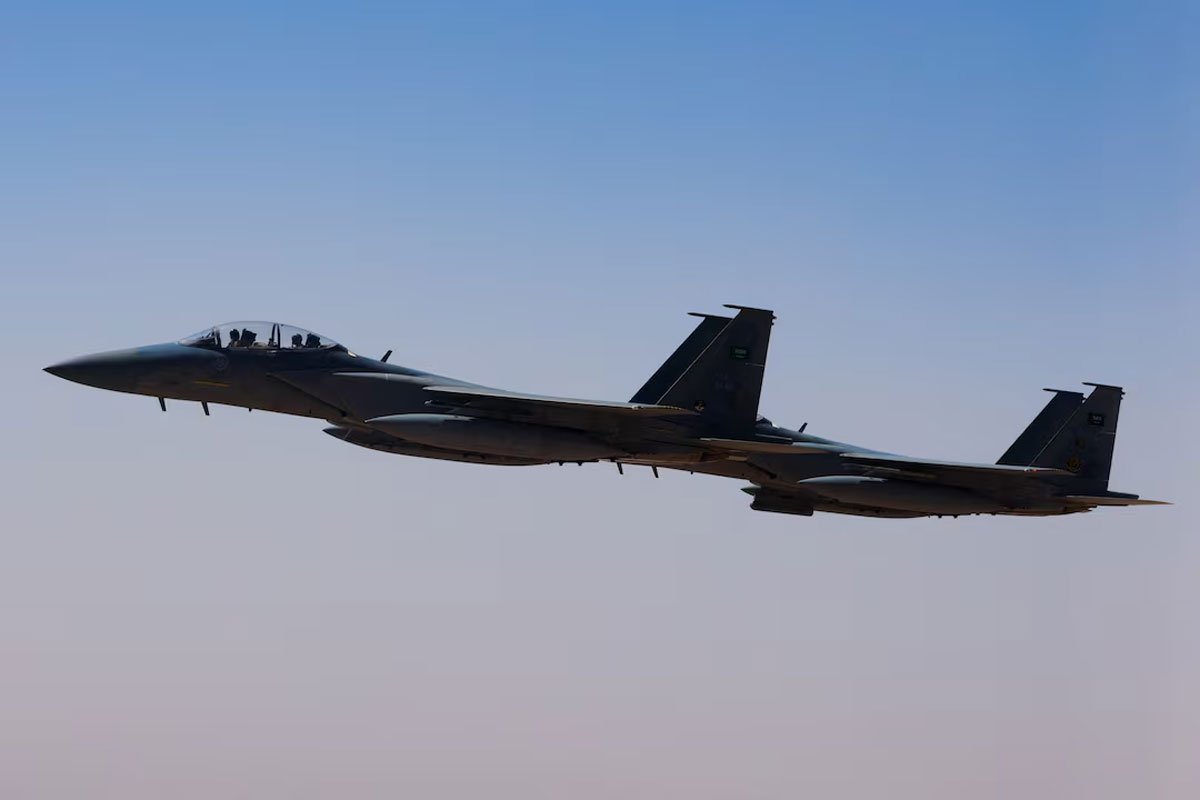

Saudi Arabia carried out previously undisclosed airstrikes on Iran earlier this year in response to attacks on the kingdom during the widening Middle East conflict, according to Western and Iranian officials.
Get today's headlines by email 
The strikes, reportedly conducted by the Saudi Air Force in late March, would mark the first known instance of Saudi Arabia directly launching military action on Iranian territory. Officials familiar with the matter described the attacks as retaliatory moves after Iran targeted Saudi Arabia with missiles and drones during the regional war.
Reuters said it could not independently verify the specific targets of the Saudi operations.
A senior Saudi foreign ministry official did not confirm whether the strikes took place when asked for comment, while Iran’s foreign ministry did not respond to requests for clarification.
Regional conflict widens
The reported Saudi strikes highlight the growing scope of the conflict that began when the United States and Israel launched airstrikes on Iran on 28 February. Since then, the confrontation has spread across the region, drawing in several Middle Eastern countries.
According to officials, Iran has launched missiles and drones at all six members of the Gulf Cooperation Council, targeting not only US military installations but also civilian locations, airports and oil infrastructure. Tehran has also closed the Strait of Hormuz, disrupting international trade.
The United Arab Emirates is also reported to have carried out strikes on Iranian territory. The Wall Street Journal reported that Emirati forces targeted an oil refinery on Iran’s Lavan Island early last month.
Those attacks were said to have taken place around the time US President Donald Trump announced a ceasefire following a five-week air campaign against Iran.
The newspaper reported that US officials had privately welcomed Emirati participation and encouraged Gulf allies willing to confront Iran.
Different approaches from Gulf states
The Saudi and Emirati responses illustrate how Gulf states affected by Iranian strikes have begun responding militarily, although their strategies differ.
The UAE has taken a more confrontational approach, seeking to impose costs on Iran while maintaining limited diplomatic engagement.
Saudi Arabia, by contrast, has attempted to contain escalation while keeping open channels of communication with Tehran. Officials said contacts continued through Iran’s ambassador in Riyadh during the crisis.
A senior Saudi foreign ministry official reiterated the kingdom’s position in favour of reducing tensions, saying Riyadh supports “de-escalation, self-restraint and the reduction of tensions” to maintain regional stability.
Strikes followed by diplomatic engagement
Officials from Iran and Western governments said Saudi Arabia informed Tehran about the strikes, after which intensive diplomatic contacts took place.
Those talks, combined with Saudi warnings that further retaliation could follow, led both sides to reach an informal understanding to scale back hostilities.
Ali Vaez, Iran project director at the International Crisis Group, said such a sequence would suggest both countries recognised the risks of uncontrolled escalation.
He said retaliatory strikes followed by de-escalation would reflect “a shared interest in imposing limits on confrontation before it spiralled into a wider regional conflict”.
According to officials, the informal de-escalation began in the week before Washington and Tehran agreed to a broader ceasefire on 7 April.
An Iranian official confirmed the arrangement, saying the aim was to halt hostilities, protect shared interests and avoid further escalation.
Longstanding rivalry
Iran and Saudi Arabia, the region’s leading Shi’ite and Sunni powers, have long backed opposing factions in conflicts across the Middle East.
Relations began to improve after China brokered a rapprochement in 2023, restoring diplomatic ties and helping secure a ceasefire in Yemen between Saudi Arabia and the Iran-aligned Houthi movement.
During the current conflict, Saudi Arabia has managed to continue exporting oil through the Red Sea, avoiding some of the disruption faced by other Gulf states.
Former Saudi intelligence chief Prince Turki al-Faisal wrote in a weekend opinion article that the kingdom had sought to avoid being drawn deeper into the war, despite pressure from regional tensions.
Changing dynamics on the battlefield
Diplomatic contacts and the threat of stronger Saudi retaliation appear to have reduced the scale of Iranian attacks.
According to a Reuters review of Saudi defence ministry statements, more than 105 missile and drone strikes were recorded during the week of 25–31 March. That number dropped to just over 25 between 1–6 April.
Western officials said that in the days before the broader ceasefire many projectiles launched at Saudi Arabia appeared to originate from Iraq rather than Iran itself, suggesting Tehran had reduced direct attacks while allied groups remained active.
Saudi Arabia later summoned Iraq’s ambassador to protest strikes originating from Iraqi territory.
Tensions nevertheless continued around the start of the wider ceasefire, when Saudi authorities reported dozens of missiles and drones targeting the kingdom on 7 and 8 April.
The spike prompted Riyadh to consider further retaliation against Iran and Iraq, while Pakistan deployed fighter jets to reassure Saudi Arabia and urged restraint as diplomatic efforts intensified.
Join the discussion? 
Already a member? 
 Adapted by ASEAN Now. Source 14 May 2026
Recommended Comments
Create an account or sign in to comment