



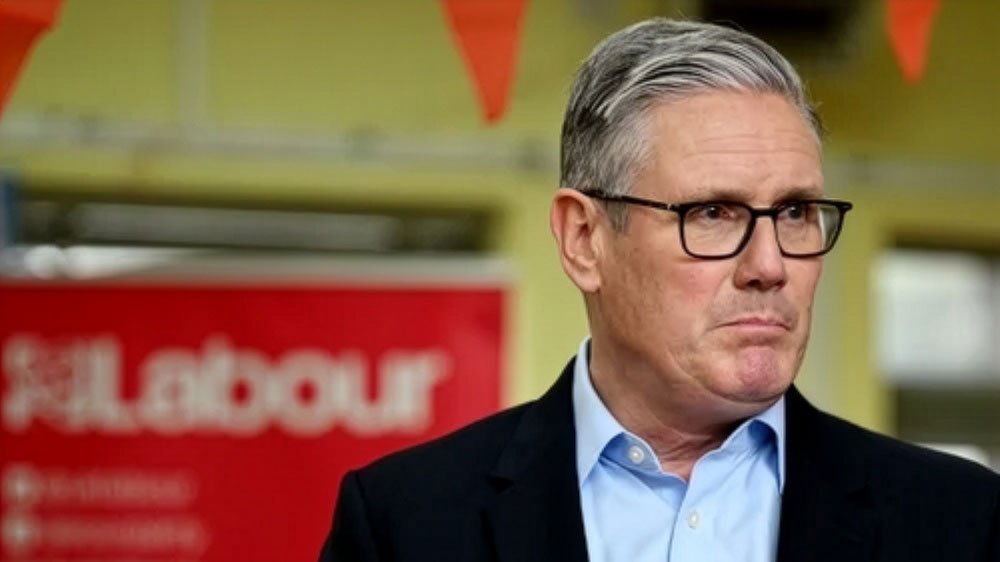

Sir Keir Starmer has said he will not step down as UK prime minister despite mounting pressure following heavy election losses for Labour across England, Scotland and Wales.
Get today's headlines by email 
The results have prompted renewed criticism of the Labour leader from within his own party, although senior cabinet ministers have so far rallied behind him.
Labour has lost power in Wales after more than a quarter century in government, while early results suggest the Scottish National Party (SNP) will remain the largest party in Scotland. In England, Reform UK has made sweeping gains, winning hundreds of council seats and taking control of several authorities traditionally dominated by Labour and the Conservatives.
Reform Surges in England
A projected national share (PNS) compiled by the BBC from results in more than 1,000 wards suggests Reform UK would win the largest share of the vote if the pattern were replicated in a general election.
The projection puts Reform on 26%, followed by the Green Party on 18%. Labour and the Conservatives are tied in third place on 17%.
Labour has already lost hundreds of council seats in England, including in parts of northern England and the Midlands that have historically been strongholds for the party. Further results are still expected as counting continues.
Nigel Farage, leader of Reform UK, described the outcome as a “historic shift in British politics”. Speaking after his party gained control of councils including Havering, he said the traditional dominance of Labour and the Conservatives was coming to an end.
Leadership Questions Grow
The scale of Labour’s losses has intensified questions over Starmer’s leadership.
Several Labour MPs have called on him to step down or set a timetable for his departure. Left-wing MPs Jon Trickett and Jonathan Brash renewed their calls for the prime minister to resign, while Ian Lavery said Starmer should “fall on his sword”.
Other MPs have suggested he should outline a timeline for leaving office. Privately, criticism of the prime minister is said to extend beyond Labour’s left wing.
However, some figures within the party have warned against triggering a leadership battle immediately. Former transport secretary Louise Haigh said that although Starmer’s unpopularity had been raised repeatedly during campaigning, an internal contest now would be irresponsible.
She said the prime minister was performing strongly on the international stage but warned that without changes he could not lead Labour into another election.
Mixed Fortunes Across the UK
In Wales, Plaid Cymru emerged as the largest party in the Senedd but fell short of an outright majority. Reform UK finished second.
The result ended Labour’s 27-year hold on power in Wales and marked the first time in more than a century that the party has lost a national vote there. Labour was reduced to nine seats in the expanded parliament.
Welsh First Minister Eluned Morgan lost her own seat and announced she would step down as leader of the Welsh Labour party.
In Scotland, the SNP is expected to remain the largest party but without an overall majority. In one notable upset, SNP minister Angus Robertson lost his Edinburgh seat to the Scottish Greens.
Cabinet Rallies Around Starmer
Despite the criticism, senior members of Starmer’s cabinet publicly backed him after the results.
Chancellor Rachel Reeves said the prime minister had won a mandate to reform the country and must now focus on delivering it. Defence Secretary John Healey said he believed Starmer could still reverse Labour’s fortunes, while Foreign Secretary Yvette Cooper cautioned against a “knee-jerk reaction”.
Starmer acknowledged the results had been “tough” but said he would not resign.
“I’m not going to walk away and plunge the country into chaos,” he said.
The prime minister is expected to attempt a reset of his government in the coming week once the election results are fully confirmed.
Join the discussion? 
Already a member? 
 Adapted by ASEAN Now. Source 9 May 2026
Recommended Comments
Create an account or sign in to comment