




UK Prime Minister Keir Starmer has warned that significant work is still required to ensure a fragile ceasefire between the United States and Iran holds, as diplomatic efforts intensify to reopen the vital shipping route through the Strait of Hormuz.
Get today's headlines by email 
Speaking during a visit to Saudi Arabia, Starmer said the two-week truce offered a moment of relief but stressed it was only the beginning of a broader effort to stabilise the region and restore energy flows.
The ceasefire follows threats by US President Donald Trump, who warned that an entire civilisation could be destroyed if Iran refused to halt hostilities and allow ships to pass through the strategic strait.
Diplomatic push in the Gulf
Starmer arrived in Saudi Arabia on Wednesday to meet regional partners and discuss how to support the ceasefire agreement and secure safe passage for shipping through the strait.
Addressing British and Saudi personnel at King Fahd Air Base in Taif, he said there remained “a lot of work to do” to ensure the ceasefire could evolve into a lasting peace.
He also emphasised the global importance of restoring traffic through the Strait of Hormuz, which carries roughly a fifth of the world’s energy shipments. Reopening the route, he said, would help stabilise oil and gas supplies and ease pressure on energy prices in the UK and beyond.
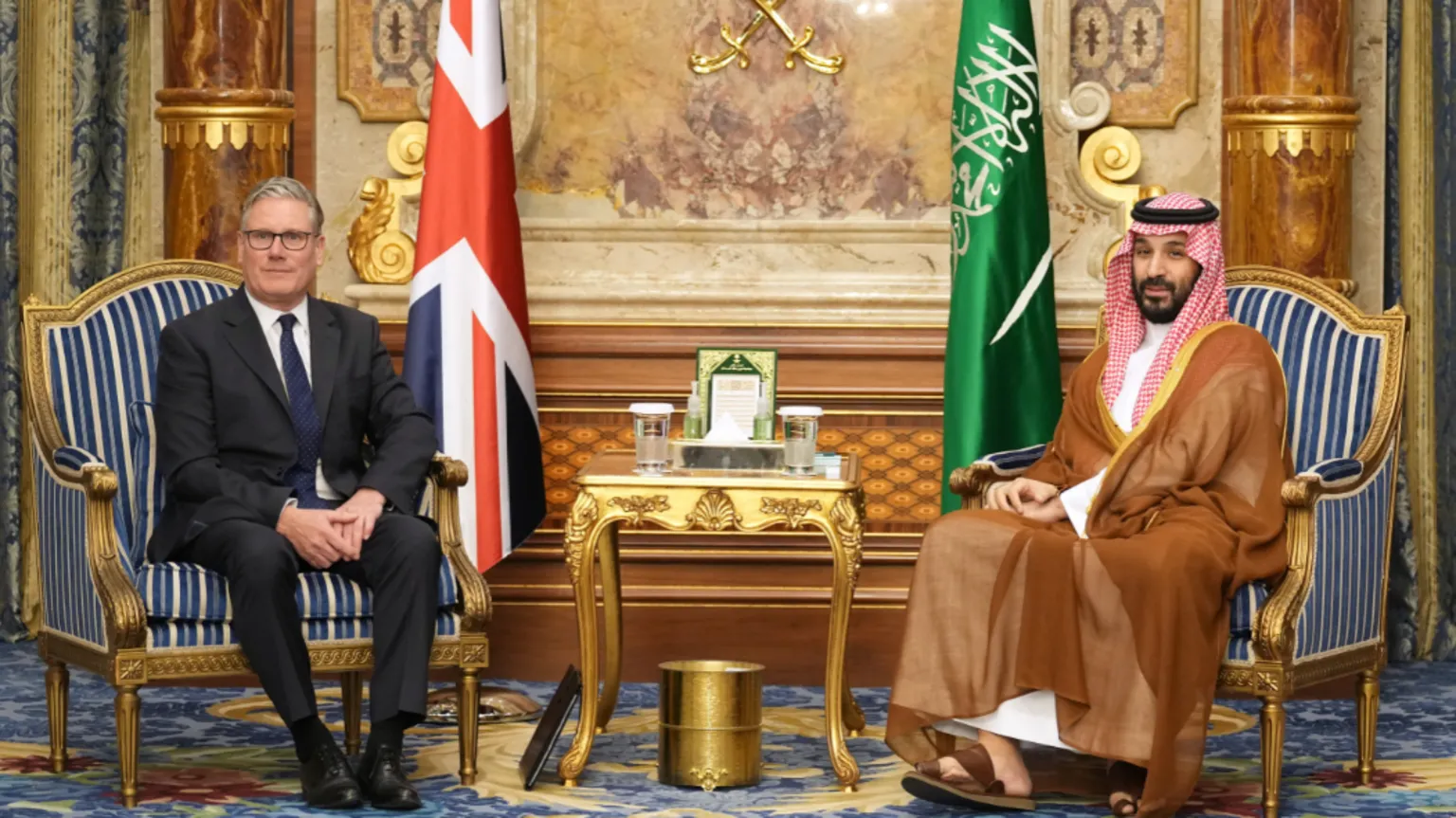
Later in the day, Starmer travelled to Jeddah to meet Saudi Crown Prince Mohammed bin Salman. According to Downing Street, the two leaders discussed international efforts to coordinate practical steps that would give commercial shipping the confidence to return to the waterway.
The UK government said Starmer also thanked Saudi Arabia for assisting British nationals in the region.
Uncertainty over shipping and wider conflict
Despite the agreement, questions remain about whether the ceasefire will hold. Iranian media reported that oil tankers had stopped passing through the strait, raising concerns that shipping has yet to resume normally.
Ship-broker SSY told BBC Verify that vessels operating in the Gulf had received messages warning that the waterway remained closed. Ships were reportedly told they would need approval from Iran’s Islamic Revolutionary Guard Corps before attempting to sail through the strait.
Further uncertainty surrounds the scope of the ceasefire. Pakistan, which helped mediate the negotiations, and Iranian officials said the deal extended to fighting in Lebanon between Israel and the Iran-backed militant group Hezbollah.
Israel, however, has said the temporary truce does not apply to its military campaign in Lebanon. Israeli officials also reported carrying out some of their largest strikes since their ground operation began there.
Political reaction in the UK
The ceasefire has drawn mixed reactions across Britain’s political spectrum.
Conservative shadow housing secretary James Cleverly said the pause in fighting should give Iran an opportunity to reconsider its behaviour both domestically and internationally. He argued that preventing Iran from obtaining a nuclear weapon must remain the central objective.
Liberal Democrat leader Ed Davey welcomed the ceasefire but questioned whether Washington could be relied upon as a partner, calling Trump an “unreliable ally”. He warned that failing to reopen the Strait of Hormuz would risk higher inflation and weaker economic growth.
Meanwhile, Reform UK leader Nigel Farage suggested Starmer might struggle to gain respect during his diplomatic outreach in the Gulf, claiming the government’s handling of the conflict had unsettled some allies.
Building a security coalition
The UK has been attempting to organise an international effort to safeguard the Strait of Hormuz once fighting subsides.
Last week, London hosted a virtual summit involving representatives from more than 40 countries aimed at establishing a coalition to ensure security in the waterway. A follow-up military planning conference was held on Tuesday.
The conflict began in February when the United States and Israel launched coordinated strikes against Iran over concerns that Tehran was accelerating efforts to develop nuclear weapons.
Iran responded with attacks across the Gulf and wider Middle East, while also restricting passage through the Strait of Hormuz. The disruption drove global oil prices sharply higher, raising fears of increased fuel costs and broader economic pressure worldwide.
Join the discussion? 
Already a member? 
 Adapted by ASEAN Now. Source 9 April 2026
Recommended Comments
Create an account or sign in to comment