



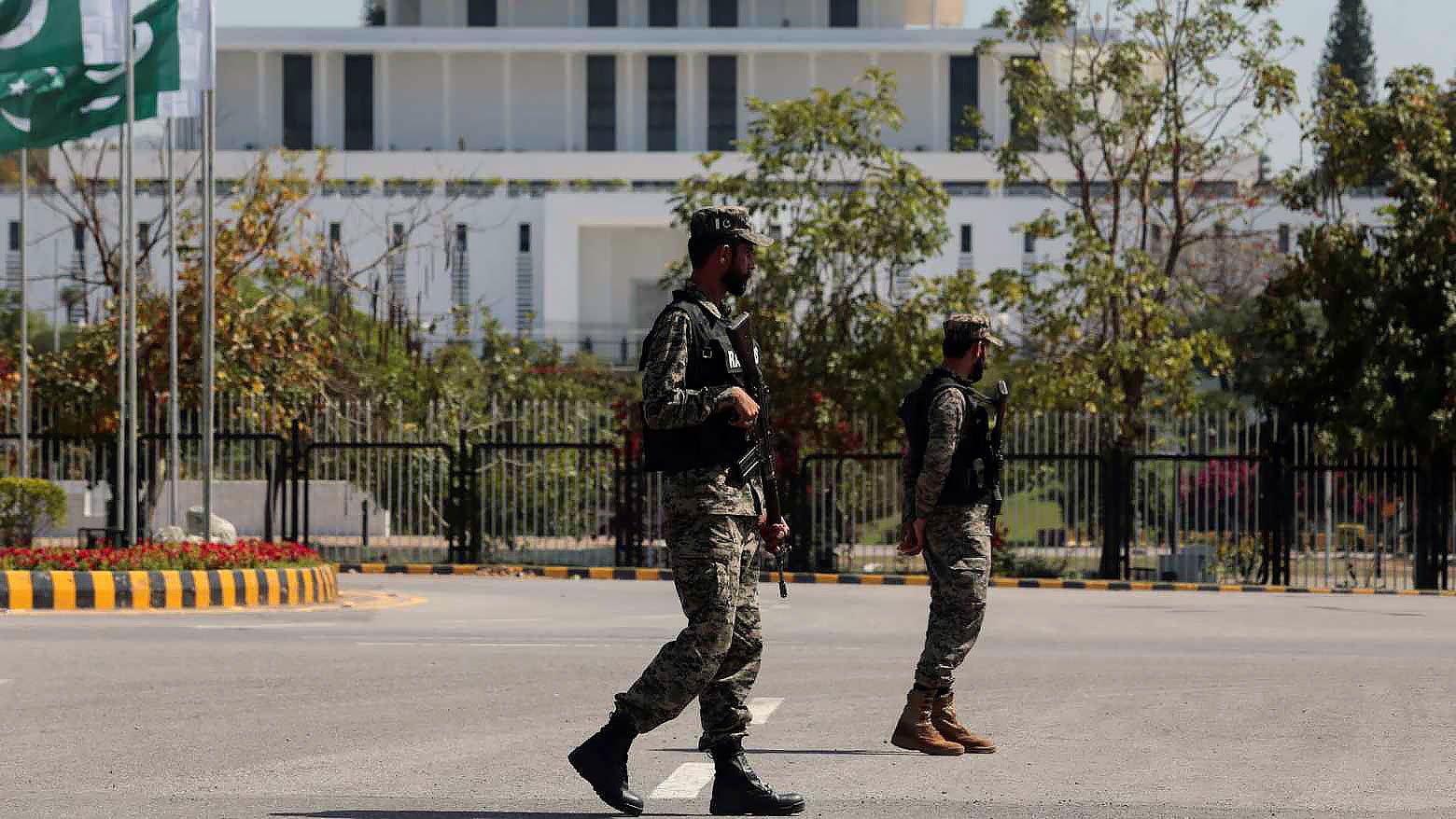

Diplomatic tensions between the United States and Iran intensified on Friday, just hours before delegations from both countries were due to meet in Pakistan for ceasefire negotiations related to the ongoing conflict involving the US, Israel, and Iran.
Get today's headlines by email 
Officials from both sides confirmed their representatives had travelled to Islamabad for the talks scheduled on Saturday. However, new disagreements and strong rhetoric raised uncertainty about whether negotiations would proceed smoothly.
The ceasefire, announced earlier in the week, temporarily halted fighting between US- and Israel-aligned forces and Iran. Yet disputes over the terms of the agreement have emerged since its announcement.
Dispute over ceasefire conditions
Iranian officials say key provisions of the arrangement remain unfulfilled. Parliamentary Speaker Mohammad Bagher Ghalibaf stated that two commitments had not yet been implemented: halting Israeli military operations in Lebanon and releasing Iranian assets frozen abroad.
Writing on social media platform X, Ghalibaf said both measures had been agreed upon and must occur before negotiations could begin.
“These two matters must be fulfilled before negotiations begin,” he wrote.
Ghalibaf is expected to participate in the talks alongside Iranian Foreign Minister Abbas Araghchi. Iranian state media later reported that the delegation had already arrived in Pakistan, but reiterated that discussions would only begin if Washington accepted Tehran’s preconditions.
Iran’s military also issued a warning, saying its forces remained ready to respond because of what it described as repeated breaches of trust by the United States and Israel.
Trump renews military threats
US President Donald Trump adopted a confrontational tone ahead of the negotiations, warning that military action could resume if talks fail.
In an interview with the New York Post, Trump said the United States was preparing additional military assets.
“We’re loading up the ships with the best weapons ever made,” he said, adding that they would be used if a deal was not reached.
In separate posts on the social media platform Truth Social, Trump criticised Iran’s negotiating position, saying Tehran had little leverage apart from its control over key shipping routes such as the Strait of Hormuz.
“The Iranians don’t seem to realize they have no cards,” he wrote.
Fighting in Lebanon continues
Despite the ceasefire announcement earlier this week, violence linked to the conflict has continued in Lebanon.
The Trump administration has credited the ceasefire with preventing a wider escalation in the war. The agreement came shortly after Trump warned of massive destruction if hostilities continued.
However, the United States has not publicly confirmed the details of the ceasefire framework, maintaining that its version differs from the 10-point proposal published by Iran.
Analysts say the two sides remain far apart on several issues, including Iran’s role in the Strait of Hormuz, the future of frozen Iranian assets, Tehran’s nuclear programme, and the scope of Israeli military operations in Lebanon.
Washington and Israel have stated that halting Israeli operations in Lebanon was not included in the ceasefire arrangement, contradicting claims by Iran and Pakistan.
Israel’s military campaign has continued. On Wednesday, Israeli strikes reportedly killed at least 300 people across Lebanon, one of the deadliest days of the offensive.
Reports from southern Lebanon on Friday suggested that attacks had not slowed significantly.
Meanwhile, Kuwait said it had intercepted seven drones launched from Iran that entered its airspace over the previous 24 hours.
US signals cautious optimism
Despite the rising tensions, US Vice President JD Vance said he remained hopeful about the outcome of the talks as he departed for Pakistan.
Vance, who is leading the American delegation, said the United States was open to negotiations but warned that Washington would not accept bad-faith bargaining.
“If the Iranians are willing to negotiate in good faith, we are certainly willing to extend an open hand,” he said.
“But if they try to play us, the negotiating team will not be receptive.”
Vance’s role reflects his position within the more non-interventionist wing of Trump’s political movement. He was chosen to lead the delegation amid Iranian distrust of US envoy Steve Witkoff and Jared Kushner, who previously handled earlier diplomatic contacts.
Earlier negotiation efforts collapsed after Israeli and US military actions interrupted two separate rounds of talks on Iran’s nuclear programme in 2025 and earlier this year.
With both sides maintaining firm positions, the outcome of the Islamabad negotiations remains uncertain.
Join the discussion? 
Already a member? 
 Adapted by ASEAN Now. Source 11 April 2026
Recommended Comments
Create an account or sign in to comment