



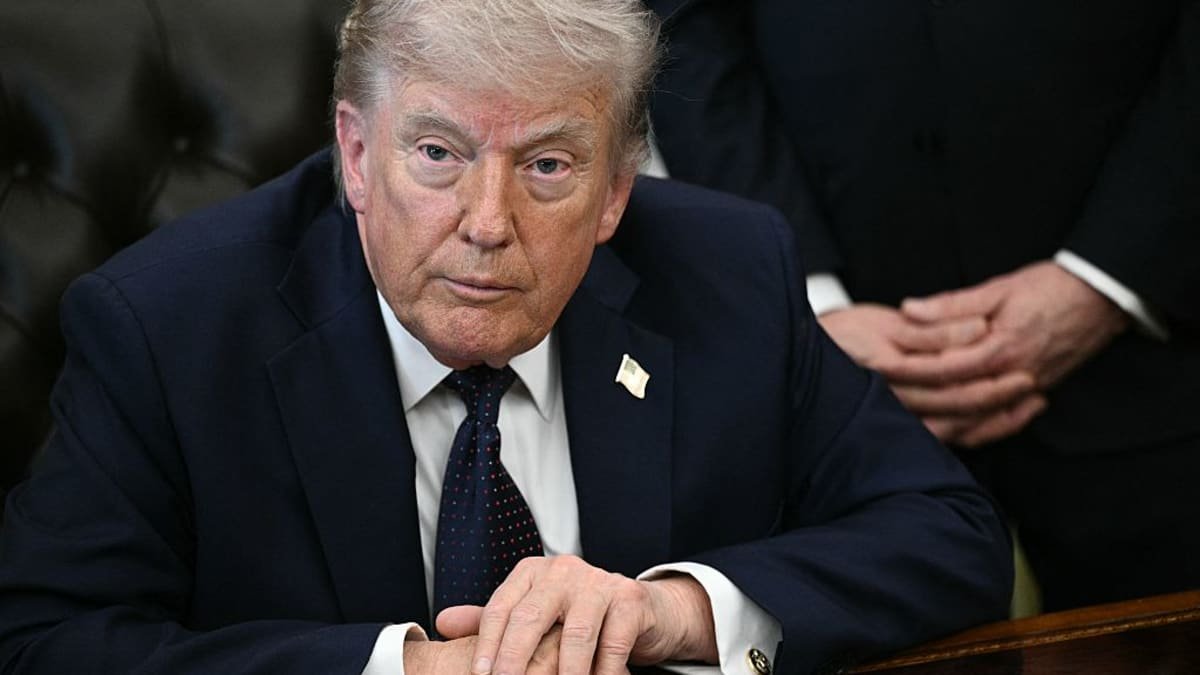

US President Donald Trump has cancelled a planned visit by American officials to Pakistan for talks related to the war involving Iran, shortly after an Iranian delegation departed Islamabad. The trip, which had been scheduled for Saturday, was intended to continue diplomatic contacts aimed at easing tensions. But Trump said the visit would waste “too much time”, adding that Tehran could initiate talks directly if it wished.
Get today's headlines by email 
“If they want to talk, all they have to do is call,” he wrote on his Truth Social platform, also claiming that Iran’s leadership was divided and unclear about who was in charge.
The move came as diplomatic efforts remain stalled despite a temporary ceasefire extension designed to create space for negotiations.
Diplomatic efforts stall
Earlier in Islamabad, Iranian Foreign Minister Abbas Aragchi held discussions with Pakistani officials, who have been acting as intermediaries between Tehran and Washington.
After the meeting, Aragchi said he had outlined Iran’s position on how the conflict could be brought to an end. However, he said it remained uncertain whether the United States was genuinely prepared to pursue diplomacy.
Posting on social media, Aragchi described the talks in Pakistan as “fruitful” and said he had presented Iran’s proposal for a workable framework to permanently end the war. He added that it was still unclear whether Washington was serious about negotiations.
Pakistan’s Prime Minister Shehbaz Sharif said the discussions involved a “warm, cordial exchange of views” on the regional situation.
The Iranian diplomat’s trip also includes visits to Oman and Russia, and Iranian state media reported he is expected to return to Islamabad later.
Ceasefire extended amid tensions
The cancelled visit followed Washington’s announcement on Friday that a US delegation led by special envoy Steve Witkoff and Trump’s son-in-law Jared Kushner would travel to Pakistan for talks.
The White House had suggested Iran was interested in negotiations. Tehran, however, said there were no plans for direct talks with the United States.
US Vice-President JD Vance had been on standby to join the delegation if discussions appeared promising. His absence from the initial team had already suggested that a major breakthrough was unlikely.
Trump recently extended a ceasefire that had been due to expire on 22 April, in the hope that diplomatic contacts could continue.
Asked whether cancelling the trip meant the war might resume, Trump said it did not necessarily signal renewed fighting.
Strait of Hormuz dispute
The conflict has centred on tensions in the Strait of Hormuz, a vital shipping route through which roughly one fifth of the world’s oil supply passes.
Iran restricted passage through the strait after the United States and Israel launched strikes in February. In response, Washington increased its naval presence in the area to block Iranian oil exports.
The confrontation has also been driven by long-standing concerns about Iran’s nuclear programme. Washington and Israel say they believe Tehran is seeking to develop nuclear weapons.
Iran denies the accusation, saying its nuclear activities are intended for civilian energy production, although it has enriched uranium to levels close to weapons grade.
Violence beyond the main conflict
Regional tensions have also continued elsewhere.
Lebanon’s state news agency reported that Israeli strikes in the country’s south killed at least four people on Saturday. Israel’s military said the attacks came after rockets were fired into Israel by Hezbollah.
Despite an existing ceasefire between Israel and the Iran-backed group, both sides have continued to exchange fire in recent weeks while accusing each other of violating the agreement.
A statement from Israeli Prime Minister Benjamin Netanyahu’s office said the military had been ordered to “vigorously attack Hezbollah targets in Lebanon”.
Join the discussion? 
Already a member? 
 Adapted by ASEAN Now. Source 26 April 2026
Recommended Comments
Create an account or sign in to comment