




European leaders meeting in Armenia sought to present a united front on security and support for Ukraine, but discussions were overshadowed by concerns about the United States and its role in Europe’s defence.
Get today's headlines by email 
Although not mentioned directly in official remarks, the influence of Donald Trump was widely acknowledged during the European Political Community (EPC) summit in Yerevan.
French President Emmanuel Macron described growing uncertainty about US security commitments as “the elephant in the room”, warning that Europe remains too dependent on American military protection.
“We have an over-reliance on the US security umbrella,” Macron said during discussions with European leaders gathered in the Armenian capital.
Security concerns grow
The EPC summit brought together leaders from across the continent at a sports complex in Yerevan. Participants focused on energy security, safeguarding democratic institutions and maintaining support for Ukraine as it continues to resist Russia’s invasion.
But the event unfolded against the backdrop of rising tensions with Washington.
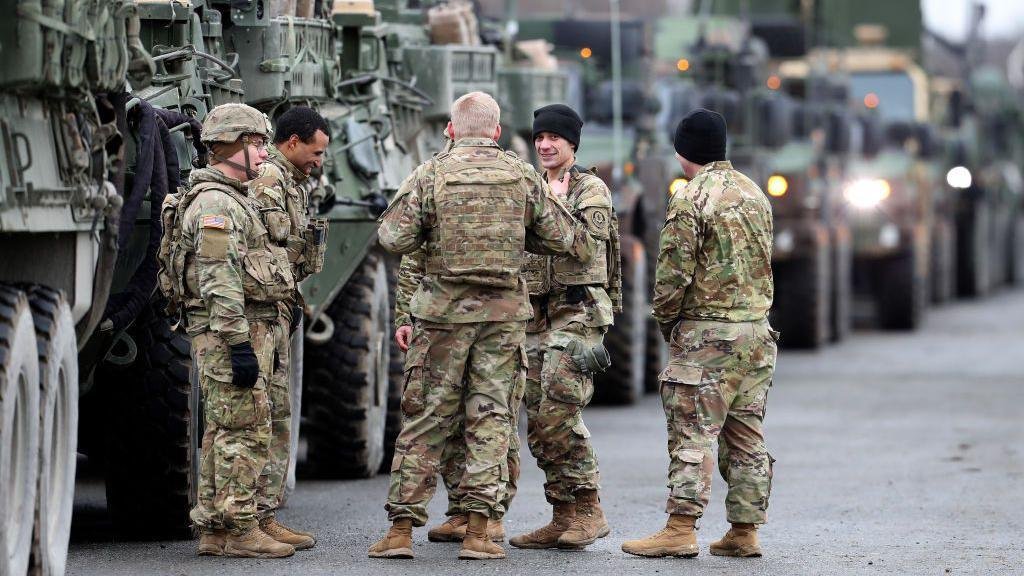
A key trigger for concern was the decision by Donald Trump to withdraw 5,000 US troops and long-range missile systems from bases in Germany. The missiles had been deployed under former president Joe Biden as a deterrent against potential Russian aggression.
The move has heightened fears among European leaders that the United States may be stepping back from its long-standing role as the continent’s primary security guarantor.
Nato Secretary General Mark Rutte acknowledged Washington’s concerns about defence spending by European allies, saying they had “heard” the US president’s frustrations.
Meanwhile, tensions between Berlin and Washington have added to the strain. Germany’s Chancellor Friedrich Merz was not present at the summit but recently criticised Trump’s military action against Iran as lacking a clear strategy.
The White House responded sharply, with Trump saying Merz was “doing a terrible job”.
War and economic pressures
Beyond the diplomatic tensions with Washington, European leaders are also grappling with the broader consequences of conflicts affecting the region.
Economic disruption from the US-Israeli war with Iran and the resulting blockage of the Strait of Hormuz has created further challenges for energy supply and trade.
At the same time, Russia’s ongoing invasion of Ukraine remains central to discussions.
Ukrainian President Volodymyr Zelensky urged allies to maintain pressure on Moscow, warning that the coming months could prove decisive.
“This summer will be a moment when Vladimir Putin decides what to do next,” Zelensky said. “We must push him towards diplomacy.”
He argued that Russia’s difficulties in acquiring military equipment suggested its forces were under strain.
UK seeks closer EU ties
The summit also highlighted efforts by the United Kingdom to strengthen cooperation with the European Union.
Prime Minister Keir Starmer said Europe’s alliances were “not where we want them to be”, while urging countries to accelerate efforts to strengthen their defences.
Britain is currently negotiating to join an EU-led €90bn (£78bn) loan programme designed to support Ukraine. While the UK has been among Kyiv’s strongest backers since Russia’s invasion, it is increasingly working through European structures to coordinate support.
Starmer said closer cooperation would benefit both Ukraine and the British economy through job creation, though he declined to comment on reports that Brussels is seeking an annual contribution from the UK as part of broader negotiations on resetting relations.
Long road to autonomy
For many European leaders, the discussions underline a deeper strategic challenge.
Calls for greater “strategic autonomy” — reducing reliance on US military power — have grown louder, but building such capabilities could take decades.
In the meantime, European governments face the delicate task of strengthening their own defences while maintaining workable relations with Washington as they confront continued geopolitical pressures.
Join the discussion? 
Already a member? 
 Adapted by ASEAN Now. Source 6 May 2026
Recommended Comments
Create an account or sign in to comment