



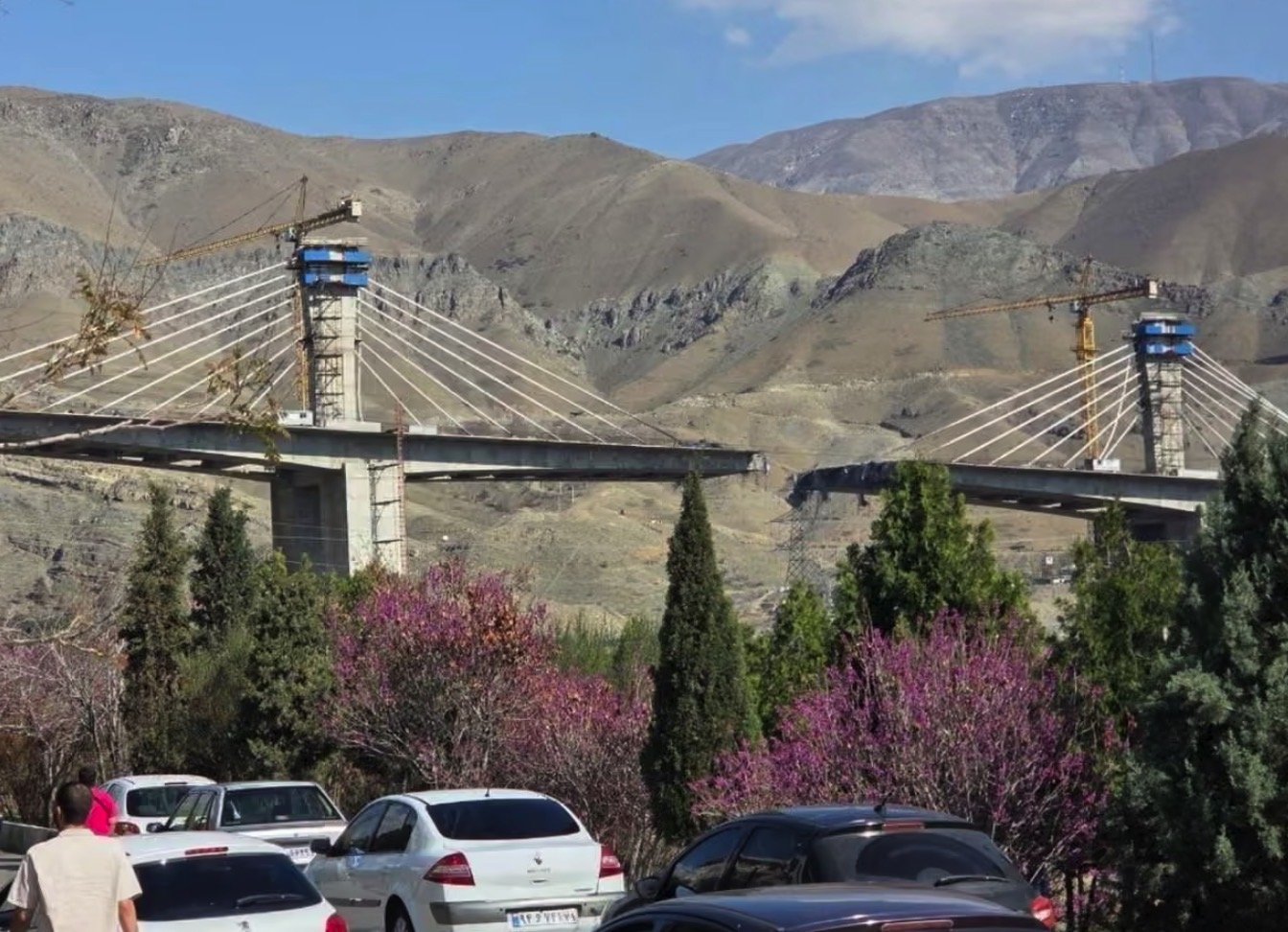

Donald Trump said a U.S. strike destroyed Iran’s largest bridge and warned further attacks could follow if no settlement ends the war with Tehran.
Get today's headlines by email 
The U.S. president posted video on Truth Social showing the collapse of part of the newly completed B1 suspension bridge linking Tehran with Karaj. The structure, about 136 metres high and built at a cost of roughly $400 million, split after the central span was hit twice.
Bridge destroyed in strike
Footage showed a section of the bridge falling onto the roadway below as black smoke rose from the site. Later images revealed a wide gap in the middle of the structure, previously one of Iran’s major infrastructure projects.
Iranian state media reported eight people were killed and 95 injured in the attack. It was unclear whether civilians were using the bridge when it was struck, though images suggested at least one truck was on the span at the time.
Trump wrote online that “the biggest bridge in Iran comes tumbling down, never to be used again,” adding that “much more” would follow if a deal was not reached.
Escalation in widening conflict
The strike came a day after Trump threatened further attacks during a televised address from the White House. He said the war launched by the United States and Israel against Iran on 28 February was close to achieving its objectives.
In the same speech, he warned that U.S. forces could target Iran’s power plants. Trump said the United States could strike every electricity generating facility “very hard and probably simultaneously,” potentially cutting power to large parts of the country.
The bridge attack was one of several confirmed strikes inside Iran this week. Independent verification remains difficult because Iranian authorities have shut down internet access during the conflict.
Video circulated earlier in the week showing a major strike on a missile facility in Isfahan. Footage captured from a nearby car showed large explosions and secondary blasts at the site. The authenticity of the video was later confirmed.
Nuclear concerns and retaliation threats
Isfahan is believed to be linked to Iran’s nuclear programme. Analysts say the country may have moved some of its stockpile of uranium enriched to 60 percent to facilities in the area.
Such material could potentially be refined further to weapons-grade levels if the technical capability remained available.
In Washington, there has been speculation that the U.S. considered an airborne operation to seize the radioactive material from underground storage. Trump later dismissed those reports, saying the material was buried so deep that he did not consider it a priority.
The war began when the United States and Israel launched coordinated strikes on 28 February that killed Iran’s supreme leader, Ali Khamenei, along with several associates. The attack came as negotiations over a potential nuclear agreement were still under discussion.
Iran said one of its medical facilities, the Pasteur Institute in Tehran, was hit during strikes on Thursday. Israel said earlier attacks targeted a headquarters used by Iran’s Revolutionary Guard to finance armed groups across the Middle East.
Iranian military spokesperson Ebrahim Zolfaqari said Tehran would carry out “broader and more destructive” attacks in response and vowed the war would continue until its enemies faced “permanent regret and surrender”.
Global concern as casualties rise
Iran has sustained heavy losses during the conflict. More than 15,000 bombing raids have been reported since the fighting began.
Rough estimates from the International Federation of Red Cross and Red Crescent Societies indicate at least 1,900 people have been killed in Iran and around 20,000 injured.
The fighting has also unsettled global markets. Oil prices rose roughly 7 percent to about $108 a barrel amid fears the conflict could disrupt energy supplies.
António Guterres, secretary-general of the United Nations, warned the world was “on the edge of a wider war” and urged all sides to halt the fighting.
Join the discussion? 
Already a member? 
 Adapted by ASEAN Now. Source 3 April 2026
Recommended Comments
Create an account or sign in to comment