



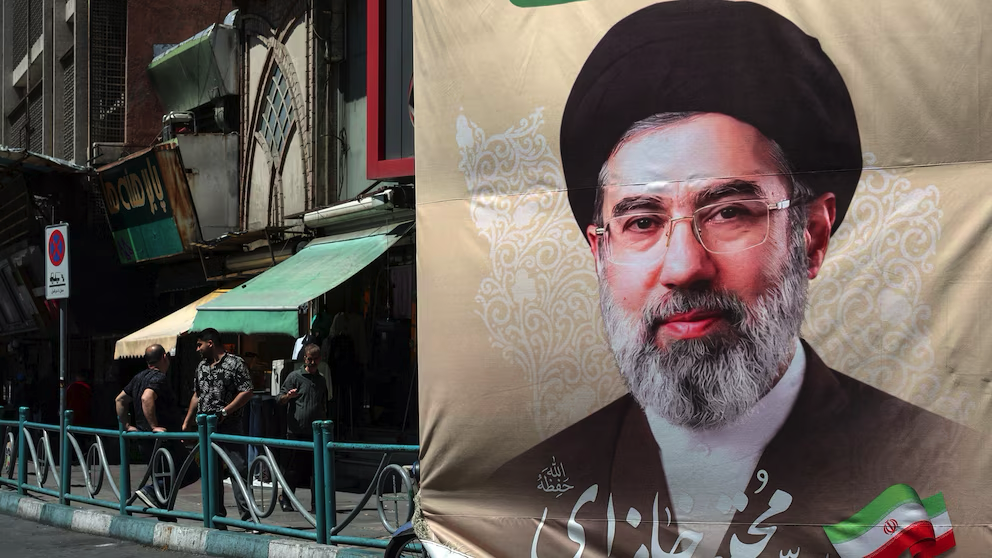

Iran’s political leadership has become the subject of debate among U.S. officials and analysts, after President Donald Trump suggested the country’s ruling system is fractured and struggling to determine who is in charge. Speaking publicly over the past week, Trump said divisions between hardline and moderate factions were hampering decision-making in Tehran and slowing progress in negotiations with the United States.
Get today's headlines by email 
However, several security and policy sources familiar with the situation dispute that characterization. They say the Iranian system remains functional, though decision-making has become less centralized following recent military developments.
Leadership after the Khamenei transition
According to officials cited by security sources, authority in Iran has shifted since the death of former supreme leader Ali Khamenei in U.S.–Israeli strikes on 28 February.
His son, Mojtaba Khamenei, is believed to have assumed the role of supreme leader. But sources say he remains in hiding and difficult to reach, complicating the government’s internal coordination.
Rather than a single dominant authority, decision-making now appears to involve a small group of senior figures closely linked to the Islamic Revolutionary Guard Corps (IRGC), the powerful military body founded in 1979 by revolutionary leader Ayatollah Ruhollah Khomeini.
Security officials describe the arrangement as resembling a “politburo-style” system, where several figures collectively shape policy.
Those cited as key participants include IRGC commander-in-chief Ahmad Vahidi, Supreme National Security Council chief Mohammad Bagher Zolghadr, military adviser Yahya Rahim Safavi, and parliament speaker Mohammad Bagher Ghalibaf.
Despite differences in style or emphasis among officials, one regional policy source said there is “no clear evidence of fractures at the level of core decision-making.”
Questions over the supreme leader’s condition
Speculation has circulated about Mojtaba Khamenei’s health after reports he was seriously injured during bombing at the start of the war.
U.S. Defense Secretary Pete Hegseth has said the leader suffered severe wounds and disfigurement. The The New York Times reported he is recovering from burns to his face and lips that may make speaking difficult.
Some officials believe he remains involved in strategic decisions even if not all matters are brought directly to him. Others say he is largely isolated, communicating only through intermediaries and avoiding phone calls or meetings.
One security source said the system appears strained but still operational. “They’re in disarray, but they’re still in control over the country,” the source said.
Military pressure and diplomatic stalemate
The debate over leadership comes as the United States and Israel continue to assess their strategy toward Iran.
Trump has sought to increase economic pressure through a blockade of the Strait of Hormuz, while Israeli leaders argue military operations have significantly weakened Iran.
An Israeli official described the campaign as a major achievement, saying Iran is “weaker than it’s ever been.” However, the official added that further action may still be needed and could come through negotiations or other means.
Israeli Prime Minister Benjamin Netanyahu has faced speculation that he urged Washington to pursue regime change in Tehran. An Israeli official rejected that claim, saying the objective was not to overthrow the government.
Analysts warn, however, that Iran remains heavily militarized and strongly influenced by the IRGC.
Iran retains significant capabilities
Despite battlefield losses, intelligence assessments suggest Iran still possesses substantial military resources.
The U.S. Defense Intelligence Agency said this week that Iran continues to hold thousands of missiles and attack drones. Israeli estimates suggest around 60% of missile launchers have been destroyed, though some could be repaired.
Iran is also believed to retain large stockpiles of ballistic missiles. During the recent conflict, more than 550 long-range missiles were fired toward Israel before a ceasefire was reached in early April.
Questions also remain over Iran’s nuclear programme. The International Atomic Energy Agency says it cannot fully verify the status of Iran’s centrifuges and nuclear materials.
Analysts warn that Iran still holds significant quantities of enriched uranium that could potentially be further refined.
While the war has weakened some of Iran’s capabilities, officials and analysts say the country’s leadership and military structure remain intact, leaving uncertainty over how the conflict and negotiations will develop.
Join the discussion? 
Already a member? 
 Adapted by ASEAN Now. Source 25 April 2026
Recommended Comments
Create an account or sign in to comment