



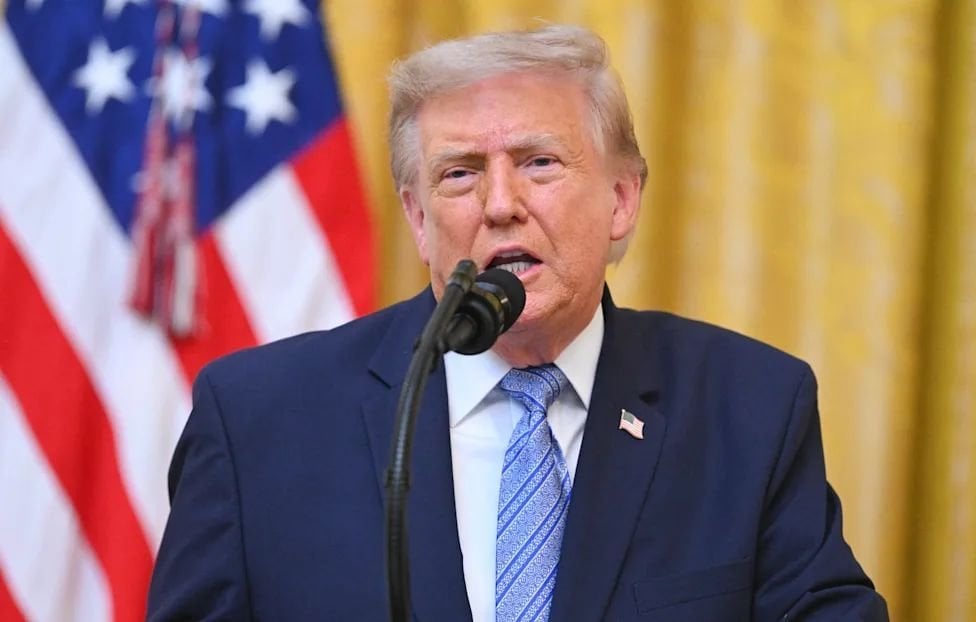

US President Donald Trump said he is close to deciding whether to launch what he described as a “massive attack” against Iran, signalling the possibility of a military operation larger than previous strikes during the months-long conflict with Tehran.
Speaking to Axios on Thursday, Trump said he was considering a significant escalation.
“I am considering a massive attack. Bigger than ever before. I am close to making a decision. We are all set for it.”
He acknowledged such action would have consequences but said no final decision had been made. Trump also claimed Israel would join any operation quickly if requested, though he added that the United States did not need additional support.
Oil prices climb as tensions deepen
Trump's remarks came as Brent crude oil rose above $100 a barrel for the first time in the latest phase of the conflict, amid growing concerns that further disruption to Middle East shipping could push prices even higher.
The comments followed threats by Trump of "major military punishment" against Iran and Yemen's Iran-backed Houthi movement after the Houthis attacked two Saudi oil tankers in the Red Sea.
The Houthis said they struck the tankers Encelia and Layla, causing fires aboard both vessels. No casualties were reported. The attack marked the group's first reported strike on a vessel since announcing a blockade of Saudi-linked shipping.
The Bab el-Mandeb Strait, which links the Red Sea to the Gulf of Aden, is one of the world's most important maritime routes. Around 12% of global trade and roughly a quarter of the world's container traffic passes through the waterway on routes connecting Europe and Asia via the Suez Canal.
Ships have begun avoiding the strait after the Houthis declared a blockade of Saudi ports, including Yanbu, which Saudi Arabia has used to export oil to Asia as shipping through the Strait of Hormuz has been severely disrupted.
Maritime intelligence firm Lloyd's List Intelligence warned the attacks threaten Saudi oil exports from Yanbu and further undermine an alternative shipping route already under pressure because of disruptions in the Gulf.
International concern grows
UN Secretary-General António Guterres warned the Security Council that the Middle East was approaching a dangerous turning point.
"The situation is getting out of control," Guterres said, adding that the region was being pulled into an expanding cycle of confrontation in which each escalation fuelled another.
Several countries also took precautionary measures. The UK temporarily withdrew diplomatic staff from Iran, Germany announced it would pull two naval vessels from the Red Sea, and the US State Department warned Americans in the region that flight cancellations were possible. Israeli authorities also opened bomb shelters in several cities.
Reports of Iranian support for Houthis
Reuters, citing four sources including two Iranian officials, reported that Iran sent Islamic Revolutionary Guard Corps personnel and military equipment, including drone components, to Yemen on 13 July. The report said the deployment coincided with Tehran's calls for the Houthis to blockade the Bab el-Mandeb Strait.
Trump warned on social media that any further Houthi attacks would result in Iran being held responsible, describing the group as an Iranian proxy and threatening major military retaliation against both Iran and the Houthis.
Saudi nuclear deal linked to Israel
Separately, Trump said a proposed US agreement to help Saudi Arabia develop a civilian nuclear programme would depend on Riyadh normalising relations with Israel under the Abraham Accords.
Saudi Arabia has long maintained that recognition of Israel depends on meaningful progress toward Palestinian statehood. It later emerged that the new condition had not been discussed with Saudi officials.
Trump has also intensified his rhetoric toward Iran in recent days, suggesting the US could strike an underground nuclear-related facility that Israel claims houses uranium enrichment centrifuges.
Meanwhile, Secretary of State Marco Rubio said Iran was seeking a deal but warned it would face severe consequences if its actions continued. At the same time, Trump's handling of the conflict faces increasing political pressure at home, with opinion polls showing declining support and the US House of Representatives narrowly approving a resolution calling for an end to US military action in Iran.
Join the discussion? 

24 July 2026
-
 2
2
Recommended Comments
Create an account or sign in to comment