



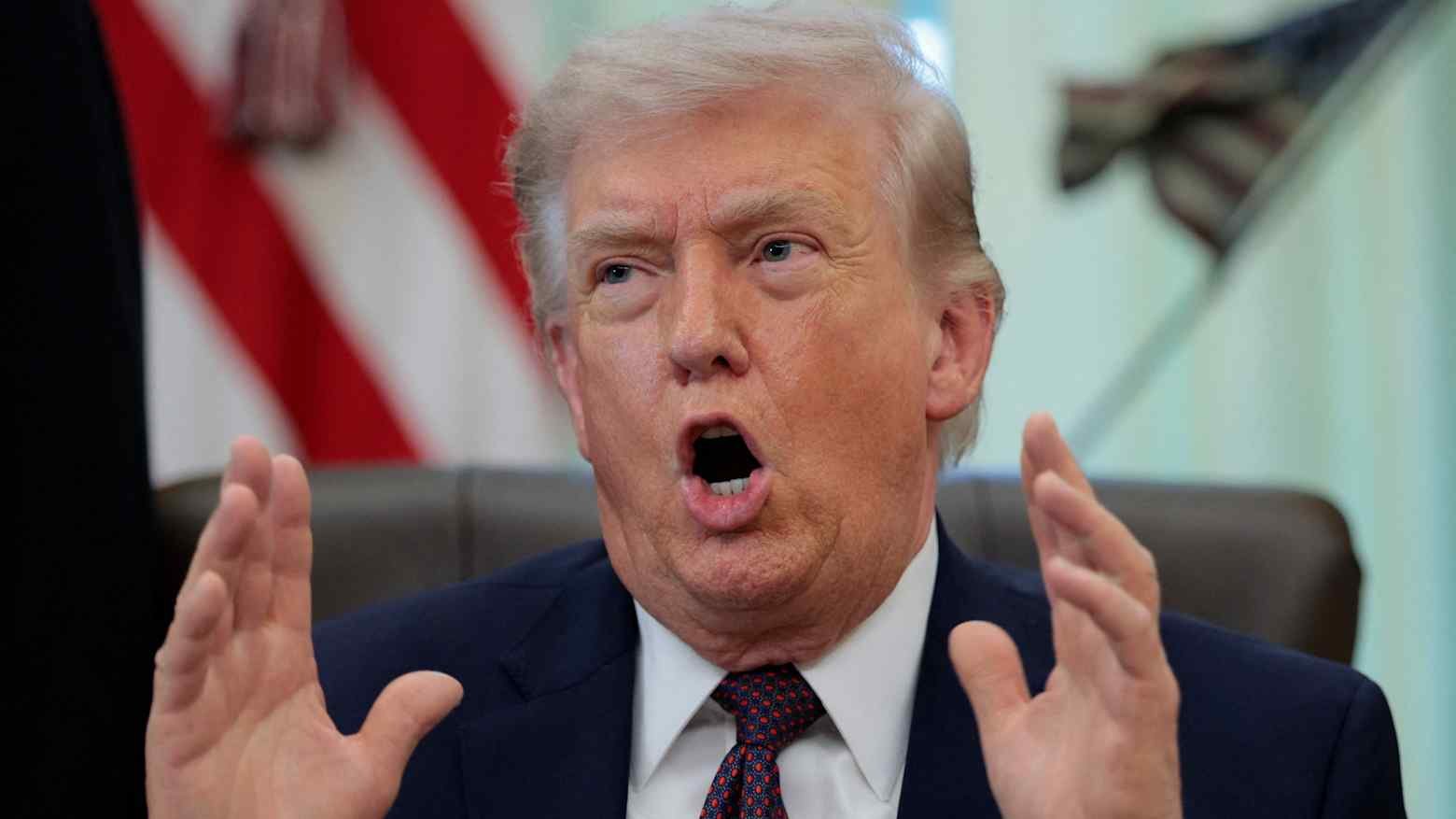

President Donald Trump says the war involving the United States and Iran may conclude within two to three weeks, regardless of whether a diplomatic agreement is reached.
Get today's headlines by email 
Speaking as the White House announced he will deliver a national address on Wednesday evening, Trump said the campaign aims to eliminate Iran’s remaining military and nuclear capabilities.
He said the conflict could wrap up “within maybe two weeks,” possibly slightly longer, depending on the progress of military operations. The president added that U.S. forces intend to dismantle Iran’s capacity to develop nuclear weapons before ending the campaign.
Trump sets short timeline for conflict
Trump also signalled that negotiations with Tehran remain possible but suggested they were not essential to ending the war.
He warned that if talks fail, the United States could escalate attacks on key infrastructure targets, including bridges.
“If they come to the table, that will be good,” he said. “But whether we have a deal or not, it’s irrelevant.”
Israel vows to continue offensive
Israeli Prime Minister Benjamin Netanyahu said Israel would continue its military campaign against Iran, declaring the operation far from over.
In a televised statement, Netanyahu said Israel would press ahead with efforts to defeat what he called Iran’s “terror regime.”
He argued the war had already reshaped the regional balance of power, claiming Israel had strengthened its position in the Middle East despite the continuing conflict.
His remarks came shortly after Iranian President Masoud Pezeshkian indicated that Iran was willing to end hostilities.
Pezeshkian said Tehran had the determination to conclude the conflict but was seeking guarantees that similar attacks would not occur again in the future.
The statements highlight a continuing divide between the opposing sides as fighting continues.
Iran-linked strikes hit Gulf region
The conflict expanded further across the Gulf on Wednesday following several attacks attributed to Iran or its allied groups.
Authorities in Kuwait reported a drone strike on a fuel tank at Kuwait International Airport, which triggered a large fire.
The state news agency said there were no immediate reports of injuries, while emergency crews worked to contain the blaze.
The report suggested the attack may have been carried out by Iran-backed militias operating from Iraq with support from Tehran.
Elsewhere in the Gulf, officials in Bahrain said firefighters were responding to a blaze at a business facility following what they described as an Iranian attack.
A tanker was also targeted off the coast of Qatar, according to authorities.
Inside Iran, state broadcaster Islamic Republic of Iran Broadcasting reported explosions and strikes across northern, eastern and central areas of Tehran.
Rubio questions NATO role
U.S. Secretary of State Marco Rubio said Washington may reconsider its relationship with North Atlantic Treaty Organization once the conflict with Iran ends.
In an interview with Fox News host Sean Hannity, Rubio said the war had raised questions about the alliance’s value for the United States.
He noted that he had long supported NATO during his time in the Senate, particularly because U.S. forces rely on bases in Europe to project military power globally.
However, Rubio suggested that if allies restrict U.S. access to those bases during conflicts, the alliance could become a burden rather than a strategic asset.
He said the United States was not asking NATO members to participate directly in air strikes against Iran but expected them to allow the use of their facilities.
“If their answer is no,” Rubio said, “then you have to ask why we are in NATO.”
His remarks follow earlier criticism from Trump, who accused some allies of failing to support the U.S. war effort and told them to secure their own oil supplies rather than relying on American protection of the Strait of Hormuz.
Join the discussion? 
Already a member? 
 Adapted by ASEAN Now. Source 1 April 2026
Recommended Comments
Create an account or sign in to comment