



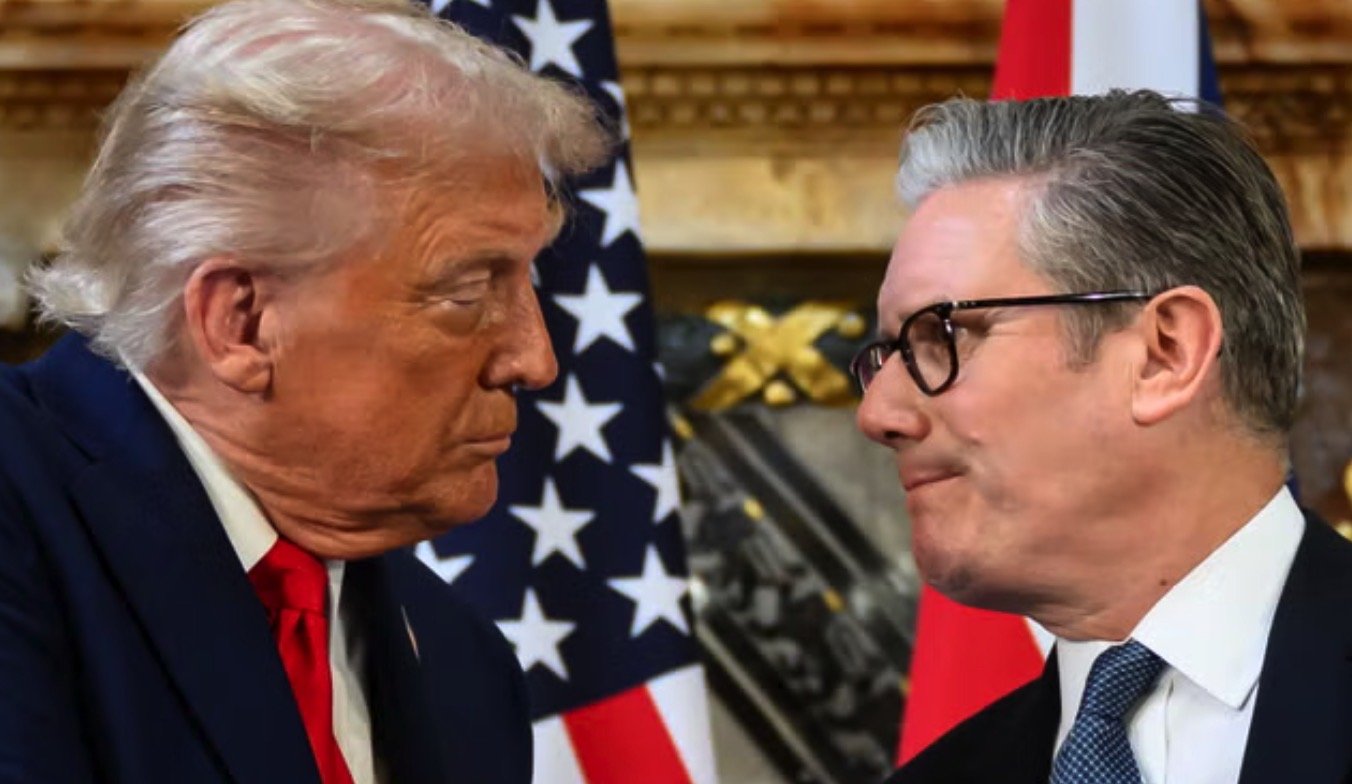

US President Donald Trump has criticised Britain’s role in the Iran conflict, telling the UK to secure its own oil supplies and warning that Washington may no longer provide support.
Get today's headlines by email 
In comments posted on his Truth Social platform, Trump accused countries that did not join US strikes on Iran of relying on American action while avoiding direct involvement.
He said states struggling to obtain jet fuel because of disruption in the Strait of Hormuz should either buy supplies from the United States or act themselves to reopen the waterway.
Trump attacks UK stance on Iran conflict
Addressing Britain directly, Trump said the country had refused to take part in what he described as the “decapitation of Iran”. He urged London to “start learning how to fight for yourself” and suggested British forces should move to the strait and secure oil shipments independently.
The remarks marked a sharp escalation in tensions with the UK government led by Prime Minister Keir Starmer.
Trump argued that the United States had already “done the hard part” in the conflict and claimed Iran had been effectively weakened. He added that countries which did not assist the US should not expect Washington to continue defending their interests.
Hormuz disruption drives energy concerns
The confrontation comes as shipping through the Strait of Hormuz remains heavily disrupted.
Iran has imposed a de facto blockade on the strategic waterway, a route used by a significant share of global oil and gas shipments. Energy markets have been shaken as tankers face delays, surcharges or restrictions when attempting to transit the narrow channel.
Some vessels have reportedly been allowed through under a system requiring payments or political conditions. Fees for passage have reached as much as $2m per voyage, sharply increasing transport costs and contributing to rising energy prices worldwide.
Trump has also reportedly considered withdrawing US forces from the conflict without a plan to reopen the shipping lane. Such a move would effectively leave Tehran controlling one of the world’s most important energy corridors.
US and UK officials trade criticism
The dispute widened as US Defence Secretary Pete Hegseth criticised the Royal Navy, saying other countries should contribute more to restoring access through the strait.
Speaking to reporters, Hegseth said responsibility for securing the waterway should not fall solely on the US Navy. He added that Britain possessed a “big, bad Royal Navy” capable of playing a stronger role.
Meanwhile Britain has expanded its military presence in the Middle East to roughly 1,000 personnel. Defence Secretary John Healey said additional forces were helping protect regional partners and allies.
Healey, visiting Saudi Arabia, Qatar and Bahrain, said Gulf leaders had emphasised the value of Britain’s defensive support. He also said partners judged the UK by its actions rather than statements.
Rising tensions and domestic impact
The political clash coincided with a confirmed state visit to Washington later in April by King Charles III and Queen Camilla, despite calls for the trip to be delayed due to the conflict.
The crisis has also begun to affect the UK economy. Prime Minister Starmer chaired an emergency Cobra committee to assess the impact of higher energy costs on households and businesses.
Prices for heating oil have already surged, particularly for homes outside the main energy price cap system. The government has announced £53m in support for affected households.
During the conflict’s early stages, Starmer allowed US forces to use RAF bases for operations aimed at protecting allied interests in the region. Despite that cooperation, Trump has repeatedly criticised NATO partners, including Britain, over their level of participation.
oin the discussion? 
Already a member? 
 Adapted by ASEAN Now. Source 1 April 2026
Recommended Comments
Create an account or sign in to comment