



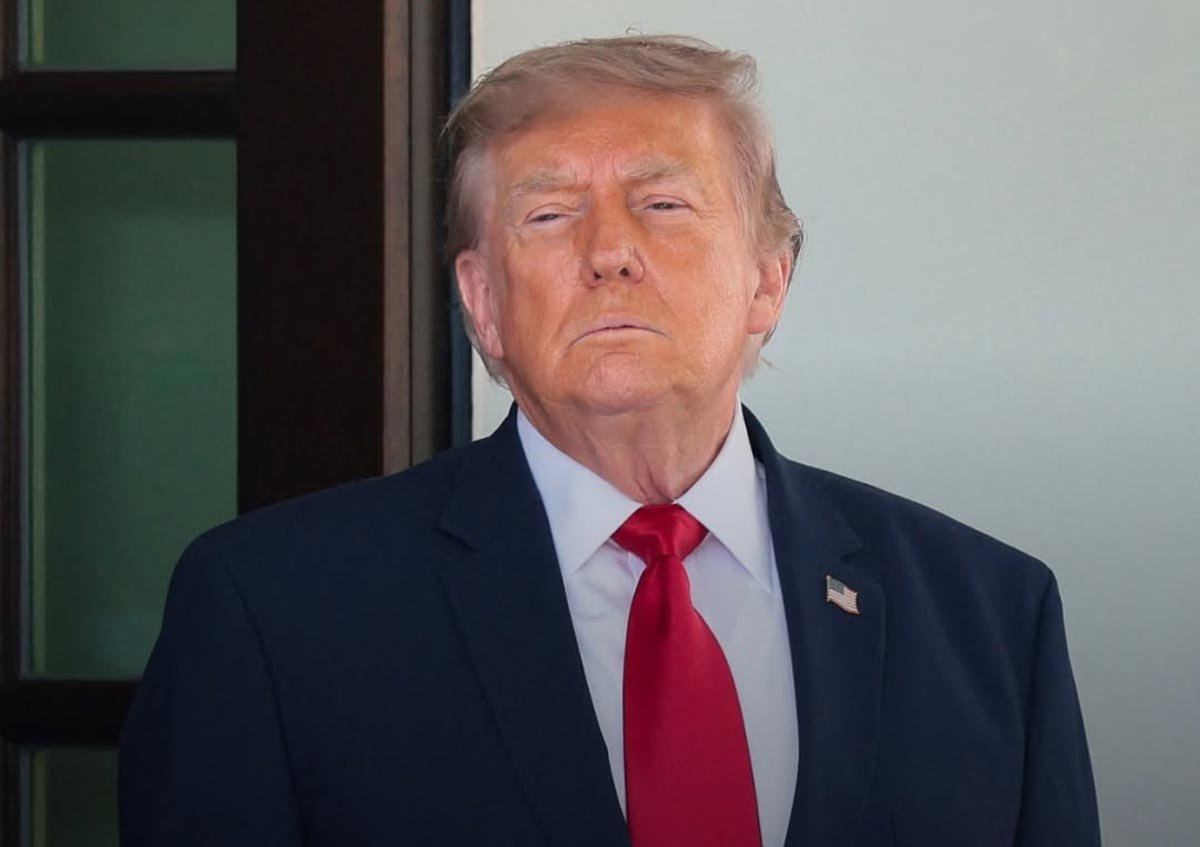

US President Donald Trump said next week the United States would strike Iran’s bridges and power plants unless Tehran resumed talks, escalating pressure as fighting between the two countries entered its fourth consecutive day.
Get today's headlines by email 
The remarks were made in an interview on Fox News, in the same period that US and Iranian forces reported continued exchanges of fire.
Threat Linked to Resuming Negotiations
Trump said he warned Iranian authorities that “it gets really bad” unless Iran “gets to the table and negotiate”. He said the US would “knock out” power plants and bridges, repeating threats he had previously made and which were condemned at the time by UN officials.
In April, Trump threatened strikes on civilian infrastructure in Iran, including bridges and power plants. Volker Türk, the UN human rights chief, said deliberately attacking civilians and civilian infrastructure is prohibited under international law and amounts to a war crime. The Geneva Conventions, agreed in 1949, bar attacks on sites essential for civilians.
In Tuesday night’s interview, Trump also said US negotiators had told their Iranian counterparts that they needed to make a deal or “you’re not going to have anything left”.
US Says It Targeted Capabilities Used to Attack Shipping
The latest escalation in rhetoric coincided with a renewed round of US strikes. US Central Command said late on Tuesday that its forces began an additional round of strikes against Iran to degrade capabilities used to attack commercial shipping in the Strait of Hormuz.
US Admiral Brad Cooper said in a late Tuesday statement that Iran had “intentionally targeted civilians” by attacking seven commercial ships. Cooper said the attacks resulted in nearly a dozen civilian crew members killed, missing, or injured.
The United Arab Emirates said on Monday night that Iranian cruise missiles had hit two UAE tankers, killing one Indian crew member and wounding eight others, with four in serious condition.
Iran’s Islamic Revolutionary Guard Corps later confirmed the strikes via Telegram, saying two tankers ignored warnings, switched off navigation systems and tried to pass through a mined route. Centcom did not specify which other incidents its statement referred to, and the IRGC did not immediately comment beyond its Telegram message.
In the early hours of Wednesday, Kuwait’s military said it was intercepting Iranian attack drones, while Bahrain activated air raid sirens. Kuwait’s army said air defences were engaging hostile drone attacks, and Bahrain’s interior ministry urged residents to move to safe places.
Tehran said on Tuesday it had targeted US military facilities in Bahrain and Jordan after earlier attacking two UAE tankers.
Fee Plan Row and Blockade Move
Trump’s comments came after he said a 20% fee he had threatened to impose on cargo moving through the Strait of Hormuz would be replaced by “massive” trade and investment deals with Gulf states. The announcement was made hours before the US resumed its blockade of Iranian ports.
On Truth Social, Trump said he had decided to replace the “United States Reimbursement Fee” with trade and investment deals to be made by Gulf states with the US, adding that the investments would be “MASSIVE” and “extraordinarily good” for them, without giving further details. He also said the strait was open to all ship traffic except for Iran and said oil was flowing “like never before”.
After talks in Washington with Iraq’s new Prime Minister Ali al-Zaidi, Trump said he did not like the concept of a fee, but that it was “not fair” for the US to protect the strait for the entire world. He said he had adjusted his initial plan after receiving calls from Gulf leaders.
Iran said it would remain in control of the Strait of Hormuz. Deputy Foreign Minister Kazem Gharibabadi told state television that the decision to tighten measures, including a blockade, had “dismantled” an earlier agreed truce, according to AFP. Reuters reported him saying that if the US tried to squeeze Iran through military actions and an economic blockade, it would be a mistake.
The US imposed a naval blockade of all Iranian ports in April. About five weeks later, it said it had redirected 100 commercial vessels and disabled four. The US lifted the blockade in June as part of a memorandum of understanding aimed at ending the conflict, but a dispute over the strait remains a key point.
Shipping data shows traffic through the Strait of Hormuz has slowed to a two-month low, while Brent crude prices have risen sharply.
Join the discussion? 

15 July 2026
-
 1
1
Recommended Comments
Create an account or sign in to comment