



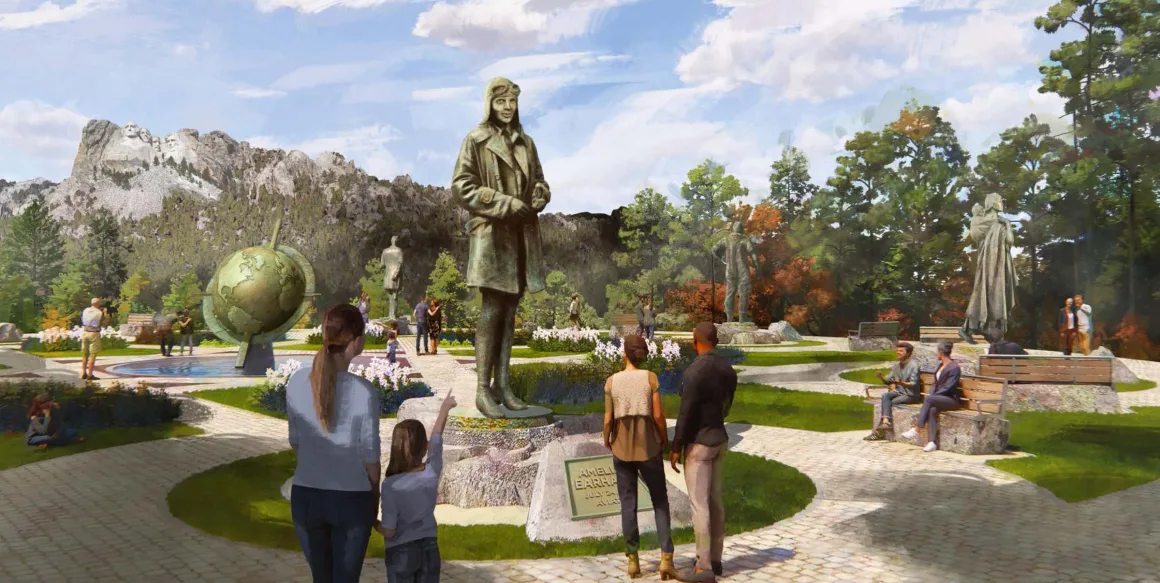

Plans for a large sculpture garden proposed by Donald Trump to mark the United States’ 250th anniversary are unlikely to produce any statues in time for the July 4 celebrations next year, according to sources familiar with the project.
Get today's headlines by email 
The National Garden of American Heroes was intended to feature 250 statues honoring prominent figures from US history and culture. However, with the 2026 deadline approaching, artists and foundries who applied to create the sculptures say they have yet to receive confirmation from the administration.
Sources say the project has also not yet been submitted for review by key federal planning bodies whose approval is required before construction can begin.
Planning approvals still pending
The sculpture garden has not been formally reviewed by either the U.S. Commission of Fine Arts or the National Capital Planning Commission, agencies responsible for evaluating major design and development projects in Washington.
A person familiar with the approval process said it would be extremely difficult for the project to move through the necessary reviews and be built before July 2026.
Despite the lack of formal submissions, some preliminary planning has taken place. Officials have reportedly identified West Potomac Park as a possible location for the garden. The park, which runs along the Potomac River, is a well-known site for viewing Washington’s annual cherry blossom displays.
The administration has also brought in architect Michael Franck, based in Washington, to advise on the project. The White House has not formally announced the proposed location and declined to comment on the status of the garden.
A broader reshaping of Washington
The sculpture park forms part of a wider set of initiatives by Trump aimed at reshaping the architecture and symbolism of the US capital.
Other proposals include constructing a large ballroom at the White House that would replace the East Wing, as well as building a triumphal arch near Arlington National Cemetery. Some veterans’ organizations have voiced opposition to the arch proposal.
Critics of the sculpture garden have also expressed concern that the project could bypass traditional oversight processes. One source involved in federal construction approvals said there were fears it might be pushed forward without congressional authorization or formal review.
The proposal was not discussed at a recent meeting of the Commission of Fine Arts, and officials at the National Capital Planning Commission say the project does not appear on the agenda for upcoming meetings.
A project years in the making
Trump first introduced the idea for the National Garden of American Heroes in 2020 during a speech at Mount Rushmore National Memorial. He described the planned park as a tribute to “the greatest Americans to ever live.”
Soon afterward, the White House issued an executive order directing that the garden open before July 4, 2026, to coincide with the nation’s semiquincentennial celebrations.
The project has faced several interruptions since then. The original executive order was rescinded in 2021 by Joe Biden before being reinstated shortly after Trump returned to office.
Funding has been drawn from several federal cultural agencies, including the National Endowment for the Humanities and the National Endowment for the Arts. Internal documents indicate the two agencies together set aside $34 million for the garden.
In addition, the Department of the Interior received $40 million under legislation known as the “One Big Beautiful Bill Act” to help establish and maintain the site.
Artists still waiting for confirmation
In April 2025, the National Endowment for the Humanities began inviting artists to apply to create the statues. The timeline suggested selected sculptors would be notified by September that year and complete their work by June 2026.
However, multiple artists and foundries contacted about the project said they had not been informed whether they were chosen, and it remains unclear whether any sculptures have begun production.
The statues are intended to follow a classical style and be made from materials such as marble, granite, bronze, copper or brass. Each would stand between six and eight feet tall and be scaled slightly larger than the historical figure depicted.
While Washington is now seen as the leading location, other potential sites were also considered, including areas near Mount Rushmore in South Dakota and locations in Philadelphia.
South Dakota officials had proposed a 40-acre site within view of Mount Rushmore, and a local family offered to donate land for the project. But earlier this year Trump said the garden would most likely be built along the Potomac River in Washington, describing it as “a beautiful complex.”
Join the discussion? 
Already a member? 
 Adapted by ASEAN Now. Source 20 April 2026
Recommended Comments
Create an account or sign in to comment