



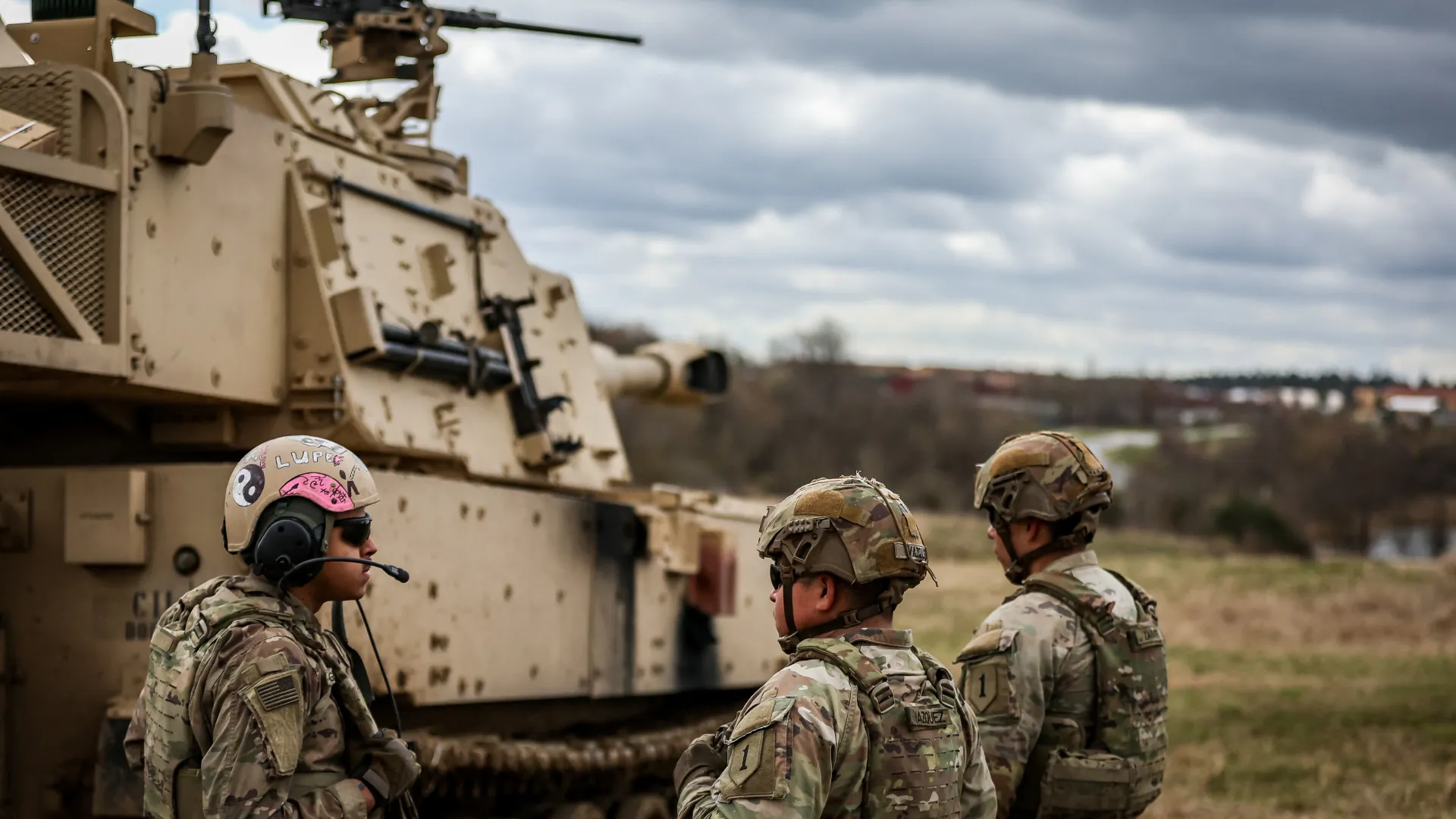

Europe faces mounting pressure to bolster its own defences as tensions grow between Washington and its NATO allies, highlighted by plans from the Trump administration to withdraw thousands of US troops from Germany.
Get today's headlines by email 
The move follows a series of disputes between the United States and European partners, ranging from trade tariffs to disagreements over the conflict involving Iran. Analysts say the proposed troop reduction is only the latest sign of a widening transatlantic divide over security responsibilities.
Troop withdrawal sparks concern
US President Donald Trump has said Washington will withdraw around 5,000 troops stationed in Germany, with the possibility of further reductions. The announcement came after German Chancellor Friedrich Merz criticised the US handling of the Iran conflict, accusing Tehran of humiliating Washington.
Trump also criticised Spain and Italy for what he described as a lack of support for US actions against Iran. When asked whether troop withdrawals could extend to those countries, he replied that it was possible, saying Spain had been “horrible” and Italy had offered little help.
Spain has refused US requests to use its bases or airspace for operations connected to the conflict. Trump’s comments about Italy surprised some observers, given that Prime Minister Giorgia Meloni has been viewed as a close ally of Washington.
The US president has repeatedly argued that European nations rely too heavily on American military protection. He previously labelled Germany “delinquent” for failing to spend enough on defence.
Europe urged to take greater responsibility
German Defence Minister Boris Pistorius said the troop reduction had been anticipated and stressed the need for Europe to strengthen its role within NATO.
“If we are to remain transatlantic, we must strengthen the European pillar within NATO,” Pistorius said.
Merz also played down the dispute, telling German broadcaster ARD that there was “no connection” between tensions with Washington and the planned withdrawal.
Germany still hosts a substantial American military presence. US Defence Department data shows that more than 36,000 active-duty US personnel were stationed in the country as of December 2025. During the Cold War, the number was about 250,000.
A NATO spokesperson said the shift highlighted the need for Europe to increase its own defence spending, particularly as Russia continues to pose a security threat.
Senior Pentagon official Elbridge Colby said Washington intends to prioritise challenges in Asia and the Western Hemisphere, areas where US military power is seen as uniquely decisive. He added that the United States expects European allies to assume primary responsibility for conventional defence on the continent.
Rising spending but structural hurdles
Some European leaders warn that weakening unity within NATO could have long-term consequences. Polish Prime Minister Donald Tusk said the alliance risked undermining itself if the trend continued.
Plans already in motion could see Europe’s annual defence spending nearly double to about $750bn by 2030. But experts say simply increasing budgets will not solve deeper structural problems.
European governments often prioritise national industries when procuring military equipment, resulting in fragmented production and higher costs. For example, Europe manufactures several different main battle tanks, while the United States produces just one model.
Attempts at joint development have also faltered. A major Franco-German project to build a next-generation fighter aircraft collapsed after disputes over leadership between companies involved in the programme.
At the same time, the European Union aims for at least half of member states’ defence spending to remain within the bloc by 2030. Historically, nearly 80% of purchases have been made outside the EU, largely from American suppliers.
Shortfalls in missile defence
Missile defence is among the most pressing concerns. Analysts say the use of interceptor systems such as Patriots and THAAD during the conflict in the Gulf has significantly depleted available stockpiles.
The Pentagon has also indicated it will not deploy a planned Long-Range Fires battalion to Germany equipped with Tomahawk and hypersonic missiles.
European defence firms do manufacture some interceptor systems, but analysts say they lack the scale and technological range to fully replace American capabilities.
A recent study by the Center for Strategic and International Studies concluded that European systems do not yet provide a complete substitute for US missile defence technology.
Searching for a new balance
European leaders increasingly face a strategic choice. One option is to continue relying heavily on American military support while strengthening cooperation with US defence companies.
The alternative would require significantly greater investment in domestic industries and closer coordination among European states to build a more independent defence capability.
Some progress is already visible. Defence companies such as Saab, Rheinmetall and BAE Systems report record order books, while new NATO members Sweden and Finland have rapidly integrated into alliance structures.
However, analysts say Europe’s ability to act collectively remains uncertain, particularly when national interests compete with the goal of building a unified defence system.
Join the discussion? 
Already a member? 
 Adapted by ASEAN Now. Source 4 May 2026
Recommended Comments
Create an account or sign in to comment