




The United Kingdom and more than 40 partner nations are considering sanctions and other diplomatic steps aimed at pushing Iran to reopen the Strait of Hormuz, a key global shipping route.
Get today's headlines by email 
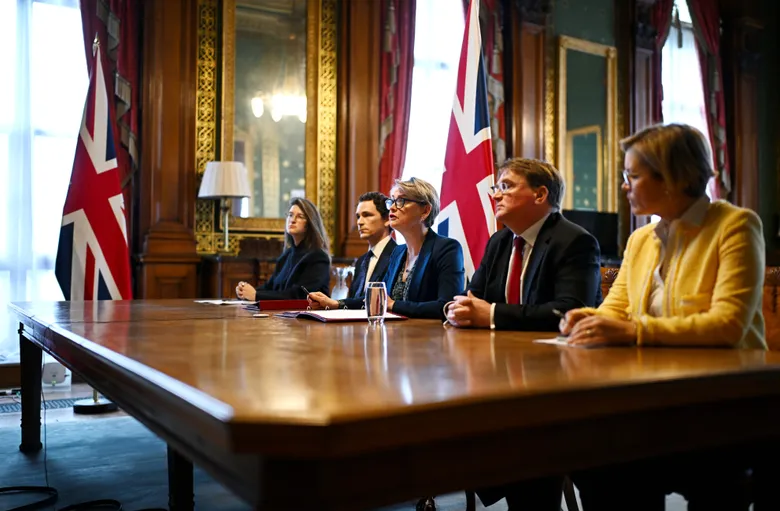
Speaking after a virtual summit on Thursday, British Foreign Secretary Yvette Cooper said participants agreed to explore coordinated economic pressure if the strait remains blocked. The meeting marked the opening phase of an effort to build an international coalition capable of restoring security along the Gulf waterway.
Coalition talks focus on diplomatic pressure
Cooper said Iran had effectively seized control of the shipping lane and was using it to pressure the global economy.
“Iran’s closure of the Strait of Hormuz is a direct threat to global prosperity,” she said. She added that participating countries demanded the “immediate and unconditional reopening” of the route and urged respect for international maritime law and freedom of navigation.
The United States did not take part in the discussions.
Sanctions and UN pressure under review
Cooper said the talks focused on diplomatic and economic measures rather than military action. Governments involved are considering increased pressure through the United Nations as well as the possibility of new sanctions if Iran keeps the strait closed.
Participants also discussed working with the International Maritime Organization to help stranded vessels resume movement once conditions allow.
The strait, located between Iran and Oman, serves as one of the world’s most important energy transit routes. Around 20% of global oil and gas shipments pass through the narrow channel linking the Persian Gulf to the Arabian Sea.
Iran has targeted several ships in recent weeks in response to military action against it by the United States and Israel. The attacks have disrupted energy exports and contributed to a sharp rise in fuel prices worldwide.
Trump urges allies to act
US President Donald Trump said on Wednesday that other nations should take responsibility for reopening the route. He criticised allies for failing to act earlier.
“Allies should have done it,” Trump said, urging them to move into the waterway and secure it themselves.
Washington has repeatedly accused partners of doing too little to protect shipping lanes or support US military operations. The comments highlight divisions over how far allies should go to confront Iran while avoiding escalation in the broader conflict.
Cooper said Britain’s decisions would reflect national interests rather than the priorities of other countries.
France warns against military option
French President Emmanuel Macron said military intervention was unlikely to reopen the strait.
Speaking during a visit to South Korea, Macron said the route could only reopen through negotiations with Iran. He stressed that a ceasefire and renewed talks would be necessary to restore maritime traffic.
London has not published a full list of countries attending the summit. Governments previously backing a joint statement condemning Iranian attacks on commercial shipping were expected to join, including France, Germany, Japan, Australia and several Gulf states.
British Prime Minister Keir Starmer said on Wednesday that the UK was exploring every diplomatic channel available to restore access to the waterway. He added that military planners would assess options for securing the route once fighting subsides.
The disruption has already driven energy prices sharply higher. Brent crude, the global benchmark for oil, has risen from about $73 per barrel to more than $100 in recent weeks.
Join the discussion? 
Already a member? 
 Adapted by ASEAN Now. Source 3 April 2026
Recommended Comments
Create an account or sign in to comment